
Your body needs to cool down before sleep can take hold. A well-timed bath may support falling asleep faster by encouraging that cooling, even though it leaves your skin feeling pleasantly warm.
If racing thoughts and long stretches of clock-watching are familiar, a warm bath sleep routine is a low-risk experiment worth trying. It won’t cure insomnia on its own, but it may make the shift into bedtime feel less abrupt.
Temperature, timing, and what happens after you towel off all matter.
Key Takeaways
- Warm water can support the body’s natural evening decline in core body temperature, making it easier to fall asleep.
- Sleep research points to water around 104 to 109 F (40 to 42.5 C), taken about one to two hours before bed, with sleep quality among the reported benefits.
- A bath or shower for 10 to 20 minutes is usually enough. Water that feels painfully hot is counterproductive and unsafe.
- The cooling period after the bath matters, so keep your bedroom comfortably cool and avoid heavy pajamas.
- If sleep trouble happens at least three nights a week for three months, or affects daily life, persistent symptoms may reflect a sleep disorder. Speak with a clinician or sleep physician.
How Warm Baths Support Sleep
Sleep isn’t an on-off switch. As bedtime approaches, your circadian rhythm, the body’s biological clock, guides core body temperature downward. This daily cooling pattern helps prepare the brain for sleep.
The hypothalamus, a small area of the brain, coordinates this thermoregulatory system. It also responds to light, activity, stress, and temperature. Darkness remains the strongest cue for melatonin production, but a bath can support the physical side of the bedtime process.
Warm water raises skin temperature and causes blood vessels near the surface to widen. This is called peripheral vasodilation. More blood moves from the body’s core toward the hands, feet, arms, and legs, where heat can escape more easily once you leave the tub.
The useful cooling phase begins after the bath, when warm skin can release heat into the cooler air around you.
That may seem backward at first. However, passive body heating can speed up the body-temperature decline that normally occurs before sleep. If you get into bed immediately after a scorching bath, you may still feel overheated. Giving yourself time to cool is what makes the routine work.
A 2019 systematic review and meta-analysis by Shahab Haghayegh and colleagues in Sleep Medicine Reviews examined 17 studies involving 5,322 participants. It found that evening baths and showers at the studied temperatures were linked with better sleep quality, improved sleep efficiency, and shorter sleep onset latency. In pooled findings, people fell asleep about 10 minutes sooner on average, though the benefit was modest and individual responses varied.
Ten minutes may not sound dramatic. Yet when you’re lying awake most nights, a modest improvement can feel meaningful. A warm bath sleep routine also gives your brain a repeatable signal that the day is winding down.
Choose the Right Water Temperature and Timing
Research often uses temperatures between 104 and 109 F, or 40 to 42.5 C. That range is comfortably warm, not skin-reddening hot. You shouldn’t feel dizzy, short of breath, or desperate to get out.
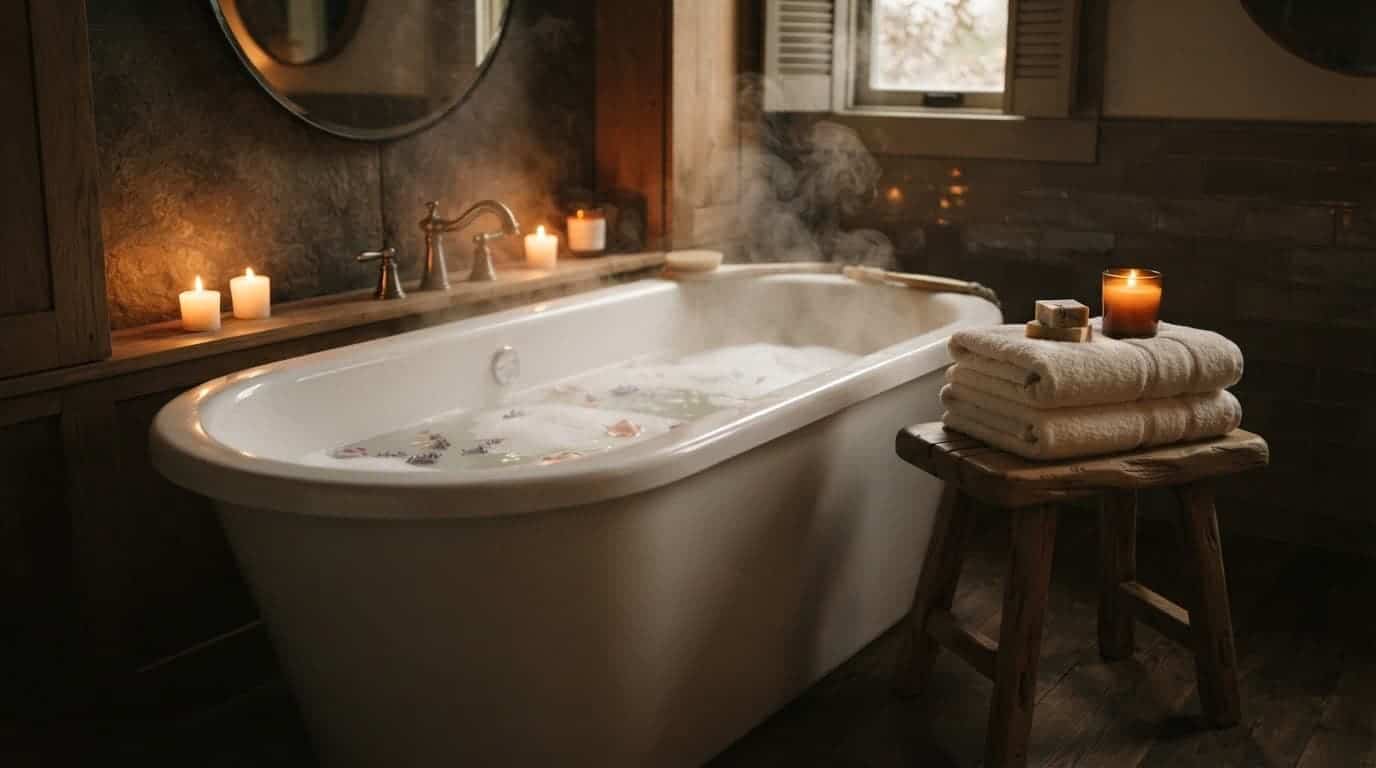
A practical pre-bed bath protocol
Start your bath about one to two hours before your planned bedtime. This gives your body enough time to shed heat afterward. If a bath isn’t practical, a warm shower can have a similar effect, especially when it lasts at least 10 minutes.
Use this as a starting point, then adjust based on how you feel.
| Routine detail | Useful starting point | Adjust if needed |
|---|---|---|
| Bath water temperature | 104 to 109 F | Lower it if you feel flushed or lightheaded |
| Time in water | 10 to 20 minutes | Keep it shorter if you get overheated |
| Bath timing | 1 to 2 hours before bed | Move it earlier if you still feel warm in bed |
| Bedroom temperature | Around 60 to 67 F | Use the coolest setting that feels comfortable |
A bath thermometer is helpful if your tap runs hot. Otherwise, use comfort as your guide. A hot bath is not the goal, since it can increase overheating, dizziness, dehydration, or a racing heartbeat.
Pair the Bath With a Calmer Bedtime Routine
The bath works best when the hour after it supports good sleep hygiene and feels different from the rest of your evening. Bright overhead lighting can work against normal evening signaling, including melatonin production. Work emails, intense gaming, and late-night exercise can also keep you alert.

After the bath, dry off and choose light, breathable sleepwear. A thick robe may feel nice for a few minutes, but it can trap heat when you need to cool down.
Keep the sequence simple so the habit is easier to repeat:
- Start the bath one to two hours before bed, and leave your phone outside the bathroom if possible.
- Afterward, dim the lights and spend a few minutes doing a quiet activity, such as reading a paper book or gentle stretching.
- Keep the bedroom cool, dark, and comfortable before you get in bed.
- Reserve the bed for sleep when you can, rather than continuing to scroll or solve tomorrow’s problems there.
Lavender bath products may add gentle aromatherapy if you enjoy the scent. However, fragrance is optional, and it isn’t the main reason a bath helps sleep. Skip essential oils if they irritate your skin, trigger headaches, or bother someone sharing the room.
Epsom bath salts can feel soothing for sore muscles, but they aren’t a proven sleep treatment. The warmth, timing, and post-bath cooling period do the heavier lifting.
When a Warm Bath Makes Sleep Harder
Some people feel sleepy after a bath right away. Others emerge from a hot bath flushed, uncomfortable, and alert. That response usually means the heat was excessive, the bath lasted too long, or bathing happened too close to bed.
First, lower the temperature slightly. Next, try moving the bath earlier by 30 minutes. A fan, open bedroom door, lighter bedding, or breathable cotton sheets can also help your body cool after bathing.
Older adults should take extra care because hot water can lower blood pressure and increase the chance of feeling faint when standing. Sit for a moment before getting out, then stand slowly. Use a non-slip mat, and avoid bathing alone if dizziness is a concern. People with cardiovascular conditions, pregnancy-related concerns, or medications that affect circulation should ask a clinician for personal advice.
Athletes may enjoy a warm bath after training because it can ease muscle soreness. Still, hard exercise close to bedtime can keep some people alert. Cold water immersion may feel stimulating near bedtime as a separate recovery practice. Finish intense workouts earlier when possible, drink water, and use the bath as part of a slower wind-down rather than another stimulating event.
A cold shower is different from cold water immersion, which is a broader and more intense exposure. Cold water can activate the sympathetic nervous system and leave some people feeling awake or tense. If a cool rinse feels refreshing to you, keep it brief and earlier in the evening. For falling asleep faster, warm bathing has stronger support from sleep research.
If you wake sweaty or restless after a bath, change the timing or temperature before deciding that baths do not work for you.
Frequently Asked Questions
Does a warm shower work as well as a bath for sleep?
This option can work well, especially if you do not have a bathtub or dislike soaking. Aim for at least 10 minutes at a comfortable temperature, then allow time to cool before bed. The same timing rule applies.
What if this bath routine doesn’t help after a week?
Try it consistently for one to two weeks while adjusting the timing and water temperature. Also review caffeine, alcohol, late meals, bedroom heat, noise, and screen use as parts of good sleep hygiene. A bath can’t fully offset habits that keep your body and mind alert.
Is a cold shower or cold water immersion helpful before bed?
Cold water immersion is a more intense exposure and is not established as a reliable substitute for a warm bath. Some people may find it activating before bed.
Can I take a bath immediately before bed?
You can, but it may be less effective if you still feel hot when you lie down. Most people get better results when they finish bathing one to two hours before bed, then spend the cooling period in dim light.
A Small Temperature Shift Can Make Bedtime Easier
A warm bath may support nighttime sleep by helping the body follow its normal overnight cooling process. The routine is simple: use comfortably warm water, finish early enough to cool down, and keep the bedroom from trapping heat.
For many restless sleepers, a warm bath sleep ritual won’t solve every bad night. Still, it can make the hour before bed calmer and more predictable.