
Trouble falling asleep can turn bedtime into a nightly grind. If you are interested in improving your sleep health through natural, non-drug options, eating kiwi before bed is one of the few food choices that has been tested in actual sleep research.
Small studies suggest that incorporating kiwi sleep benefits into your nightly routine may help you fall asleep faster, stay asleep longer, and wake less during the night. While the evidence remains limited, it is more robust than the claims surrounding many other popular bedtime snacks.
The most useful takeaway is not the hype, but rather the consistent sleep patterns that researchers observed in these studies.
Key Takeaways
- Research on kiwifruit consumption and sleep is promising but remains small, pointing to potential benefits rather than definitive proof.
- The most effective routine identified in studies involves eating two kiwifruits about one hour before bed for several weeks.
- Reported benefits include better sleep quality, longer sleep duration, and a reduction in sleep disturbances or frequent night wakings.
- Kiwi may help support rest because it contains melatonin, serotonin, antioxidants, and compounds associated with mood improvement, although no single mechanism has been confirmed.
- If you suffer from chronic insomnia, loud snoring, acid reflux, or a kiwi allergy, relying on fruit alone is unlikely to solve the underlying problem.
What the studies on kiwi before bed found
The main reason people talk about eating kiwi for sleep is a small but well-known study from 2011. In that research, adults with self-reported sleep problems ate two kiwifruits about an hour before bed for four weeks. According to the 2011 PubMed study on kiwifruit and sleep quality, participants reported improvements in their Pittsburgh Sleep Quality Index scores. Specifically, they experienced reduced sleep onset latency, increased total sleep time, and improved sleep efficiency, which suggests less time spent in a state of wake after sleep onset.
That sounds impressive, and it may be. Still, the study had an important weakness. It did not use a placebo group, so it cannot prove kiwi alone caused the change.
A later paper looked at elite athletes and found a similar pattern. The 2023 kiwifruit study in elite athletes reported better sleep quality and enhanced physical recovery after nightly kiwi intake over four weeks. That matters because athletes often deal with stress, travel, and heavy training loads, all of which can hinder rest.
Here is the short version of the current research:
| Study | Who was studied | Kiwi routine | Reported changes | Main limit |
|---|---|---|---|---|
| 2011 adult study | Adults with sleep complaints | Two kiwifruits, about 1 hour before bed, for 4 weeks | Improved Pittsburgh Sleep Quality Index, faster sleep onset latency, longer total sleep time, and better sleep efficiency | No placebo control |
| 2023 athlete study | Elite athletes | Nightly kiwifruit for 4 weeks | Better sleep quality and faster physical recovery | Small group, athlete-specific |
| Newer registered trial | Adults in an ongoing study | Bedtime kiwifruit protocol | Results not yet published | No final outcome yet |
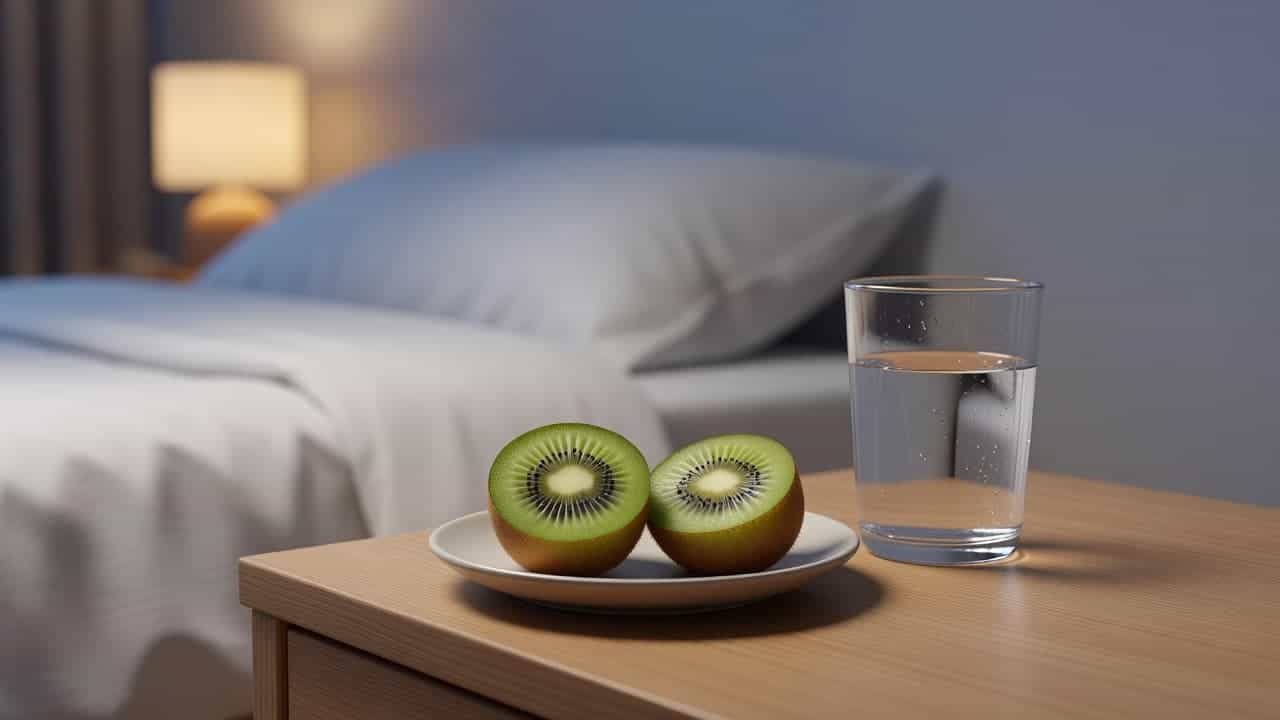
The research points to a simple routine, two kiwis around an hour before bed, repeated for a few weeks.
That does not mean kiwi is a fix for insomnia. It means kiwi is one of the rare bedtime foods with at least some human data behind it. There is also a registered clinical trial on bedtime kiwifruit and sleep, which shows researchers are still testing the idea.
Why kiwi may help sleep
Scientists do not have one definitive answer yet. Eating fresh kiwifruit seems to offer a unique combination of helpful factors rather than providing a single magic ingredient.
One primary reason is melatonin. Kiwi contains natural melatonin, the hormone closely tied to your body’s internal circadian rhythm. While the amount found in fruit is far lower than what you might find in a typical supplement, food-based melatonin can still play a modest role in signaling to your brain that it is time to rest.
Serotonin is another key piece of the puzzle. Kiwi contains serotonin, which is linked to both mood and sleep regulation. Furthermore, the fruit provides tryptophan, an essential amino acid that serves as a building block for your body to produce serotonin. Because your body uses serotonin to create melatonin, this biochemical connection receives a great deal of attention. Still, dietary serotonin does not function exactly like a drug, and researchers have not yet proven that this process is the sole explanation for the sleep effect.
The presence of vitamin C and antioxidants may also be significant. Some researchers believe these nutrients help because poor sleep is often linked to oxidative stress and inflammation in the body. While this theory is plausible, it remains a subject of ongoing study; the current data does not confirm that these compounds are the primary reason people sleep better after consuming kiwi.
A simpler explanation may matter as well. Kiwi is a light, easy bedtime snack. It provides a mild nutritional boost without the heaviness associated with pizza, fried foods, or sugary desserts. For many people, that light profile alone can make the final hour before bed feel much calmer on the stomach.
The most honest answer is this: kiwi may support sleep through several small effects working in tandem. That is a useful benefit, even if the exact biological mechanism is still being refined by science.
How to try kiwi before bed without overthinking it
If you want to test kiwi sleep advice in a way that matches the research, keep it simple. The studies that garnered the most attention used two kiwifruits about one hour before bedtime.
A good self-test looks like this:
- Eat two kiwis about 60 minutes before bed.
- Keep your sleep schedule as steady as you can.
- Try this consistent kiwifruit consumption for at least two weeks, though four weeks is better.
- Track a few basics, such as how long you take to fall asleep, how often you wake up, and how rested you feel in the morning.
That routine matters because sleep can be affected by many different factor. One good night does not prove anything, and one bad night does not rule it out. You need a little time to see a pattern.
Try to avoid changing five other things at once. If you start adding magnesium, tart cherries, a new mattress topper, and a strict no-phone rule on the same night, you will not know what actually helped. Keep the rest of your routine fairly stable to accurately gauge the impact of the fruit.
It also helps to match the snack to your body. If fruit close to bedtime gives you indigestion or makes you feel acidic, try eating it earlier in the evening, perhaps shortly after your evening meal. If you hate going to bed with any food in your stomach, kiwi may not be the right fit, even if the research is promising.
Most importantly, keep your expectations realistic. Kiwi is more like a nudge than a knockout. A small drop in sleep latency, fewer wake-ups, or a bit more total sleep can still be worthwhile if your nights have been rough.
When kiwi won’t be enough, and who should be careful
Kiwi works best as a low-risk experiment rather than a stand-in for professional sleep care. If you suffer from chronic insomnia symptoms, fruit alone will likely not be enough to fix the issue. The same applies to conditions like sleep apnea, restless legs, chronic pain, or external factors like high stress and a bedroom that is too bright or noisy.
Lifestyle habits also play a significant role. Consuming alcohol at night can wipe out any minor benefits, as can late-day caffeine, irregular sleep schedules, and long evening naps. These factors often have a greater impact on your overall sleep quality than any single dietary addition. While you may notice improvements in your subjective measures of rest, the foundational elements of sleep hygiene still matter most.
Some people should skip this fruit or at least exercise caution. Do not try eating kiwi before bed if you have a known allergy or experience oral allergy symptoms, such as itching, swelling, or throat irritation. If fruit consumed late at night triggers reflux, cramps, or digestive issues, that is a clear sign to stop.
Individuals on special diet plans should also consult their healthcare provider first. This includes anyone with medical food restrictions, those following kidney-related dietary advice, or people on a clinician-guided plan that limits certain fruits.
Finally, consider the severity of your situation. If you lie awake for hours most nights, wake up gasping, snore heavily, or feel exhausted every single day, it is time to look past simple bedtime snacks. Kiwi can be a helpful part of a healthy sleep routine, but it should not delay seeking professional help when your symptoms point to a larger underlying problem.
Conclusion
Kiwi is one of the few bedtime food options backed by genuine, if limited, scientific research. The most consistent evidence suggests that eating two kiwis about an hour before bedtime for several weeks may support better rest.
That makes kiwi sleep benefits a reasonable experiment for those looking for a gentle, food-based approach to winding down. However, keep in mind that quality rest usually comes from a consistent nightly routine rather than just one fruit. Integrating kiwi into your diet is most effective when paired with steady habits and a proactive approach to addressing deeper concerns. Ultimately, while fruit can be a helpful tool, true sleep health is a holistic goal that encompasses your entire lifestyle.
FAQ
How many kiwis should you eat before bed?
The best-known studies used two pieces of fresh kiwifruit. That is the routine with the most support, so it makes sense to start there if you want to match the research.
How long before bed should you eat kiwi?
About one hour before bedtime is the most common timing in the published studies. If that feels too close to bed for your stomach, try moving it a bit earlier.
How long does it take for kiwi to help sleep?
The research looked at several weeks, not one night. While some people may notice a change sooner, consistent kiwifruit consumption for two to four weeks is a fair way to test the effects.
Can one kiwi help with sleep?
It might, but the research does not give a solid answer. Since the studies used two, one kiwi is more of a personal trial than an evidence-based routine.
Is kiwi a treatment for insomnia?
No. Kiwi may help some people improve their sleep quality, but it is not a proven treatment for insomnia. If your sleep problems are frequent or severe, a broader sleep plan matters more.