
When your body is tired but your mind keeps replaying the day, sleep can feel frustratingly out of reach. Using 4-7-8 breathing gives your attention one simple job and slows the pace of your breath before you settle into bed.
This simple breathing technique helps calm the mind and lets you fall asleep much easier when night anxiety strikes. It won’t erase every cause of insomnia, and it isn’t a replacement for medical care. Still, this gentle 4-7-8 breathing pattern can become a useful signal that the day is over and it’s safe to rest.
Key Takeaways
- 4-7-8 breathing uses a four-count inhale, seven-count hold, and eight-count exhale during deep breathing practice.
- A longer exhale can help shift attention away from racing thoughts and physical tension.
- Start with four rounds before bed, then stop if you feel lightheaded or uncomfortable.
- Practice matters more than perfect counting, so use a pace that feels steady.
- Pair 4-7-8 breathing with a dim, predictable bedtime routine to trigger the relaxation response and support better sleep quality over time.
Why 4-7-8 Breathing Can Help You Wind Down
The method has a clear rhythm: breathe in through your nose for four counts, hold for seven, then breathe out slowly through your mouth for eight. The exhale is longer than the inhale, which shifts your nervous system away from a state of fight or flight and activates the parasympathetic nervous system for effective stress relief.
Slow, controlled breathing can reduce the sense of urgency that keeps many people awake. By lowering your heart rate and decreasing blood pressure, this practice helps trigger a natural relaxation response. Instead of scanning tomorrow’s to-do list or checking whether you feel sleepy yet, you count, and that small mental task creates distance from the thought spiral.
4-7-8 breathing isn’t a sedative. You may still need time to fall asleep, especially during a stressful week. However, it can reduce the effortful feeling of trying to force sleep, which often makes wakefulness worse and keeps your nervous system on high alert.
A 2022 study on sleep deprivation and this breathing pattern described the method as inhaling, holding, and exhaling for counts of four, seven, and eight. The paper also examined changes in heart rate variability after the exercise, noting how slow breathing supports overall stress relief. You can read the full research report on 4-7-8 breathing control for a closer look at the protocol and findings.

The count is a guide, not a test. A calm, comfortable breath is more useful than reaching eight while straining.
If the seven-count hold feels too long, that doesn’t mean the practice has failed. Shorten each part while keeping the general shape of the exercise. For example, try three, five, and six counts until your breathing feels smooth.
How to Do 4-7-8 Breathing Before Sleep
Get comfortable first. You can sit against your headboard or lie down with your shoulders loose. Choose the position that makes it easiest to breathe without effort.
Place the tip of your tongue lightly behind your upper front teeth. Keep it there throughout the exercise. Then let your jaw soften and breathe out fully through your mouth, making a gentle whooshing sound if that feels natural.
As one of the most popular breathing exercises available, this technique has roots in ancient pranayama practice and traditional yoga breathing. Follow these steps for four rounds:
- Close your lips and inhale gently through your nose for a count of four.
- Hold that breath for a count of seven without clenching your throat, chest, or stomach.
- Exhale through your mouth for a count of eight, slow and controlled.
- Begin the next inhale only after the exhale ends.
Counting should feel even, not rushed. A count of four might be one-one-thousand, two-one-thousand for some people, while others prefer a quicker internal count. Pick one pace and stick with it for the whole set.
At first, four rounds are plenty. Andrew Weil, who has popularized the technique in the United States, recommends starting there rather than turning bedtime breathing into a long task. This form of deep breathing draws attention away from a busy mind, and andrew weil often highlights its soothing effects. The University of Michigan also explains how paced, deep breathing may support relaxation by drawing attention to the breath and engaging the body’s calming response. Their guide to the 4-7-8 relaxation technique offers practical background.
Many people drift off before finishing. That is fine. There is no need to restart the count or worry about doing the method properly once sleepiness arrives.
Set Up a Bedtime Routine That Supports the Exercise
Breathing works best when it becomes part of a repeated pre-sleep cue. If you use the pattern only after 90 minutes of scrolling, worrying, and clock-checking, your body may still feel alert. Give yourself a short runway instead, using stress management to ease into the evening.
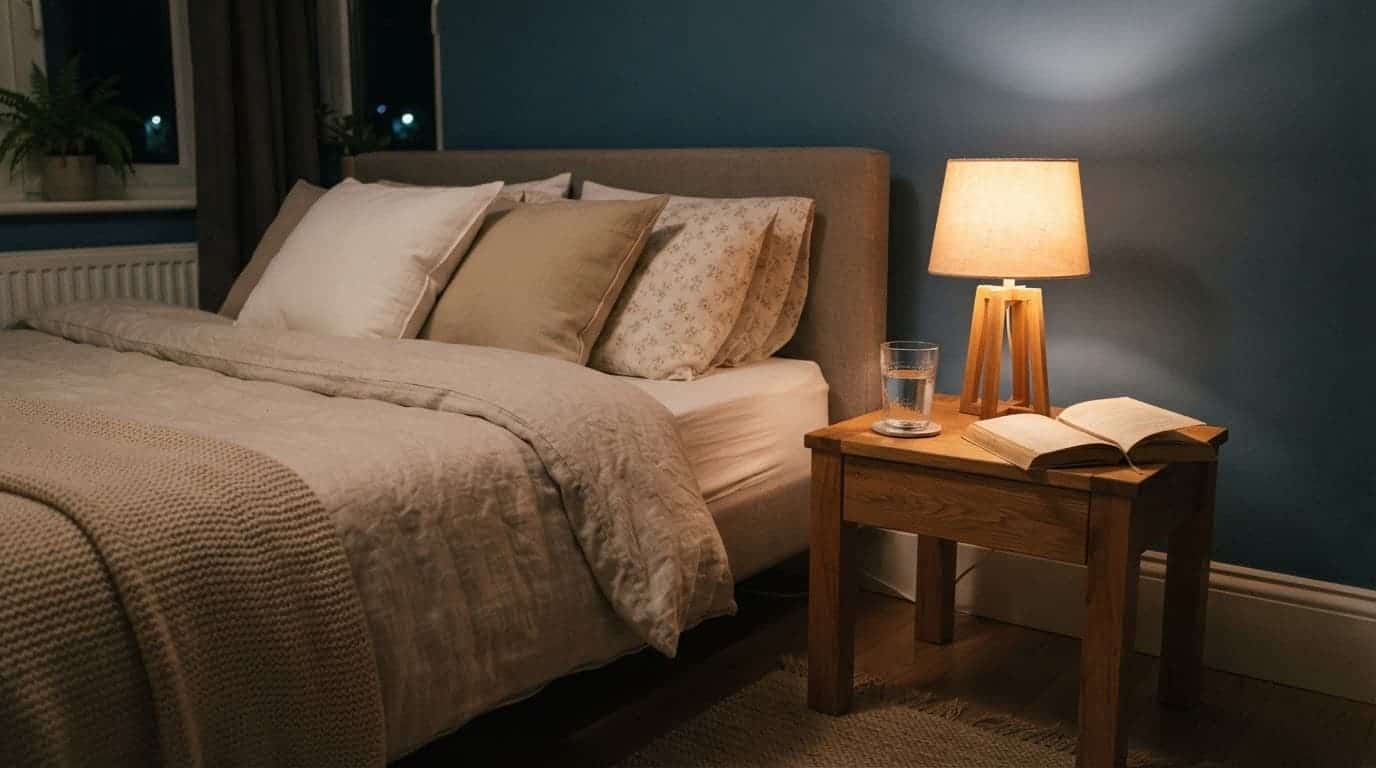
About 20 to 30 minutes before bed, lower the room lighting and put your phone out of reach if possible. Choose one quiet activity, such as reading a paper book, taking a warm shower, or listening to familiar low-key audio. As part of your daily practice, this quiet window builds a bridge toward better sleep quality. Then get into bed and begin your breathing rounds.
A clock can turn relaxation into performance. Turn it away from the bed so you aren’t calculating how few hours remain. In the same way, don’t keep checking your smartwatch for a sleep score while you practice. The goal is a quieter body, not instant proof that the exercise worked.
Try this simple sequence for one week:
- Dim lights and finish work or social media before getting into bed.
- Do four rounds of 4-7-8 breathing as a deliberate mindfulness exercise.
- If you remain awake, rest with natural breathing rather than repeating the exercise compulsively.
- Repeat at roughly the same time each night when your schedule allows.
Consistency teaches your brain to associate the routine with rest. Over time, applying this breathing technique transforms your evening habits. Furthermore, maintaining a steady daily practice supports lasting stress management and steady improvements in sleep quality. On the other hand, a night of poor sleep doesn’t mean the habit is useless. Sleep changes from night to night, and breathwork is only one part of the picture.
Common Mistakes That Make Breathing Feel Harder
The most common mistake is taking a huge breath. A forceful inhale during deep breathing can create chest tension or cause lightheadedness. Keep the breath gentle, as though you are filling only part of your lungs.
Another problem is treating the hold as a contest. You don’t need to lock your breath down. Hold it softly. If anxiety rises during breath-holding, reduce the count or skip the hold for now and use a slow inhale and longer exhale instead. When exploring various breathing exercises like box breathing or alternate nostril breathing for anxiety reduction, remember that the goal is simply calming the nervous system.
Some people also use the method only when they are already panicked about sleep. Practicing 4-7-8 breathing during the day, perhaps after lunch or before a shower, helps with anxiety reduction. Familiarity makes the rhythm less distracting at night and prevents the body from entering a fight or flight state.
A newer study reported improved overall sleep quality after participants trained with the technique. Still, its results don’t mean 4-7-8 breathing will resolve chronic insomnia by itself. The published study on breathing-exercise training and sleep quality supports using it as a non-drug self-care tool, alongside other healthy sleep habits.
Avoid forcing this practice if you have a respiratory condition that makes breath-holding difficult. Stop if you feel faint, short of breath, or uncomfortable. If insomnia lasts for months, affects daytime safety, or comes with low mood, panic, loud snoring, or gasping, speak with a healthcare professional.
Questions About 4-7-8 Breathing for Sleep
How many rounds should I do at bedtime?
Begin with four rounds. After a week or two, you can try more if they still feel comfortable. More isn’t automatically better, especially when you’re learning the pace and trying to fall asleep.
Can I do 4-7-8 breathing while lying down?
Yes. Lying down works well for many people because you can move straight into sleep afterward. If holding your breath feels harder on your back, sit upright for the first few rounds to support your stress management goals.
What if counting makes me more alert?
Use a softer structure. Breathe in for three, pause for three or four, then breathe out for five or six. The longer exhale matters more than hitting exact numbers, and this gentle pranayama practice can improve your overall stress relief.
Will it work if I wake up at 3 a.m.?
It can help you settle after a nighttime wake-up. Keep the room dark, avoid checking the time, and use only a few relaxed rounds. If you become more awake, return to normal breathing and rest.
How does this compare to box breathing or alternate nostril breathing?
While 4-7-8 breathing focuses heavily on a prolonged exhale to help you fall asleep, box breathing creates equal intervals for daytime mindfulness and stress management. Other yoga breathing methods, such as alternate nostril breathing, offer different benefits for daily stress relief rather than bedtime relaxation. Andrew Weil popularized the 4-7-8 technique specifically for sleep, distinguishing it from general breathing exercises meant for focus.
A Gentle Practice for Restless Nights
Building a daily practice of 4-7-8 breathing gives a busy mind a steady rhythm, helping to calm the mind and trigger a natural relaxation response so your body has permission to slow down. Over time, these small moments of intentional focus can lead to a noticeable improvement in your overall sleep quality.
Start with four comfortable rounds, keep the exhale unhurried, and let go of the need to fall asleep on command. A better night may begin with something as small as one slow breath followed by another.