
For people whose sleep is affected by seasonal allergies, insomnia during allergy season can improve when you reduce bedroom allergens, especially pollen carried indoors and dust mites in bedding. These changes can ease congestion and itching, although they won’t resolve every cause of sleeplessness.
If allergies at night leave you waking stuffy, sneezing, or with watery eyes, start with allergen exposure before adding another sleep supplement. A practical bedroom reset begins with your bedding and the air around your bed.
This post may contain affiliate links. If you make a purchase through these links, I may earn a small commission at no extra cost to you.
Key Takeaways
- Wash bedding weekly in water at least 130°F (54°C), and use fully enclosing allergen-proof covers.
- Keep pollen outside by closing windows, changing outdoor clothes, and showering before bed.
- Use a properly sized HEPA air purifier, keep pets outside the bedroom, and maintain 30% to 50% humidity.
- Seek medical advice for persistent insomnia, wheezing, or signs of sleep apnea, including gasping and loud snoring.
Why Allergies Disrupt Sleep at Night
Congestion becomes harder to ignore when you lie down
Allergic inflammation swells the lining of your nose. Nighttime allergies can become harder to ignore when you lie down. Changes in blood flow and reduced gravity-assisted drainage can worsen congestion and allow mucus to collect.
As a result, you may breathe through your mouth, wake with a dry throat, or cough because of postnasal drip. Sneezing, a runny nose, and watery eyes can interrupt both falling asleep and staying asleep.
Morning allergies, including a runny nose, can also reflect hours of exposure to allergens in your pillow or mattress. They don’t automatically mean pollen entered through the window overnight.
Histamine matters, but symptoms don’t establish a diagnosis
This chemical contributes to allergic itching and swelling. Allergic inflammation follows daily rhythms, so symptoms can become more troublesome overnight.
However, the claim that everyone has higher levels of it at night oversimplifies the biology. Brain histamine promotes wakefulness, and its activity normally falls during sleep.
Our guide to histamine and disrupted sleep discusses that connection. Waking itchy or congested deserves attention, but waking at 2 a.m. doesn’t diagnose an intolerance or a mast cell disorder.
Start With Bedding and Dust Mite Control
Wash the bedding you use every week
Dust mites live in mattresses, pillows, box springs, carpets, and upholstered furniture. Their waste and body fragments can trigger symptoms in people who are allergic to them.
For hot water bedding care, follow each item’s label. Wash sheets, pillowcases, and washable blankets weekly in water at least 130 degrees Fahrenheit (54°C). A 60°C cycle is a practical option when the care label permits it. Dry everything completely before remaking the bed.
Use the washing machine’s temperature setting rather than raising your household hot-water temperature, which can increase scalding risk. Choose bedding that tolerates regular washing.
Choose encasements rather than ordinary protectors
Allergy UK’s dust mite guidance recommends breathable barrier covers that completely enclose bedding.
These products do different jobs:
| Bedding option | Main purpose | Important limitation |
|---|---|---|
| Ordinary mattress protector | Protects against spills and wear | May not block mite allergens |
| Zippered allergen-proof encasement | Encloses a mattress, pillow, or box spring | Needs a secure zip and complete coverage |
| Washable sheets and pillowcases | Allow frequent allergen removal | Don’t replace an encasement |
Prioritize fully enclosing covers for your mattress, pillows, and box spring if you have one. A fitted sheet alone leaves much of the mattress exposed.
Expensive “hypoallergenic” bedding isn’t automatically necessary. Washability and an effective barrier matter more than marketing language.
Keep Pollen and Pet Dander Out of Bed
Pollen settles on your hair, skin, clothing, and shoes. After time outdoors, change clothes outside the bedroom and shower before bed. Washing your hair after substantial exposure can also reduce pollen transfer to your pillow.
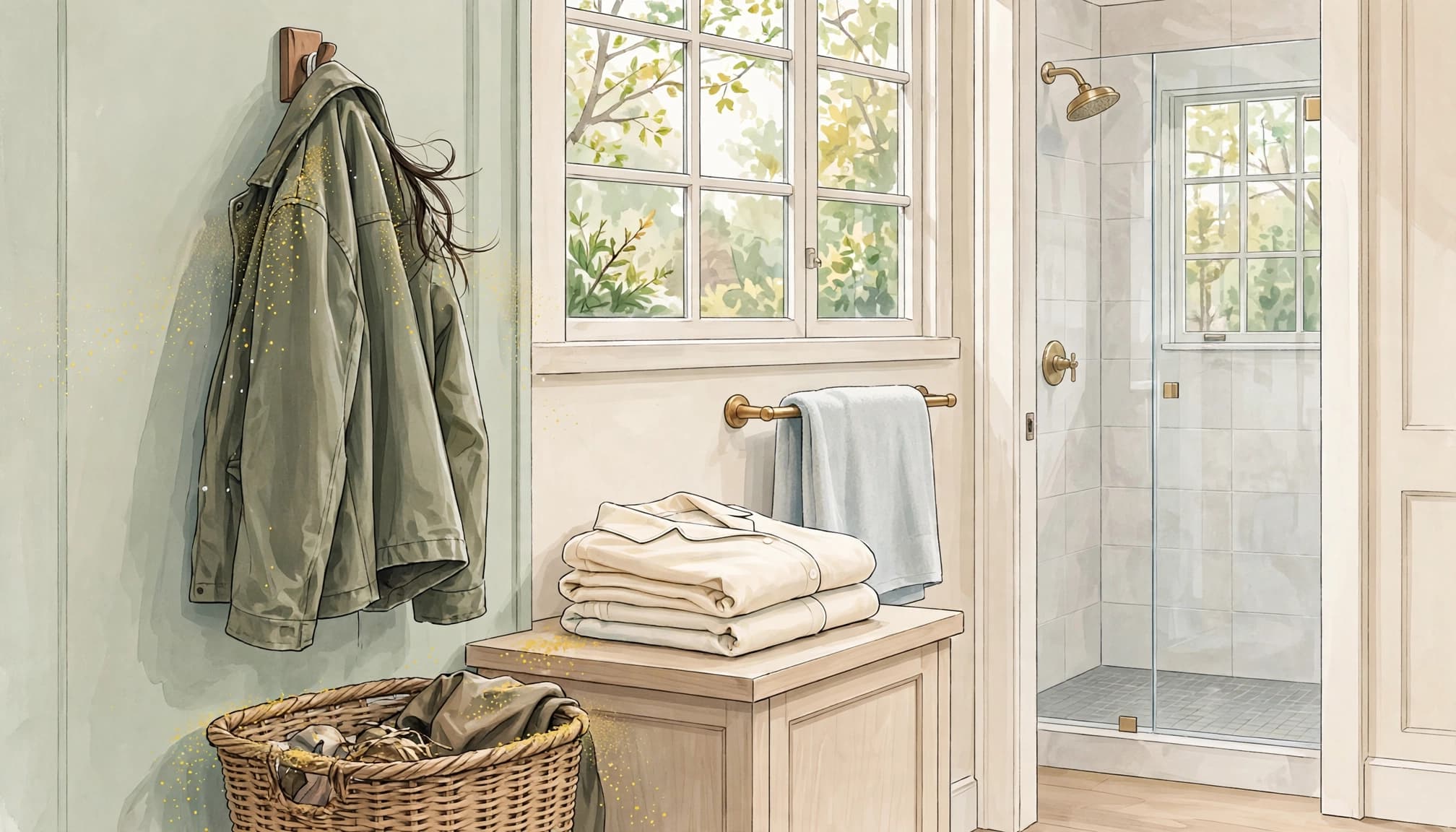
Keep bedroom windows closed during high-pollen periods, and avoid drying bedding outdoors when pollen is troublesome.
There isn’t one reliable “worst hour” everywhere. Some guidance emphasizes morning release; other guidance describes peaks around midday or early afternoon.
The AAAAI’s definition of pollen counts describes measurements as pollen grains or mold spores per cubic meter of air. Check local pollen counts because plant species, weather, and location affect the pattern.
If pet allergy is relevant, keep pets outside the bedroom throughout the day. Pet dander can travel through the air and on clothing, so removing the animal at bedtime won’t immediately remove the allergens.
Improve Filtration Without Making the Room Damp
Choose a HEPA purifier that fits the room
A HEPA air purifier can reduce airborne pollen, pet dander, and other particles. However, it won’t remove all allergens already embedded in bedding or carpets.
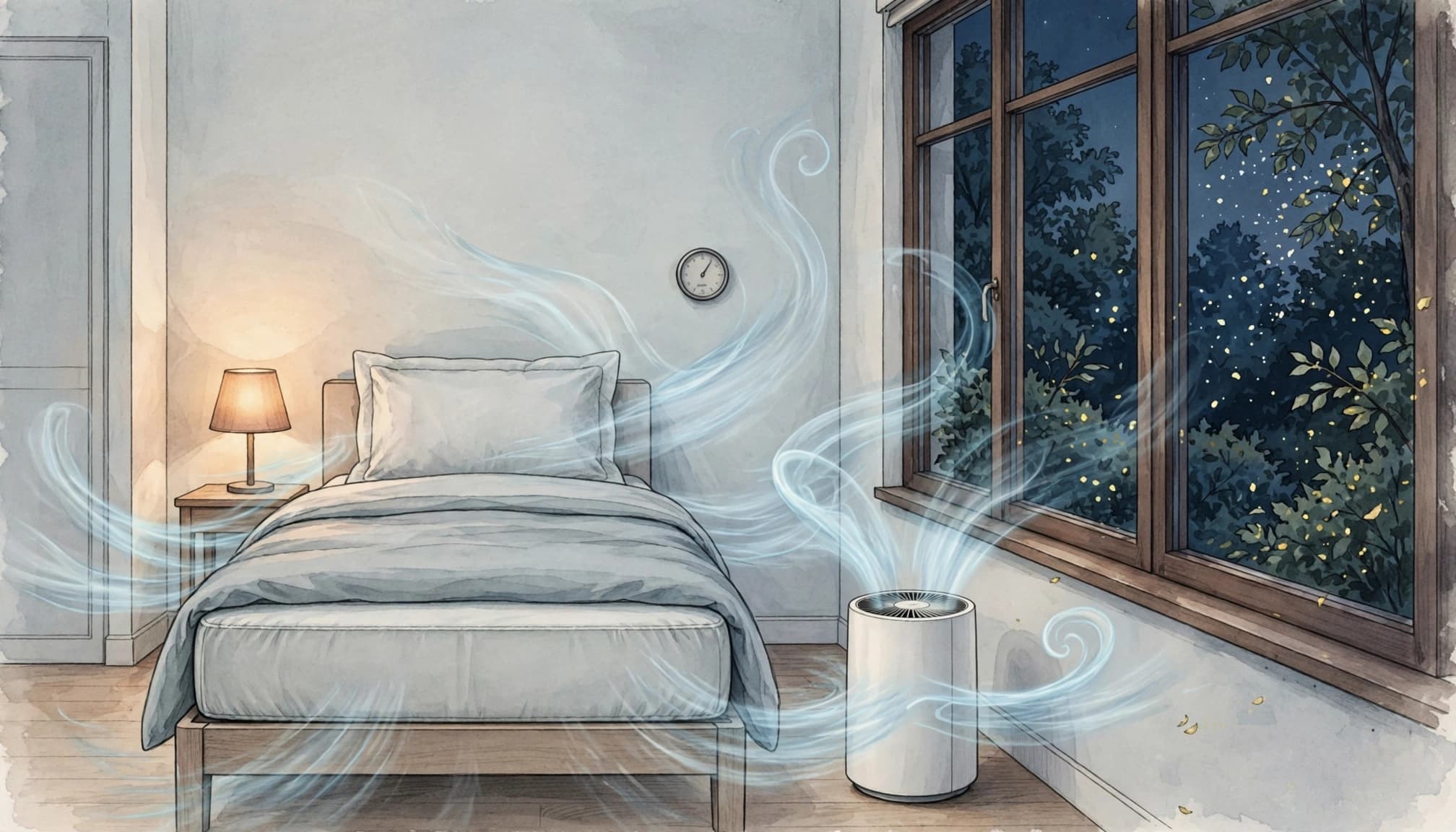
Choose a unit with a clean air delivery rate, or CADR, appropriate for your bedroom’s size. Also consider its noise level at the speed you’ll actually use overnight.
Run it consistently, keep airflow unobstructed, and replace filters according to the manufacturer’s schedule. Avoid ozone generators and switchable ozone-producing features.
An air purifier complements washing and cleaning. It can’t compensate for a pillow or carpet that keeps releasing allergens.
Measure humidity before adding moisture
Aim for 30% to 50% relative humidity. Excess moisture encourages dust mites and mold, so a humidifier can make an allergy bedroom worse.
Use a hygrometer near the bed, away from windows and heaters. If the room is already within range, a dry throat may reflect mouth breathing rather than dry air.
Carolina Asthma recommends keeping the bedroom below 70°F (about 21°C), alongside humidity control. Choose a comfortably cool setting rather than forcing yourself to feel cold. Our guide to bedroom temperature for sleep covers individual comfort differences.
Remove Settled Dust and Deal With Dampness
Damp-dust surfaces and vacuum regularly with a well-sealed HEPA-filter vacuum to help remove settled dust and pet dander. Keep clothing piles and unnecessary upholstered items away from the bed.
Cambridge University Hospitals’ dust mite advice recommends weekly vacuuming and damp dusting. If possible, someone without the allergy should vacuum because cleaning can temporarily disturb dust.
If you have mold allergies, address the moisture source first and avoid disturbing extensive mold growth. Look for leaks, recurring condensation, and dampness behind furniture.
Carolina Asthma describes a bleach dilution of roughly one cup per gallon of water, or detergent cleaning. Small mold patches on hard surfaces generally need detergent and water, followed by thorough drying. Bleach isn’t always necessary.
Never mix bleach with detergent, ammonia, or other cleaners. Wear gloves and provide ventilation whenever using cleaning products. Extensive, recurring mold or damaged porous materials need professional assessment rather than repeated surface scrubbing.
Build a Simple Non-Drug Evening Routine
Bedroom changes work best when you repeat them. Keep the routine manageable rather than turning bedtime into a cleaning project.
- After outdoor exposure, leave shoes and outdoor clothing outside the bedroom.
- Shower and change into clean sleepwear before settling down.
- Check local pollen counts after outdoor exposure, then close the window, run the purifier, and note the humidity reading.
- Finish with a quiet activity in low light instead of monitoring symptoms on your phone.
If nasal symptoms remain uncomfortable, a saline spray may help. For nasal irrigation, use only distilled, sterile, or previously boiled and cooled water, and clean the device after use.
Avoid fragranced sprays, incense, and essential-oil diffusers if they irritate your airways. “Natural” doesn’t mean allergy-friendly.
Our calming bedtime routine can support the wind-down period. In the morning, briefly record congestion, remembered awakenings, sleep quality, and daytime tiredness. Patterns over several nights are more informative than one unusually good night.
Recognize When Bedroom Changes Aren’t Enough
Allergy symptoms that occur only at night don’t prove an allergy. Reflux, nonallergic rhinitis, asthma, medication effects, and structural nasal blockage can cause similar problems.
Nasal allergies and obstructive sleep apnea can occur together. Seek assessment for loud snoring, witnessed breathing pauses, gasping, morning headaches, or persistent morning dry mouth or sore throat. Cleaning the bedroom doesn’t treat sleep apnea.
Talk with a clinician if sleep disruption lasts for weeks, affects daytime functioning, or comes with recurrent wheezing or hives. Allergy testing can help identify relevant triggers, but results need interpretation alongside your symptoms.
If insomnia continues after congestion improves, cognitive behavioral therapy for insomnia, or CBT-I, is an established non-drug treatment.
Sudden tongue or throat swelling, breathing difficulty, or faintness requires emergency care. Don’t treat those symptoms as ordinary seasonal allergies.
Frequently Asked Questions
Can allergies cause insomnia without daytime symptoms?
Yes. Allergies at night can be most noticeable in bed or after waking, so morning allergies may appear even without daytime symptoms. Persistent nighttime blockage also deserves assessment for nonallergic causes.
Should I take allergy medicine at night?
Albuquerque ER & Hospital suggests nighttime dosing may prevent some allergy medication from wearing off during sleep. Timing depends on the product and its duration of action.
Discuss changes with a pharmacist or clinician. Decongestants can cause sleeplessness, while sedating antihistamines aren’t a good long-term insomnia strategy.
Do I need a low-histamine diet or supplements?
Bedroom-related allergy symptoms don’t establish food-related histamine intolerance. Start with relevant environmental changes rather than broad food restrictions.
Alcohol can worsen sleep and nasal symptoms, so reducing evening drinking is reasonable. Supplements marketed as natural antihistamines have variable evidence and can interact with medicines.
Make the Bedroom Less Triggering, One Habit at a Time
For allergy season insomnia, the most useful starting point is consistent exposure reduction. Wash bedding, use enclosing covers, keep pollen outside, and control moisture without over-humidifying.
These changes can reduce nighttime irritation without adding another sleep aid. If breathing symptoms or insomnia persist, medical assessment can identify what bedroom changes alone can’t solve.