
Eczema can itch more at night because your skin loses moisture, hormone levels change, and warmth can worsen irritation. Fewer distractions also make the itch harder to ignore.
For atopic dermatitis, protecting your skin barrier and reducing overheating can help, although persistent inflammation may need medical treatment. A simple evening routine can ease nighttime itch by keeping skin moisturized without making your bed hot or damp.
This post may contain affiliate links. If you make a purchase through these links, I may earn a small commission at no extra cost to you.
Key Takeaways
- Nighttime water loss, changing hormones, and warm bedding can make eczema itchier after dark.
- Moisturize immediately after a brief, lukewarm bath and refresh dry areas before bed.
- Choose cotton sleepwear, keep the bedroom comfortably cool, and measure humidity before adding moisture.
- Repeated waking, broken skin, or infection symptoms deserve medical attention.
What drives eczema itching at night?
Your body clock changes inflammation and skin warmth
Your circadian rhythm affects more than sleepiness. Cortisol, one of the body’s natural anti-inflammatory corticosteroids, falls toward nighttime. Daily changes in inflammatory molecules can also increase itch.
Core body temperature normally falls as sleep approaches, while increased blood flow can warm the skin. That distinction explains why your skin may feel warm even as your body prepares for sleep. Heavy bedding can add uncomfortable heat.
Your skin loses more water overnight
In atopic dermatitis, the weakened skin barrier allows moisture to escape more easily. Skin also tends to lose more water overnight than during the day, which can leave eczema-prone areas drier and itchier.
Meanwhile, moisturizer applied in the morning may no longer provide enough protection by bedtime. Regular emollients help address this weakened skin barrier, so an evening application matters even after a relatively comfortable day.
Sweat and fewer distractions amplify the itch
Warm, humid evenings make sweat evaporate less readily. Sweat can sting inflamed skin, while repeated sweating and drying can leave it irritated.
Once you’re lying quietly, there are fewer competing sensations to draw attention away from itching. The sensation becomes harder to ignore, and scratching offers brief relief. However, scratching also damages the barrier and fuels the itch-scratch cycle.
Build a bedtime routine around bathing and moisturizing
A repeatable routine is easier to manage when you’re tired. The aim is to put water into the skin, then reduce its escape.
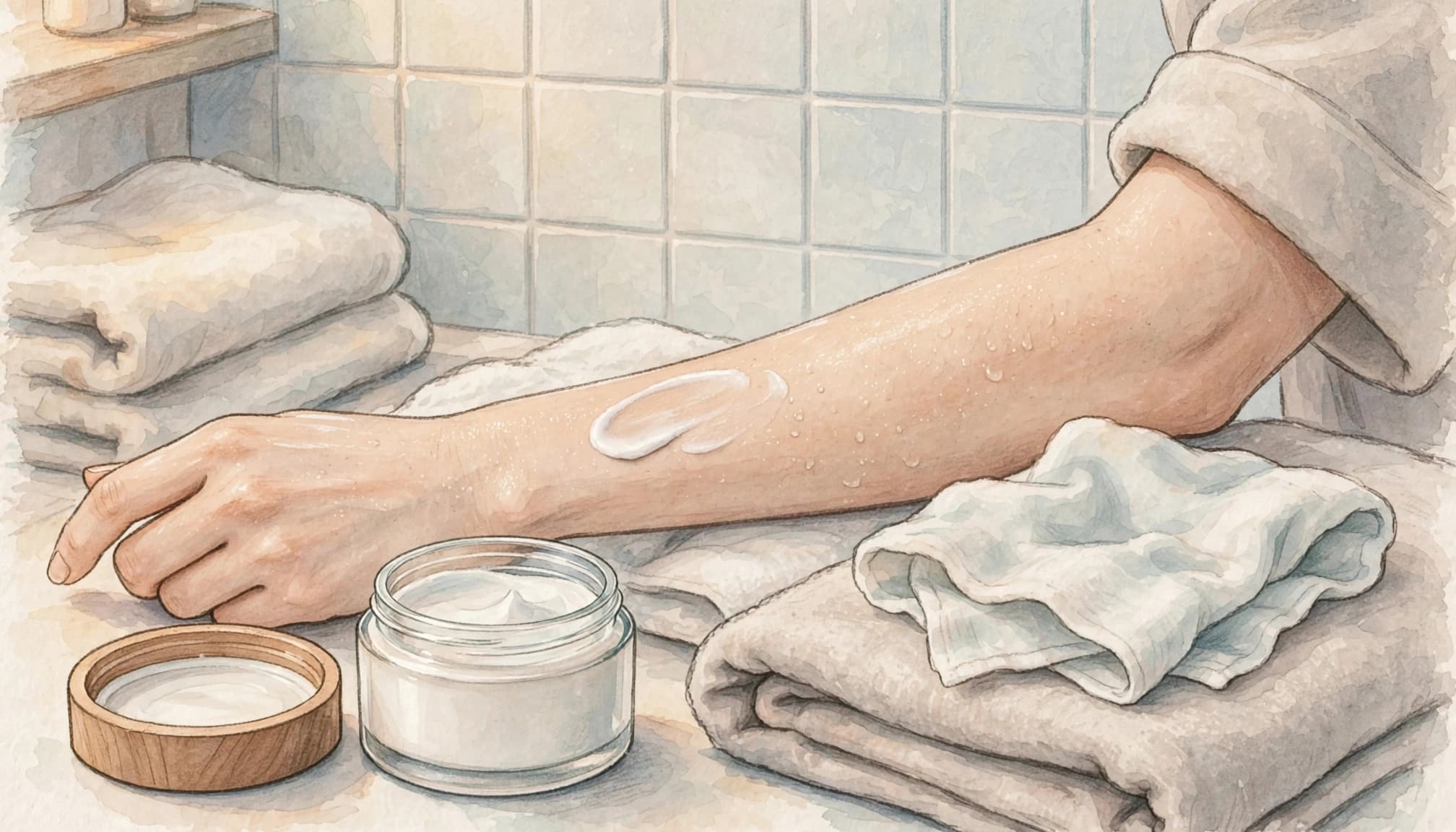
The National Eczema Association calls bathing followed by moisturizing the soak and seal method. Hot water and prolonged washing can worsen dryness, so use lukewarm water and keep the bath or shower brief.
- Use a gentle, fragrance-free cleanser only where needed. Avoid scrubbing itchy patches or trying to remove every loose flake. A fragrance-free colloidal oatmeal product may be an option if your skin tolerates it, but stop using it if it causes irritation.
- Pat lightly with a towel, leaving skin slightly damp. Apply a generous layer of fragrance-free cream or ointment before that moisture evaporates.
- Follow your existing eczema treatment plan. If you’ve been prescribed a flare treatment, use it as directed rather than replacing it with moisturizer alone.
- Moisturize before bed on any areas that feel dry again. Allow yourself time to settle without rushing straight into heavy nightwear.
A thick cream or ointment usually protects dry skin better than a thin lotion. However, the most useful option is one your skin tolerates and you’ll apply consistently.
Avoid introducing several new products during a flare. Otherwise, it becomes difficult to tell which ingredient helped or caused stinging.
Make your bedroom cooler without making it damp

Adjust bedding before chasing a thermostat number
Aim for a bedroom cool enough to prevent overheating, without making yourself feel cold. A thick duvet can trap heat against your skin even when the room feels cool.
Try a lighter cover before buying new equipment. If you share a bed, separate duvets let each person adjust warmth independently. Our guide to bedroom temperature for sleep covers these comfort differences.
For direct skin contact, choose loose, 100% cotton sleepwear and cotton bedding. Avoid wool and heat-trapping synthetic fabrics such as polyester if they provoke itching. Smooth seams and removable labels can also reduce rubbing.
Measure humidity before switching on a humidifier
Very dry air can worsen skin discomfort, but adding moisture to an already damp bedroom can encourage mold and dust mites.
Use a hygrometer near the bed, away from windows, radiators, and a humidifier’s outlet. Look for a pattern over several nights rather than reacting to one reading.
If the air is dry, a well-maintained humidifier may improve comfort. Clean it according to its instructions. If you notice condensation or musty smells, address ventilation and moisture sources instead of adding more humidity.
Change one thing at a time so you can judge whether it helps.
Protect itchy skin from overnight scratching
Reduce damage without blaming yourself
Unconscious scratching during sleep isn’t a failure of willpower. Trim fingernails and smooth their edges to reduce damage when it happens.
Adults can try clean cotton gloves at bedtime. They should fit comfortably without tight wrist bands. For children, choose age-appropriate sleepwear and discuss scratch protection with their clinician rather than improvising loose coverings.
Repeated scratching releases inflammatory substances and creates small breaks in the skin. Those openings can allow infection, which may make itching harder to control.
Gloves can reduce scratching damage, but continued waking usually means the itch itself needs better control.
Use wet wraps with an agreed treatment plan
Wet wrap therapy can help during difficult flares by keeping moisturized skin hydrated and shielding it from scratching.
After bathing and moisturizing, place a clean, damp cotton layer over the affected area, followed by a dry outer layer. It should feel comfortably damp, not dripping, and shouldn’t restrict movement or circulation.
The National Eczema Association’s wet-wrap instructions describe leaving dressings on for two hours or overnight. Overnight use should follow a clinician’s plan, especially for children.
Wraps increase medication absorption. Don’t cover steroid cream with wet wraps unless your clinician has directed you to do so. Avoid wrapping infected-looking skin without medical advice.
Break the cycle between itching and lost sleep
Sleep disruption is common. Medical News Today reports estimates affecting 33% to 90% of adults with eczema and up to 83% of children at times. Changead reports that around 90% of patients say their skin condition affects sleep. These figures describe different groups and measures, rather than one universal rate.
The relationship works both ways. Itch fragments sleep, while sleep loss can increase stress and inflammatory activity. Because of this, skin care and sleep habits need attention together.
A consistent wake time and quiet, dimly lit wind-down routine are sleep hygiene habits that support sleep but don’t treat an active eczema flare.
If itching wakes you, first address the discomfort. Remove an overheated layer or briefly apply a cool, damp cloth. Then return to a quiet activity rather than scrolling on your phone.
Our advice on falling asleep again after waking offers additional ways to settle once the immediate irritation eases.
Know when bedtime habits aren’t enough
Arrange a medical appointment if itching repeatedly interrupts sleep, affects daytime concentration, or continues despite consistent skin care. You don’t have to wait until the skin looks severe: sleep disruption is a meaningful symptom.
New or widespread itching without your usual eczema patches also deserves assessment. Nighttime timing alone doesn’t identify the cause.
Seek prompt medical advice for increasing pain, warmth, swelling, weeping, or yellow crusting. A rapidly worsening painful rash, fever, or clusters of blisters needs urgent medical attention.
Keep a short record of waking, itch severity, and changes to your routine. This can help a clinician understand the pattern without turning bedtime into a monitoring exercise.
Frequently asked questions
Can antihistamines stop eczema itching at night?
Antihistamines often don’t relieve eczema itch because histamine isn’t its only driver. Some cause drowsiness, which may help someone fall asleep without treating the inflammation.
They can also cause next-day sleepiness and interact with medicines. Ask a pharmacist or clinician before using them for sleep, especially for a child. Don’t combine sedating products with alcohol or other sleep medicines.
Is eczema contagious, including through shared bedding?
Eczema isn’t contagious and cannot pass from one person to another through touch or bedding.
However, scratched skin can become infected, so don’t share towels when infection is present. Wash bedding regularly using a detergent your skin tolerates, and dry it thoroughly before remaking the bed.
Should I follow the same routine for a child?
The basic principles are similar: brief lukewarm bathing, prompt moisturizing, breathable clothing, and avoiding overheating. Children with repeated sleep disruption need their eczema treatment reviewed.
However, don’t automatically copy adult measures. Wet wraps and medicines need age-appropriate advice. Babies also need a clear, safe sleep space, so don’t add loose gloves, wraps, pillows, or blankets as improvised itch treatments.
Start with moisture protection and less heat
Eczema itching at night often reflects a combination of water loss, changing inflammation, and warmth against sensitive skin. A consistent bathing-and-moisturizing routine, lighter cotton layers, and a comfortable bedroom can reduce avoidable irritation.
Start with one manageable change tonight. If itching keeps waking you, seek help with eczema control rather than relying on sleep habits alone.