
Imagery rehearsal therapy is a non-drug treatment that involves rewriting a nightmare while awake, then mentally practising the revised version. It aims to reduce nightmare frequency and distress, so sleep feels less threatening.
If distressing nightmares leave you afraid of bedtime, this offers a structured approach beyond general relaxation. The starting point is a manageable change to the dream, rather than forcing yourself through its most frightening details.
This post may contain affiliate links. If you make a purchase through these links, I may earn a small commission at no extra cost to you.
Key Takeaways
- Imagery rehearsal therapy targets recurring nightmares, including those associated with PTSD, through rescripting and daytime practice.
- Daily rehearsal often takes 10-20 minutes, although timing and treatment length vary.
- Trauma-related distress, dissociation or worsening symptoms are reasons to work with a qualified therapist.
- Research supports IRT, although improvement varies and nightmares may not disappear completely.
What Imagery Rehearsal Therapy Changes
IRT is a form of cognitive-behavioural therapy. You create a less distressing script for a recurring dream, then repeatedly imagine it while awake. This imagery rescripting may increase your sense of control and reduce a threatening response to nightmare imagery.

Why nightmares deserve attention
Some estimates put troublesome nightmares at around 8% of the general population. They are particularly common after a traumatic event. More than 70% of Oklahoma City bombing survivors reported sleep disturbances six months afterwards.
In Harvey and Bryant’s observational research, 33% of people reporting nightmares one month after trauma had PTSD six months later. The figure was 72% among those reporting sleep disturbances. These findings describe associations within a study, not your personal likelihood of developing PTSD.
A clinician can assess persistent, distressing symptoms against the criteria for nightmare disorder.
How IRT differs from relaxation
Our guided imagery for sleep routine directs attention towards calming sensory details. IRT has a narrower purpose: changing a recurring nightmare’s content and rehearsing the replacement.
Meanwhile, cognitive behavioural therapy for insomnia, or CBT-I, addresses persistent difficulty falling or staying asleep. It targets sleep habits, beliefs and the association between bed and wakefulness. Someone with nightmares and insomnia may need both approaches.
The Six Steps of Nightmare Rescripting
Treatment protocols vary, but this sequence captures the usual process. For trauma-related nightmares, work through it with a trained practitioner rather than treating it as an exposure exercise.
- Choose one nightmare. Select a recurring or frequent dream. Although some programmes begin with the most distressing nightmare, a less frightening one can help you learn the method without becoming overwhelmed.
- Describe the original dream. Write its setting, sequence and emotions in enough detail to recognise the pattern. You don’t need to recover missing memories or produce an exhaustive, graphic account.
- Change the script. Alter whatever makes the dream distressing. You can change the ending, introduce help, remove a threat or give yourself more choice. The replacement doesn’t need to obey real-world rules.
- Write the revised version. Make this the account you will practise. Focus on a version that feels acceptable and less threatening, rather than one you think ought to feel positive.
- Rehearse while awake. Imagine the revised dream for around 10 to 20 minutes daily, as tolerated. Protocols differ: some favour practice before sleep, while others avoid immediately before bed. Earlier practice is sensible if imagery makes you alert.
- Track change without constant monitoring. Briefly note nightmare nights, distress and daytime functioning. Review the pattern over several weeks with your therapist. Avoid repeatedly checking during the night whether treatment is working.
Changing the Dream Without Increasing Distress
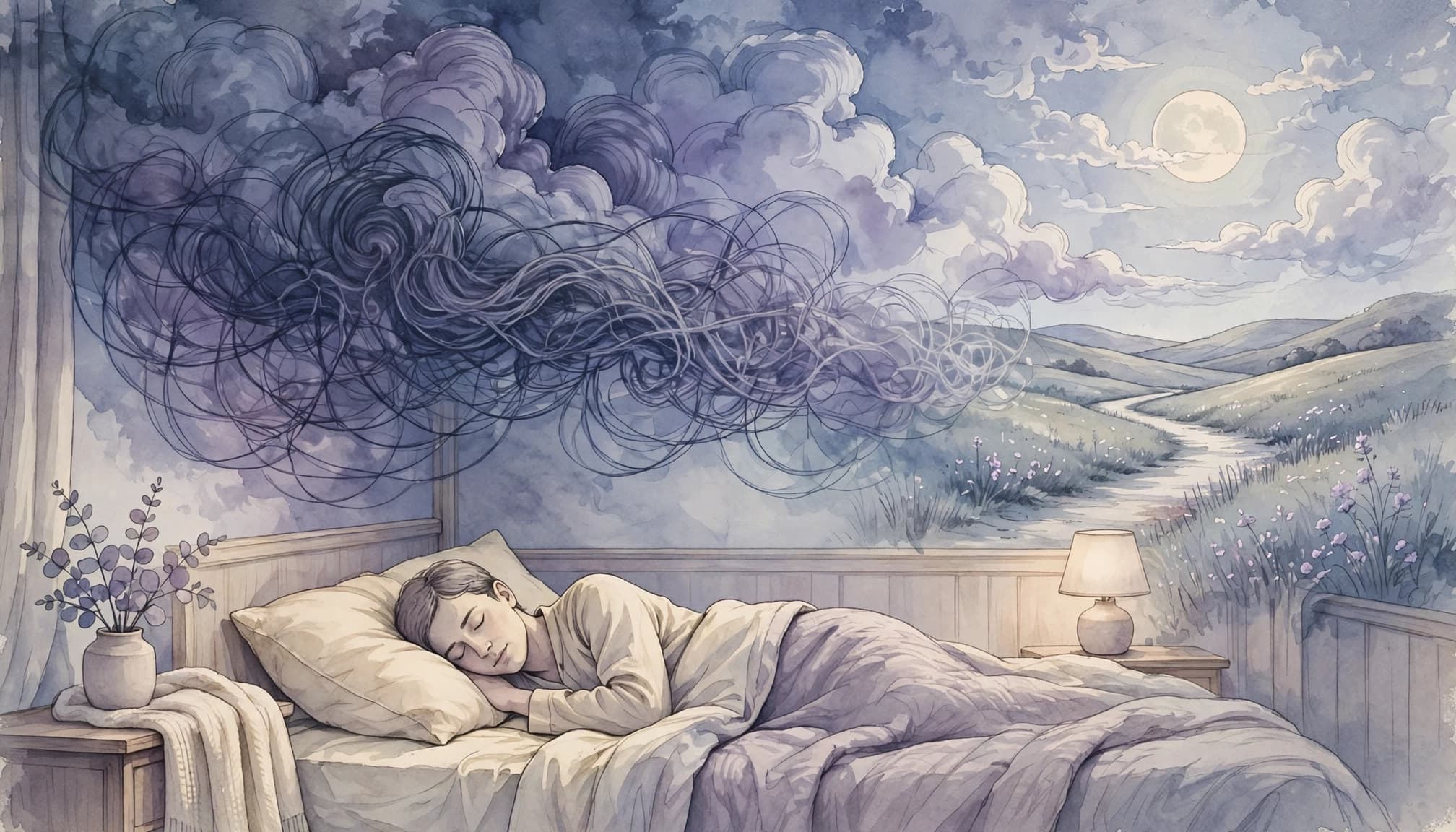
There are several ways to rescript
You don’t have to invent a cheerful ending. In Harb and colleagues’ research, 58% of participants created alternative endings, while 23% added positive images without changing the ending.
Other approaches included transforming threatening elements into less distressing images (13%), inserting reminders that they were dreaming (10%), and using distancing techniques (8%). Participants could use more than one approach, so these percentages aren’t mutually exclusive.
The practical point is flexibility. A believable sense of safety or distance may feel more workable than a dramatic victory.
Stop if practice becomes overwhelming
If writing triggers panic, flashbacks, numbness or a feeling of being disconnected from your surroundings, pause. Open your eyes, place your feet on the floor and notice the room around you.
Don’t push through distress to finish the exercise. A therapist can reduce the amount of nightmare detail, begin with neutral imagery or change the pace.
Daily practice means rehearsing the revised dream. Repeatedly replaying the frightening original is not the goal of standard IRT.
Faint or absent mental images aren’t a failure. Tell your practitioner if words, sounds or physical sensations work better for you.
What the Research Says About IRT
The recommendation needs its date attached
The American Academy of Sleep Medicine (AASM) gave IRT a Level A recommendation in its 2010 best-practice guide. Its 2018 nightmare treatment position paper reaffirmed IRT as a recommended treatment for nightmare disorder and PTSD-associated nightmares.
The 2018 document used position statements rather than Level A grading. IRT is an established psychological treatment option, and it can be considered a first-line psychotherapy for appropriate cases. Describing the 2018 recommendation itself as “Level A” mixes two different documents.
Trials support benefits, with limits
Krakow’s 2001 JAMA trial studied chronic nightmares following sexual assault. It randomised 168 women with PTSD and chronic nightmares to IRT or a wait-list control. Results favoured IRT for nightmares and PTSD symptoms. Krakow’s trial reported medium-sized effects around Cohen’s d = 0.60.
Belleville and colleagues studied 42 adult women with histories of sexual abuse and PTSD. One group received five weekly IRT sessions followed by 15 CBT sessions; the comparison group received CBT alone. Adding IRT led to greater improvements in sleep quality and nightmare frequency.
A wait-list comparison doesn’t show whether IRT outperforms another active treatment. Krakow’s wait-list comparison has this limitation, and small trials provide less certainty about who benefits most.
Variants, Medication Comparisons and Lasting Benefits
IRET adds relaxation methods, including progressive muscle relaxation. ERRT, or exposure, relaxation and rescripting therapy, also includes structured nightmare exposure. These related treatments aren’t identical to standard IRT.
Long and colleagues used six IRET sessions with 37 US war veterans who had PTSD and chronic nightmares. Among 33 completers, 90.9% reported general, moderate improvement in sleep disturbance. Also, 30.3% increased their sleep to at least six hours nightly. Completer results don’t establish the same benefit for everyone starting treatment.
A 2015 comparative meta-analysis found broadly comparable short-term effects for IRT and prazosin, a prescription medicine used for PTSD nightmares. Later prazosin trials produced mixed findings; medication decisions belong with a prescriber.
A 2023 systematic review supported imagery-rehearsal and exposure-based treatments, while highlighting limitations in study quality. Some trials found benefits at three- or six-month follow-up, but permanent relief isn’t established.
Use follow-up checks to track sleep quality, nightmare frequency, distress and daily functioning. Better sleep doesn’t always mean that every nightmare has stopped.
Finding Treatment in the UK
What a course can involve
IRT isn’t a routine NHS primary-care treatment. Access may involve clinical psychologists within secondary mental health, trauma or specialist sleep services.
University College London Hospitals offers a defined programme: five one-hour sessions on consecutive weeks, followed by a three-month follow-up. It requires attendance throughout and questionnaires before and after treatment. The service requests 48 hours’ notice for cancellations.
Other services use different schedules, so this isn’t a universal IRT timetable.
Choosing appropriate support
Look for an HCPC-registered clinical psychologist or another appropriately registered mental health practitioner with training in nightmare rescripting and relevant trauma experience. Ask about their IRT training, how they manage distress, whether they also treat insomnia, and whether the programme includes psychoeducation about nightmare patterns and rescripting.
A low-pressure bedtime routine can support treatment, but it doesn’t replace nightmare-focused care or CBT-I when needed.
UCLH’s programme isn’t an emergency service. If your risk escalates, contact your GP for an urgent appointment, attend A&E or call Samaritans on 116 123. Seek immediate emergency help if you cannot keep yourself safe.
Frequently Asked Questions
Can I try imagery rehearsal therapy on my own?
Some people with milder, non-traumatic nightmares use self-guided rescripting. Severe distress, PTSD, dissociation, worsening symptoms, or persistent, impairing symptoms warrant clinician support and assessment for nightmare disorder. Don’t begin with your most traumatic dream simply because it seems the most important.
What could cause nightmares every night?
Possible contributors include stress, PTSD, medicines, substance use or withdrawal, and disrupted sleep. Loud snoring, gasping, dream-enactment movements or injuries warrant medical assessment. Nightmares alone don’t establish a PTSD diagnosis, and medication changes should involve your prescriber.
Does EMDR help PTSD nightmares?
EMDR is an established PTSD treatment and may improve nightmares as PTSD symptoms improve. IRT directly targets the recurring dream. A trauma clinician can help decide whether nightmare-focused treatment, broader PTSD therapy or both suit your needs.
Should I stop alcohol or other substances during treatment?
UCLH asks participants to avoid alcohol and substances during its course. Discuss use openly with your clinician because intoxication and withdrawal can disrupt sleep and treatment. If you may be dependent on alcohol or sedatives, don’t stop suddenly without medical support; withdrawal can be dangerous.
A More Manageable Approach to Nightmares
Imagery rehearsal therapy offers a structured, non-prescription approach to recurring nightmares. Its central skill is practising a revised dream while awake, at a level of distress you can manage.
Appropriate support matters, especially when trauma is involved. Progress can include less fear of bedtime and better daytime functioning, even before nightmare frequency changes.