
When bedtime feels like a test you keep failing, your body starts to brace for it. That tension can keep yoga nidra for insomnia from sounding believable at first, because lying still with your thoughts may seem like the last thing you need.
Yet this practice, often referred to as yogic sleep, is less about doing sleep right and more about easing the alarm state that keeps deep sleep out of reach. If your nights feel wired, tense, or frustrating, using this meditation for sleep can give your mind and body a softer landing.
Key Takeaways
- Yoga nidra is a guided meditation practice you do lying down, usually for 10 to 30 minutes.
- It helps improve sleep quality by lowering physical tension and reducing the internal pressure to fall asleep.
- A body scan is a common component of these sessions, which helps shift your focus away from racing thoughts and toward physical relaxation.
- You do not need yoga experience, physical flexibility, or special gear to start.
- A short guided track, a dark room, and a comfortable setup are all you need for your first session.
- If insomnia is frequent or long-lasting, yoga nidra is a great tool, but CBT-I and professional medical care may still be necessary for long-term relief.
What Yoga Nidra Is, and Why It Helps With Insomnia
Yoga nidra is a guided practice done in a resting position, often on your back. A teacher’s voice leads your attention through the body, the breath, sounds in the room, and sometimes simple imagery or a sankalpa, which is a personal intention or resolve. You stay in a subtle space between conscious awareness and unconscious sleep.
That in-between state matters because insomnia often feeds on effort. The more you push for sleep, the more alert you become. Your body reads bedtime as a problem to solve, so your heart rate, breathing, and thoughts stay a little too active. Yoga nidra interrupts this cycle by engaging the parasympathetic nervous system, which helps your body shift out of a state of high alert.
Instead of demanding unconsciousness, the practice asks for gentle attention. This shift triggers a relaxation response that lowers performance pressure, which is often half the battle. Many people also like that it feels more structured than lying in the dark hoping for the best. A body scan gives the mind something light to follow. Meanwhile, slow breathing and stillness can reduce muscle tension in the jaw, shoulders, belly, and hands, helping the body prepare for deep sleep by releasing the areas where many poor sleepers hold tension without noticing.
Research on yoga nidra and sleep is still growing, and results vary. Still, small studies and clinical use suggest it may improve relaxation, stress, and sleep quality for some people. That does not make it a cure. It makes it a useful bedtime tool, especially if your insomnia has a strong stress or rumination component.
You also do not have to stay awake for it to count. If you drift off midway, the practice still did its job.
The goal is to reduce struggle, because a calmer nervous system gives sleep a better chance to show up.
Getting Started With Yoga Nidra at Bedtime
Your setup matters, but it doesn’t need to be fancy. Most beginners do best with a 10 to 20 minute guided track, low lighting, and enough support under the body to stay still without strain. Creating a comfortable space is a simple way to help you fall asleep faster.
If your bed has become a place of frustration, try the floor, a rug, or a yoga mat beside the bed. Lie down in shavasana, or corpse pose, which is a neutral position on your back. Add a pillow under your head, another under your knees for support, and a blanket. Warmth helps, because your body can cool down fast when you become still.
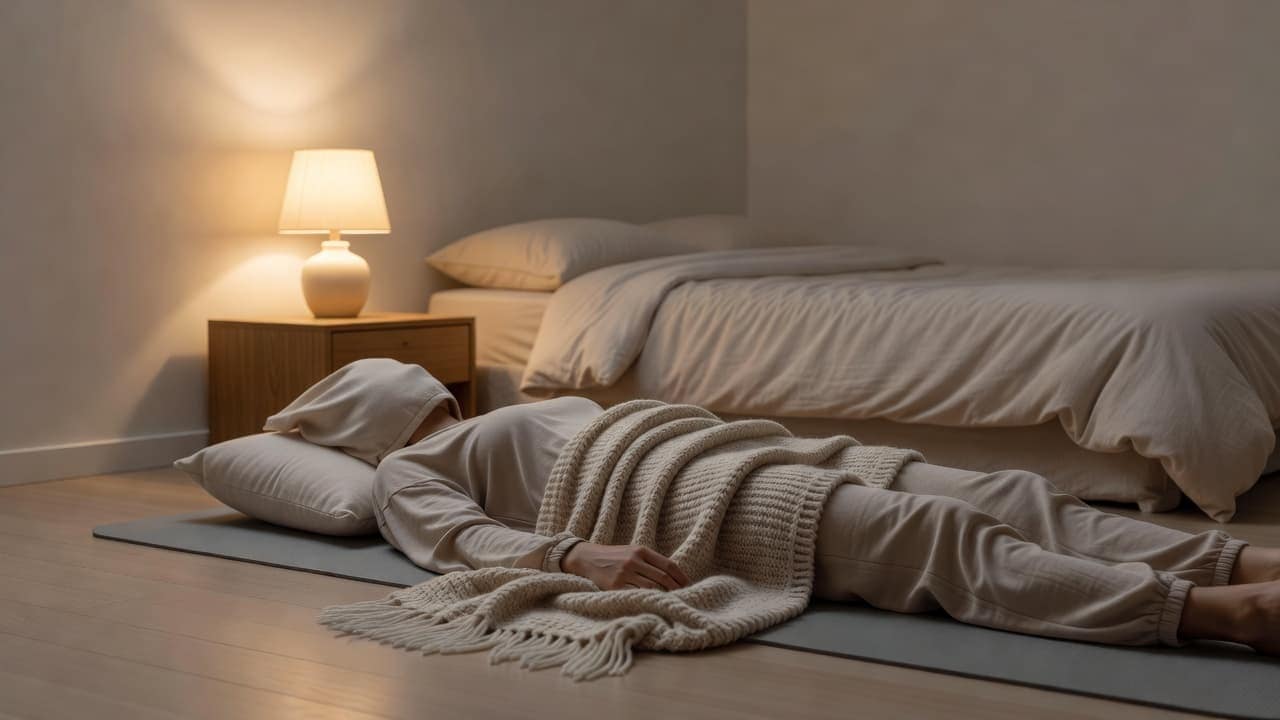
Choose audio that feels steady and neutral. Apps like Insight Timer and Calm both carry yoga nidra tracks, and YouTube has plenty of free options. You can also search for non-sleep deep rest, often abbreviated as NSDR, which shares many techniques with traditional yoga nidra.
A few simple steps make the first session smoother:
- Dim the lights 30 to 60 minutes before bed, and silence notifications.
- Settle into a position you can hold comfortably for at least 10 minutes.
- Start a short guided track, preferably with a voice you find calming.
- Follow the cues to build sensory awareness, focusing on the rhythm of breath as you move through various breathing exercises.
- If your mind wanders, return to the voice without judging yourself.
- Let drowsiness happen if it comes. If it does not, simply keep resting.
- When the track ends, stay still for a moment. If you are sleepy, go to bed or remain there. If you are wide awake and irritated, leave the bed and do something quiet in low light.
A few details are easy to miss. Use an eye mask if light bothers you. Keep the room cool but not chilly. Wear socks if your feet get cold. If headphones annoy you, play the audio softly through a speaker instead.
Above all, keep your first few sessions short. A 12-minute practice is often better than a 35-minute one that makes you restless.
Common Problems Beginners Run Into
The first surprise for many people is how busy the mind stays. Thoughts may jump from tomorrow’s meeting to an old conversation to whether you are doing it wrong. That is perfectly normal. Yoga nidra does not require a blank mind; it asks you to maintain conscious awareness, noticing where your attention drifts before gently bringing it back. As your brain waves shift from active beta patterns to slower, more relaxed states, it is common for the mind to process lingering thoughts.
Another common issue is falling into a state of unconscious sleep almost instantly. That is not a failure of your practice. It usually means your body is catching up on much-needed rest and responding to the chance to lower its guard. If you want to stay a little more aware throughout the session, try practicing slightly earlier in the evening or resting with your knees bent to keep your body alert.
Some people feel annoyed by the teacher’s voice, while others dislike long pauses. Do not force yourself to endure a style that grates on you. Switch tracks, as a different pacing, accent, or tone can change the whole experience.
Physical discomfort also gets in the way. Low back pressure, shoulder tension, or numb hands can pull you right out of the practice. Use more props, or try a side-lying position with a pillow between the knees. Remember that your comfort matters more than looking like a textbook pose.
There is also the emotional side of the practice. When the room gets quiet, some people notice their feelings more clearly. While this can be a tool for anxiety reduction and general mental health support, it can occasionally feel overwhelming. If that happens, keep your eyes slightly open, shorten the session, or choose a simpler breath-based practice. People with a trauma history may prefer teachers trained in trauma-sensitive methods, including iRest.
The bottom line stays the same: easy is better than perfect. A workable practice beats an ideal one you choose to avoid.
When You Need More Than Yoga Nidra
Yoga nidra can certainly improve your sleep quality, yet it cannot fix every cause of insomnia. If you have experienced trouble sleeping at least three nights a week for three months, it is important to talk with a clinician. Chronic insomnia often requires a more comprehensive treatment plan.
CBT-I, which stands for cognitive behavioral therapy for insomnia, is the first-line treatment for chronic insomnia. It addresses the specific habits and thought patterns that sustain sleep problems. Yoga nidra fits well alongside this therapy because it offers stress reduction and can make the process of falling asleep feel less intense.
It is also wise to investigate other potential sleep disruptors. Conditions such as loud snoring, gasping, restless legs, acid reflux, chronic pain, late alcohol use, or the side effects of certain medications can keep you awake. In these cases, guided relaxation may soothe your nervous system, but it may not trigger the necessary slow wave sleep or deep sleep if physiological issues like sleep apnea are present.
If you are unsure what is driving your persistent sleeplessness, keep a simple sleep diary for one to two weeks. Tracking your bedtime, wake time, caffeine intake, naps, and middle of the night wake ups can reveal patterns very quickly.
A Gentler Way to Meet the Night
Insomnia often intensifies when you actively fight against it. Yoga nidra helps by lowering that internal resistance, ensuring that bedtime feels less like a high-pressure performance and more like a natural transition into rest.
Start small, keep your environment comfortable, and utilize a short guided meditation track for at least a week to establish a routine. The best sign of progress is not necessarily perfect sleep on the very first night. Instead, look for a quieter body, a softer mind, and a noticeable reduction in the fear surrounding wakefulness. By focusing on consistent stress reduction and the steady rhythm of breath, you can effectively soothe your nervous system. Embracing this practice serves as a reliable pathway toward the restorative deep sleep your body craves.
FAQ: Yoga Nidra for Insomnia
Can yoga nidra replace sleep medication?
Sometimes this meditation for sleep helps people rely less on medication, but it should not replace a prescribed drug on your own. If you take sleep medication regularly, talk with your prescriber before making changes. Yoga nidra works best as a support, not a sudden substitute.
Is it okay if I fall asleep during yoga nidra?
Yes. Many people do, especially at bedtime. Falling asleep does not mean you failed. It usually means your body felt safe enough to let go.
Should I practice in bed or on the floor?
Use whichever place feels calmer. If your bed is linked with frustration or long wakeful nights, the floor or a mat beside the bed may work better because it shifts your sensory awareness to a new environment. If bed still feels comforting, stay there.
How long does yoga nidra take to help insomnia?
Some people feel calmer the first night. To help you fall asleep faster, your nervous system needs repetition. Try it at least four to six nights a week for two weeks to begin achieving the benefits of deep sleep before judging whether it helps.