
Jerking awake as you drift off is usually a hypnic jerk, a brief, involuntary muscle twitch during the transition into sleep. Hypnic jerks are common and usually harmless, even when they come with a startling falling sensation.
If they keep interrupting your night, reducing stimulants and sleep deprivation is a sensible starting point. First, it helps to recognise a typical sleep start and understand which patterns need medical attention.
This post may contain affiliate links. If you make a purchase through these links, I may earn a small commission at no extra cost to you.
Key Takeaways
- Hypnic jerks usually happen as you fall asleep and rarely need treatment.
- Stress, insufficient sleep, caffeine, nicotine and vigorous late exercise can make them more frequent.
- A steady wake time, earlier caffeine cutoff and gentle wind-down may help. Repeated movements throughout sleep, daytime jerking or other unusual symptoms need assessment.
What Hypnic Jerks Feel Like
A hypnic jerk, also called a sleep start or hypnagogic jerk, is a brief, involuntary muscle contraction, a form of myoclonus sometimes called sleep myoclonus that occurs at sleep onset.
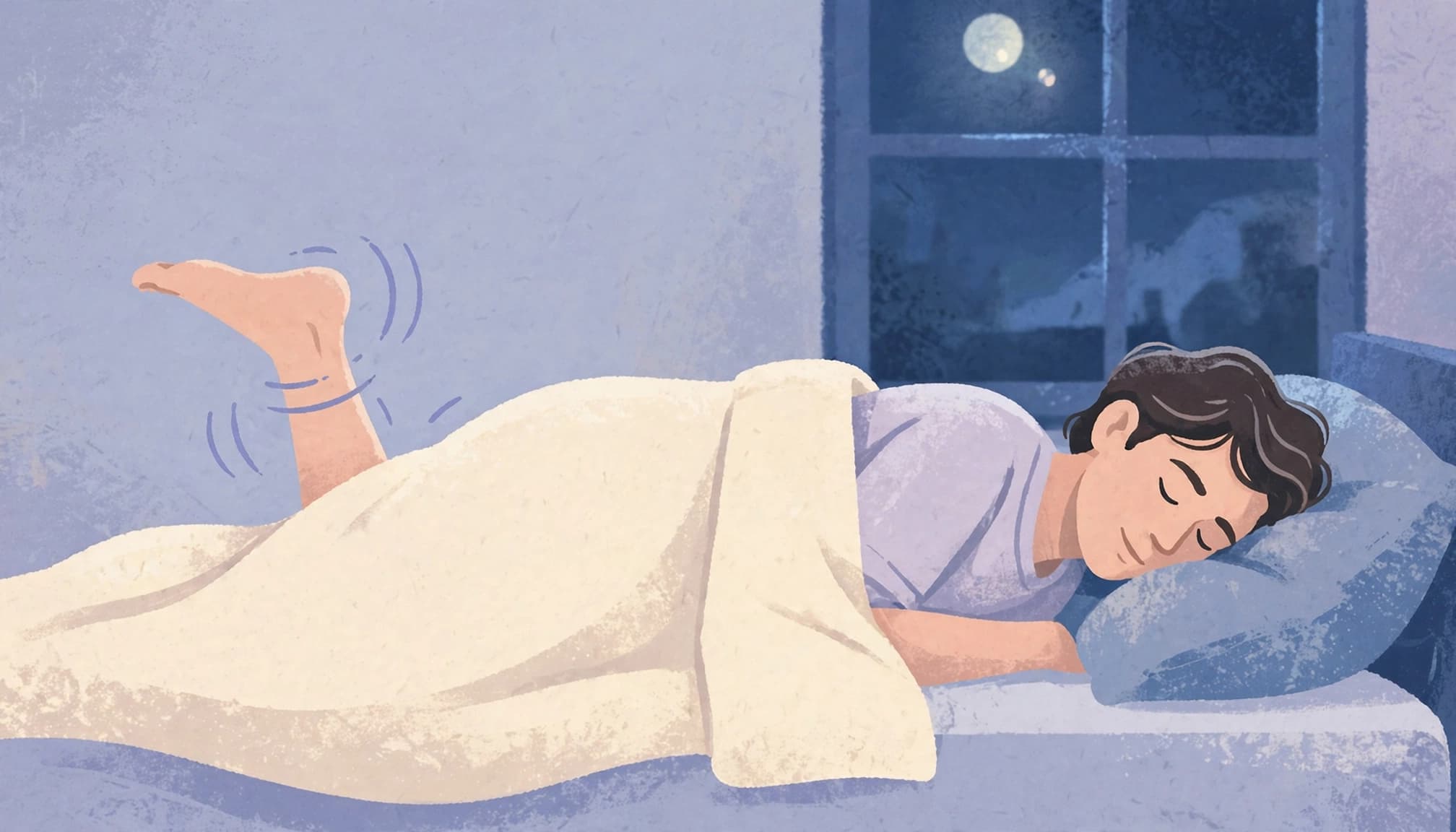
The jolt and falling sensation
You might feel one leg kick, an arm twitch or your whole body jump just as you lose awareness. Some people describe dropping through space or falling into a void.
The surprise can bring a racing heartbeat, faster breathing and sweating. Although alarming, this brief startle response can accompany an ordinary sleep start.
Mayo Clinic includes sleep starts among normal forms of myoclonus that rarely need treatment.
How common they are
Estimates suggest around 70% of people experience hypnic jerks. However, daily-frequency figures need context: one clinical review of hypnic jerks reports daily symptoms in about 10% of those affected, rather than 10% of everyone.
The second International Classification of Sleep Disorders grouped them with isolated symptoms, apparently normal variants and unresolved issues. An occasional sleep-start twitch generally fits within normal sleep physiology.
Why Sleep Starts Happen More Often
Researchers haven’t established one complete explanation. One theory involves brief motor signals, possibly from the reticular brainstem, during the change between wakefulness and sleep.
The familiar explanation that your brain mistakes muscle relaxation for falling remains a theory.
Stress, fatigue and stimulants
Stress and anxiety can leave you alert when you want to settle. Fatigue, sleep deprivation and irregular sleep schedules can also make sleep starts more noticeable or frequent.
Caffeine and nicotine are named triggers. Coffee, tea, energy drinks and pre-workout products all count towards caffeine intake. Cigarettes, vapes and nicotine pouches can also add stimulation.
Vigorous evening exercise bothers some sleepers, particularly when they finish close to bedtime. However, this isn’t a reason to stop regular physical activity.
Medicines can play a part
Antidepressants, which may be prescribed for major depressive disorder, are another possible contributor. Reports have described sleep starts after starting or increasing selective serotonin reuptake inhibitors, including escitalopram and sertraline.
A case series involving SSRIs describes this association, but it doesn’t mean everyone taking these medicines develops jerks.
If the timing fits a medication change, speak with your prescriber. Don’t stop an antidepressant abruptly or change its dose yourself.
A Natural Plan to Reduce Hypnic Jerks
Start with habits that reduce stimulation and protect sleep. These approaches may lower the frequency of sleep starts, although no routine guarantees they’ll disappear.
Move caffeine earlier
Sleep Foundation recommends limiting daily intake to about 400 milligrams and stopping about eight hours before bed. Treat 400 milligrams as an upper limit for many healthy adults, rather than a sleep-friendly target.
If bedtime is 10 p.m., an eight-hour cutoff means finishing by 2 p.m. Sensitive sleepers may need less or an earlier cutoff.
Research on dose and timing supports taking both seriously: a large dose can affect sleep long after consumption. Our guide to finding your caffeine cutoff helps you translate that into a daily schedule.
If you drink substantial amounts, reduce gradually to limit withdrawal headaches.
Protect your sleep schedule and recovery
Keep your wake time reasonably consistent, including after a poor night. Allow enough time for sleep without spending extra hours awake in bed.
Sleep Foundation suggests finishing vigorous exercise at least 90 minutes before bedtime. Move demanding sessions earlier if you still feel overheated or alert afterwards. Gentle walking or comfortable stretching can fit later.
A bedroom around 65 to 68°F (18 to 20°C) is another suggested starting point. Adjust bedding and temperature for comfort rather than chasing an exact number.
For one or two weeks, make brief morning notes about sleep, caffeine, exercise and medication changes. Look for patterns without counting every twitch.
What to Do After a Jolt Wakes You

After a familiar sleep start, let your breathing return to its usual pace. Relax your jaw and shoulders, then settle into a comfortable position.
Avoid forceful deep breathing or repeated breath-holding, especially if these make you lightheaded or more aware of your heartbeat. Easy breathing is enough.
Counting every twitch can make bedtime more watchful. Record the general pattern the next morning instead of monitoring your body as you drift off.
Anxiety about another jolt can create a cycle: you anticipate it, stay alert and find sleep harder. You can acknowledge a familiar twitch without treating it as a warning that sleep is unsafe.
If you’re fully awake and frustrated, leave bed for a quiet activity in dim light. Return when you feel sleepy. Our calming bedtime routine offers a simple structure without making relaxation another task.
A sleep partner can help by describing whether they notice one brief jolt or repeated movements later. Agree to discuss observations in the morning unless something appears unsafe.
If fear of sleep persists, cognitive behavioural therapy for insomnia (CBT-I) can address sleep-related worry and habits that maintain insomnia.
How Hypnic Jerks Differ From Other Sleep Movements
Timing matters. A brief twitch while drifting off differs from repeated movements throughout established sleep.
These patterns help explain the differences, but they aren’t a home diagnostic test.
| Pattern | Typical distinguishing feature |
|---|---|
| Hypnic jerk | A sudden, brief movement during the transition into sleep. |
| Restless legs syndrome | An uncomfortable urge to move while awake and resting, usually worse in the evening. |
| Periodic limb movements | Repeated movements during sleep, often involving the legs or upward foot flexing. |
| Hypnagogic foot tremor | Rapid, repetitive foot movements around sleep onset. |
| Rhythmic movement disorder | Repeated rocking, rolling or head movements around sleep. |
| Hereditary or essential startle syndrome | Exaggerated responses to unexpected sounds or touch, including while awake. |
With restless legs syndrome, movement usually brings temporary relief. Our guide to restless legs at night explores that pattern.
Periodic limb movements may repeat roughly every 20 to 40 seconds. A partner may notice them before the sleeper does. They qualify as periodic limb movement disorder only when clinical criteria, including meaningful sleep or daytime problems, are met.
Typical hypnic jerks don’t cause post-seizure confusion, tongue biting or loss of bladder control. However, their absence doesn’t rule out seizures. An EEG may be normal with ordinary sleep starts, but a normal routine EEG alone cannot exclude epilepsy.
A review of sleep-related movement disorders explains why the full pattern matters more than a single symptom.
When to Seek Medical Help
Arrange a medical appointment if jerks repeatedly prevent sleep, cause injury, occur while you’re fully awake or follow a medication change. Loud snoring, witnessed breathing pauses, waking gasping or significant daytime sleepiness also deserve assessment.
Seek urgent help for a first suspected seizure, loss of consciousness, prolonged confusion or breathing difficulty. Chest pain or persistent palpitations shouldn’t be dismissed as a sleep start.
Most typical hypnic jerks don’t need testing. However, polysomnography, an overnight sleep study, can record breathing, brain activity and movements when another disorder is possible. A Cureus case report describes using this assessment to exclude other sleep disorders.
Medication is rarely necessary, and clinicians rarely consider clonazepam except for severe symptoms. Small reports describe clinician-prescribed clonazepam at about 0.5 to 1 mg at bedtime, but this isn’t self-treatment advice. Any use of clonazepam requires clinician supervision and a risk-benefit discussion because it can cause sedation and dependence.
For most people, reassurance, adequate rest and a comfortable sleeping position are more appropriate starting points. Treatment should address the actual cause when assessment identifies something beyond ordinary sleep starts.
Frequently Asked Questions
Can hypnic jerks kill you or damage your heart?
Ordinary hypnic jerks are benign and aren’t known to cause death or heart damage. A brief racing heartbeat can accompany the startle. However, persistent or irregular palpitations, fainting, chest pain or breathlessness need medical assessment.
Do sleep starts eventually go away?
They often become less frequent when stress, sleep deprivation or stimulant intake improves. Some people continue having occasional episodes throughout life. Persistent symptoms that disrupt sleep deserve assessment rather than repeated attempts to tolerate them.
Will magnesium, melatonin or herbal remedies stop them?
Good evidence doesn’t establish these products as treatments for hypnic jerks. A soothing routine may help you settle, but supplements aren’t a proven way to stop sleep starts. Natural products can also interact with medicines; discuss them with a pharmacist or clinician before adding one.
Make Falling Asleep Feel Less Threatening
A brief jolt as you drift off usually reflects hypnic jerks, a common sleep-start movement. The most useful first steps are less stimulation and consistent sleep, rather than watching for the next twitch.
Begin with an earlier caffeine cutoff and a calm wind-down. If movements become persistent, unusual, or disruptive, or anxiety about sleep persists, seek an assessment to address the right problem.