
Bedtime procrastination means putting off bed when nothing prevents you from going, despite knowing tomorrow will feel harder. Changing that pattern starts with making the evening easier to finish, while recognising that difficulty sleeping needs a different response.
If you’re delaying bedtime because lying awake feels miserable, stricter rules may add pressure. Start by separating postponed sleep from sleep that won’t come.
This post may contain affiliate links. If you make a purchase through these links, I may earn a small commission at no extra cost to you.
Key Takeaways
- Bedtime procrastination involves delaying bed without an external reason, despite expecting negative consequences.
- A stable wake-up time and a manageable wind-down routine provide structure without forcing sleep.
- Five-minute planning exercises can help turn intentions into action, although research has limitations.
- Persistent insomnia needs assessment and evidence-based treatment, rather than increasingly strict bedtime rules.
How Bedtime Procrastination Differs From Insomnia
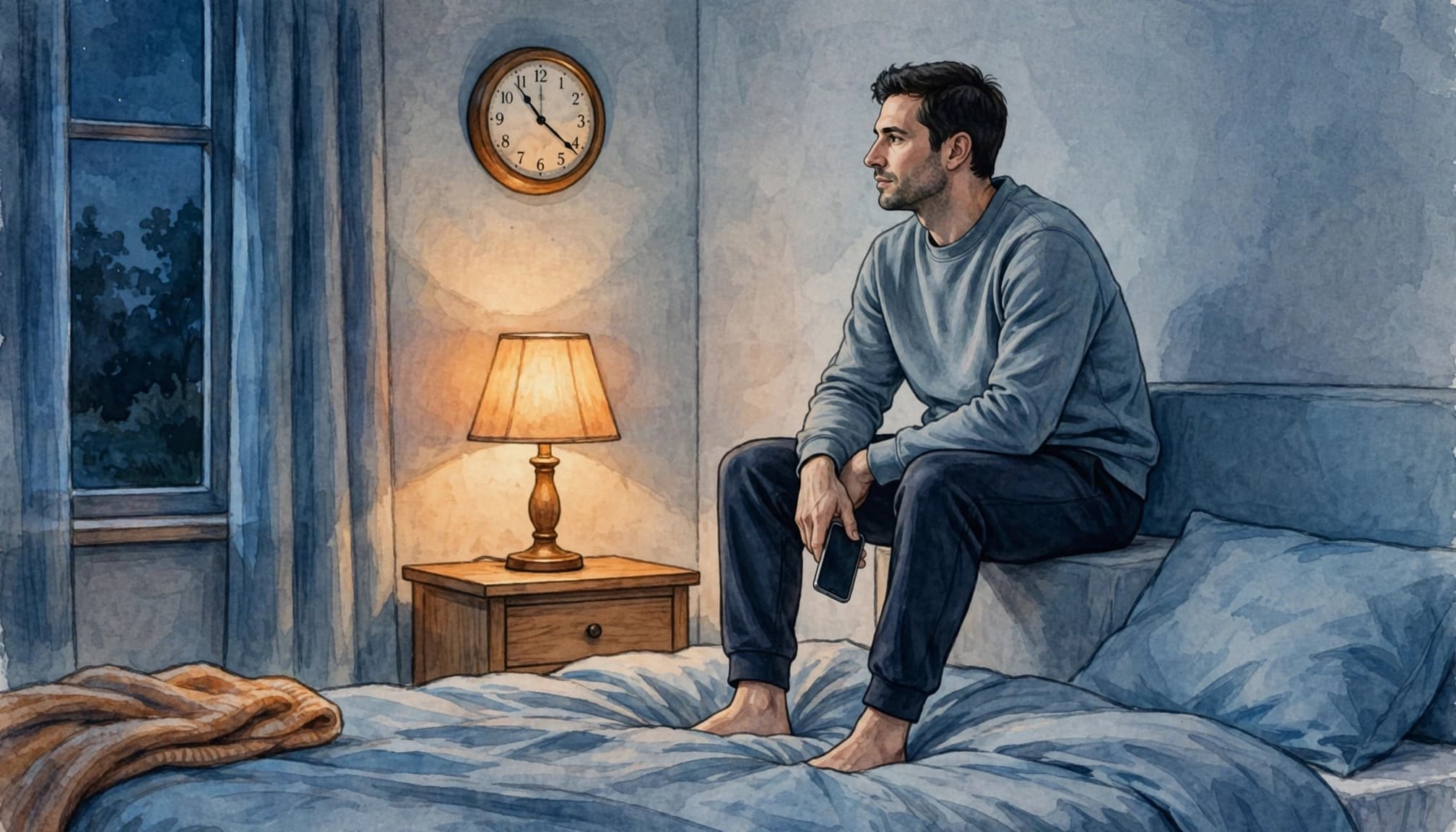
When you’re putting bedtime off
In their 2014 foundational study, Floor Kroese and colleagues defined bedtime procrastination as missing your intended bedtime when nothing external prevents it. This avoidable delay is sometimes described as sleep procrastination.
Three features help distinguish the pattern: delaying bed reduces your sleep opportunity, there’s no unavoidable reason, and you anticipate negative effects but continue.
Long working hours, a night shift, caring for someone who’s ill, or pain can limit sleep opportunity. These constraints aren’t automatically procrastination. Nor does one enjoyable late evening establish a recurring problem. The important question is whether avoidable delay repeatedly takes sleep you intended to have.
When you’re trying but can’t sleep
Insomnia involves difficulty falling asleep, staying asleep, or waking too early despite having an opportunity to sleep. Both problems can occur together.
A qualitative study published online in 2018 interviewed 17 frequent bedtime procrastinators. It identified deliberate delay, mindless delay and strategic delay.
Strategic delay meant staying up because participants believed it would help them fall asleep. Researchers suggested this might sometimes reflect undiagnosed insomnia. The small study couldn’t establish diagnoses, but it highlights why avoiding bed doesn’t always mean avoiding sleep.
Why You Keep Staying Up Later
Reclaiming time after a demanding day
Revenge bedtime procrastination describes staying awake to recover personal time after a day that felt controlled by other demands. The reward is immediate: nobody needs anything from you, and your time finally feels your own.
According to the BBC’s account of the phrase, Daphne K. Lee helped popularise it through a June 2020 Twitter post. The earliest mention the BBC found was a November 2018 Chinese blog post, rather than a definitive origin.
Revenge bedtime procrastination can signal an unmet need for personal time. If this fits, protect some leisure earlier. A bedtime alarm alone can’t resolve a day that leaves no room for you.
Losing track or feeling alert late
Sometimes there isn’t a deliberate decision. Scrolling continues, another episode starts, or unfinished chores expand into the evening. This loss of control can make stopping harder, especially when stress gets in the way of switching activities.
An evening chronotype is a natural tendency to feel alert later, and people with this pattern may describe themselves as night owls. An early work schedule may not align with your chronotype, so consider that mismatch rather than labeling it poor self-control.
These explanations can overlap. Notice whether your main obstacle is losing track of time, wanting personal freedom, or genuinely not feeling sleepy. Each calls for a different adjustment.
What Lost Sleep Costs You
Kroese’s 177-person online survey found that bedtime procrastination correlated with general procrastination at r = 0.60 and insufficient sleep at r = 0.61. These associations don’t prove that one behaviour causes another.
Repeatedly shortening sleep can contribute to sleep deprivation, daytime fatigue, sleepiness and trouble concentrating. Poor sleep quality may accompany the pattern, too.
The CDC links insufficient sleep with health problems, including anxiety, depression, obesity and heart disease. However, that doesn’t mean bedtime procrastination directly causes every condition.
Focus first on everyday effects: morning alertness, mood and whether you can work or drive safely. These matter more than achieving a perfect bedtime record.
Start With a Stable Wake-Up Time
Choose a realistic wake-up time that fits your responsibilities. Keep it fairly consistent, including on days off, rather than repeatedly compensating with long lie-ins.
Then allow enough room for sleep and a short wind-down. Most adults need around seven to nine hours, but the clock can’t tell you exactly when sleepiness will arrive.
If you’re already lying awake for hours, forcing an earlier bedtime can increase time spent awake in bed.
Morning daylight can help anchor your circadian rhythm. Our guide to morning light and sleep timing explains how to incorporate it into your day. Melatonin timing is part of the body’s sleep-wake signalling, and it varies from person to person.
For the first week, observe your pattern rather than redesigning everything. In the morning, briefly record your intended bedtime, when you stopped activities, estimated sleep duration and how alert you feel. Avoid watching the clock overnight to collect data.
Use a Five-Minute Plan to Change the Evening
Picture the outcome, then identify the obstacle
Mental Contrasting with Implementation Intentions, usually shortened to MCII, combines a desired outcome with an honest look at what gets in the way.
The exercise takes about five minutes. In a reported three-week comparison, participants moved bedtime about 33 minutes earlier, versus 14 minutes in the control group. The research on MCII and bedtime delay supports planning as a useful tool, although these findings don’t establish a treatment for insomnia.
Choose an outcome you value, such as feeling less rushed and exhausted in the morning. Then name the obstacle you can influence.
Turn the obstacle into an if-then action
Make the plan before you’re tired. Keep it narrow enough to follow on an ordinary evening.
- Choose one realistic change, such as ending recreational scrolling before your wind-down.
- Picture a concrete benefit, such as getting ready for work with better concentration.
- Identify the main internal obstacle, perhaps wanting more uninterrupted leisure.
- Write an if-then plan that links the obstacle to an action you can take.
A clear cue and response support self-regulation when you’re tired by making the next action easier to follow. Charging your phone outside the bedroom when the wind-down reminder sounds is more actionable than promising to show more discipline.
If the plan repeatedly fails, adjust the cue or make the action smaller. Don’t treat it as evidence that you lack willpower.
Make the Last Half-Hour Easy to Repeat
Choose a short sequence you can repeat without much effort: finish practical tasks, lower the lights, wash, then read something undemanding.
Our 30-minute bedtime routine offers a flexible structure. Treat each activity as preparation for rest, without testing whether it’s making you sleepy.
Device advice varies. The Sleep Foundation recommends at least 30 minutes without electronics, ideally longer. A practical starting point is 30 minutes; extend it if that helps and fits your evening.
Notifications, stimulating content, and endless feeds on electronic devices can make smartphone use harder to stop when you’d intended. Put the phone somewhere that requires a deliberate decision to retrieve it.
Also give unfinished tasks somewhere to wait. Write tomorrow’s next action on paper, then leave it outside bed. Keep the room dark, quiet and comfortably cool.
Go to bed when sleepy. If you’re clearly awake and becoming frustrated, move to a quiet activity in low light, then return when drowsy. Turn the clock away rather than repeatedly calculating lost sleep.
When a Routine Isn’t Enough
Structured behavioural help may be useful when bedtime delay persists. The small BED-PRO proof-of-concept study included 20 participants, three weekly sessions and a booster call. It reported an average reduction of 51 minutes in bedtime procrastination, or 63.8%.
That’s encouraging, but a small preliminary study can’t establish how well the programme works across different populations.
For persistent insomnia, cognitive behavioural therapy for insomnia (CBT-I) has stronger support than sleep hygiene alone. It addresses sleep-related beliefs and behaviours, including the association between bed and prolonged wakefulness.
The NHS insomnia guidance recommends seeking help when sleep problems persist or make daily life difficult. Snoring with gasping, severe daytime sleepiness, pain or medication effects also deserve assessment. Don’t drive when sleepy.
Frequently Asked Questions
Is bedtime procrastination a sign of ADHD?
Bedtime procrastination isn’t an ADHD diagnosis. Difficulty estimating time, or time blindness, intense focus, and trouble switching activities may contribute to bedtime delay for some people with ADHD.
External prompts may help: a visible reminder, an app limit, or a phone charger outside the bedroom. If attention difficulties affect several parts of your life, discuss them with a qualified clinician rather than drawing conclusions from bedtime habits alone.
How can I tell whether the changes are helping?
Look for patterns across several weeks rather than judging a single night. Useful signs include less avoidable delay, fewer prolonged scrolling sessions, and better daytime alertness.
If you’re reaching bed earlier but spending longer awake and frustrated, reconsider the plan. You may need insomnia-focused support instead of an earlier bedtime. Keep any diary brief so tracking doesn’t become another source of pressure.
Build a Routine That Leaves Sleep Unforced
Bedtime procrastination becomes easier to address when you understand what the delay gives you, or what going to bed makes you fear. Protect personal time, choose one clear stopping cue and keep your wind-down manageable.
Let consistency without pressure guide the process. If you still can’t sleep despite making room for it, seek insomnia-focused help rather than adding more bedtime rules.