
When your body still feels wound up at bedtime, sleep can seem miles away. An evening stretching insomnia routine offers gentle relaxation and bedtime support, but it isn’t a treatment.
A slow sequence won’t cure every sleep problem. It may ease physical tension and create a calmer bridge between a busy day and bed. The aim is comfort, not fitness.
With dim lighting, easy breathing, and a few supported positions, gentle stretches may help you relax, feel less stiff, and prepare for rest.
Key Takeaways
- Gentle, static stretches can help ease tension in the neck and shoulders, hips, calves, and lower back before bed.
- Keep the routine slow and easy. A stretch should feel mild, never sharp or painful.
- Long, unforced exhales help signal that it is time to slow down.
- Complete your stretches about 15 to 60 minutes before you plan to sleep.
- Stretching may support comfort and sleep quality, but it isn’t a standalone insomnia treatment. If insomnia lasts for months, combine physical relaxation with evidence-based sleep support.
This post may contain affiliate links. If you make a purchase through these links, I may earn a small commission at no extra cost to you.
Evening Stretching Insomnia: Why a Slow Routine Can Help
Insomnia often has a physical side. Tight hip flexors after desk work, clenched shoulders from daily stressors, or restless calves can create muscle tension. That can keep your attention fixed on your body when you want to switch off.
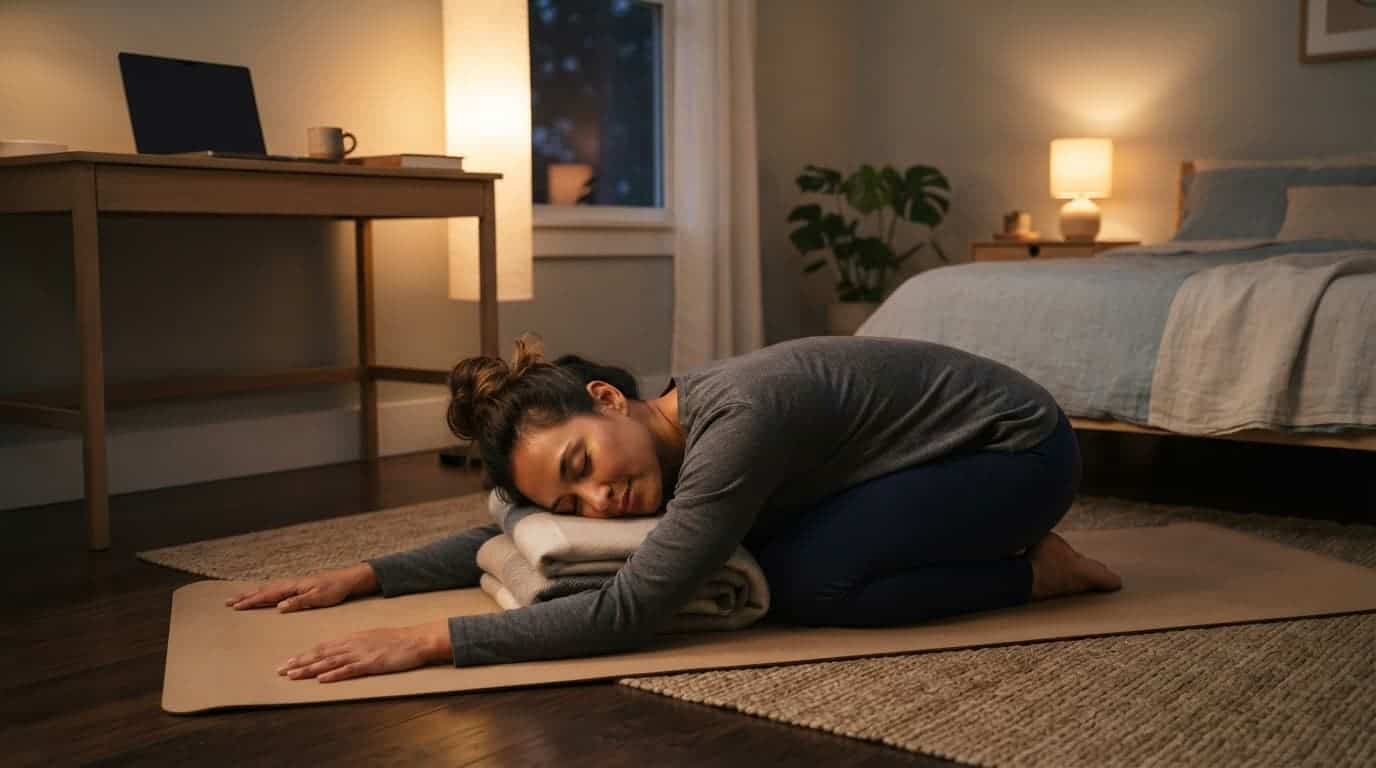
Gentle stretching gives that tension somewhere to go. You are not trying to pull muscles to their limit. Static stretches and a supported child pose (also commonly called child’s pose) may ease bracing and fidgeting while supporting sleep quality.
Long exhales help your body downshift
Breathing changes the character of every stretch. Let the inhale arrive naturally, then make the exhale a little longer and softer. For example, breathe in for three or four seconds and out for five or six.
This slower pace may support a shift toward rest-and-digest activity through the parasympathetic nervous system. It also gives a racing mind one quiet task to return to.
A bedtime stretch should leave you feeling heavier and warmer, not energised or proud of how far you reached.
Releasing desk-related stiffness can reduce distractions
Office workers often feel the day’s posture most strongly at night. Hours of sitting and poor posture can leave the chest, hip flexors, hamstrings, and lower back feeling restricted.
Cat-cow movements may support spinal mobility and make lying down more comfortable, reducing position changes at bedtime. Research on behavioural strategies for insomnia supports exercise as one part of a wider approach, although timing and intensity matter. Broader evidence on yoga and sleep doesn’t establish that this exact 10-minute routine treats chronic insomnia.
Choose a Time and Setting That Feel Unhurried
Finish your bedtime stretching routine around 15 to 60 minutes before sleep. This leaves time to wash, read, or sit with a calming drink afterward. You can relax before bed instead of treating the final stretch as a race to fall asleep.
Keep the room comfortably warm and the lights low. Use a yoga mat, carpet, or folded blanket to find a comfortable position. If the floor feels unwelcoming, many poses also work on the bed, provided the mattress feels firm and stable.
Keep the effort below workout level
Late-night exercise isn’t automatically harmful, but a vigorous session can leave some people too alert. Skip fast flows, deep backbends, strong balance poses, breath-holding, and anything that noticeably raises your heart rate.
Use a 10-point effort scale. Your stretches should sit around a two or three. You should be able to breathe slowly and speak in a normal voice throughout.
If you feel sleepy halfway through, that is fine. Shorten the routine and go to bed.
The Gentle 10-Minute Stretching Routine for Insomnia
Move slowly through this bedtime stretching routine, a series of gentle stretches, in socks or bare feet. Set a quiet timer if watching the clock makes you tense. Stay in each position only as long as your body accepts it easily.
Minutes 0 to 2: Settle with supported breathing
Choose a starting position: sit on the edge of your bed or lie on your back with knees bent and feet down. Rest one hand over your abdomen if that feels comfortable.
Take five slow breaths. Keep this deep breathing quiet and unforced. Let your shoulders drop away from your ears as you breathe out. There is no need to fill your lungs to capacity. Easy breathing is more relaxing than forced deep breaths.
Minutes 2 to 4: Cat-cow and child’s pose
Come onto hands and knees for cat cow pose. On an inhale, gently tip the tailbone back and let the chest open slightly. On the exhale, round your spine comfortably and allow the head to follow. Repeat six times at an unhurried pace.
Then widen your knees and lower into child pose. Place a pillow under your chest, hips, or forehead if the floor feels too far away. Stay for four to six breaths, allowing your lower back to broaden.
Minutes 4 to 7: Ease the neck, shoulders, and back
Return to sitting to ease your neck and shoulders. Let your right ear drift toward your right shoulder without pulling on your head. Hold the stretch for three slow breaths, then change sides. Next, roll both shoulders backward five times.
For a mild seated twist, sit tall and turn your ribs to the right while keeping both sit bones grounded. Pause for two breaths, then turn left. Twists should feel spacious, never like a forced crank through the spine.
Minutes 7 to 10: Release the legs and finish on your back
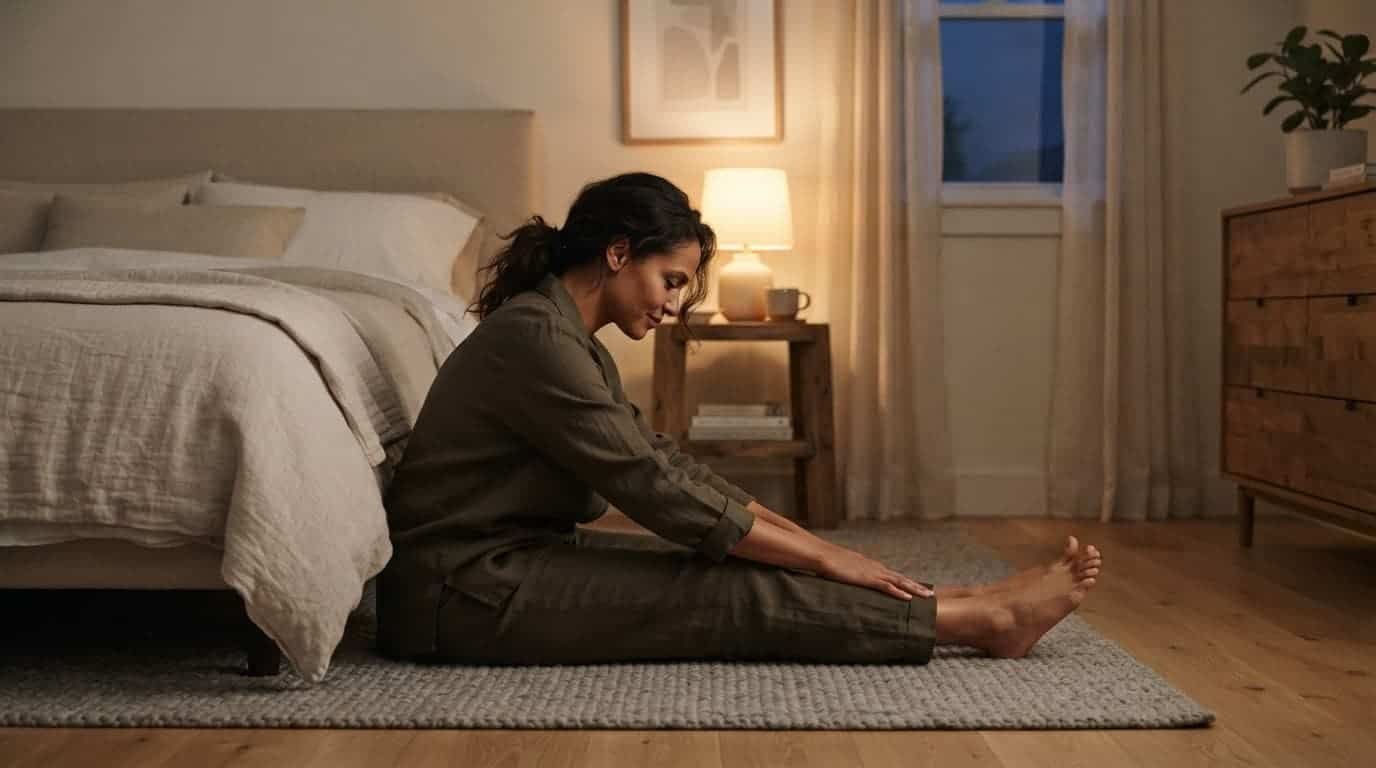
Extend one leg and bend the other for a seated hamstring stretch. Hinge forward only until you feel a light stretch. Keep the knee softly bent if needed. Hold the stretch for three breaths on each side.
Finally, lie down with your calves resting on the bed or a chair, with your knees bent at about 90 degrees. This restorative pose offers comfortable support and takes pressure off tired legs without demanding flexibility. It isn’t guaranteed to induce sleep. Stay there for one or two minutes, shortening the routine if needed, then roll onto your side before standing.
Adapt the Routine for tension in the neck and shoulders or lower back
Your routine does not need to include every pose each night. Pick the areas that feel most distracting when you lie down, then give them a few calm minutes.
For tight neck and upper body
Avoid aggressive neck circles or tugging your head with a hand. Instead, try small ear-to-shoulder tilts, gentle shoulder rolls, and a doorway chest opener.
For the chest opener, stand in a doorway with one forearm against the frame. Step forward slightly until you feel the front of the shoulder and chest lengthen. Keep the movement small, especially if you have shoulder pain.
For a stiff lower back after sitting
Cat-cow, a supported child pose, and a reclined knee-to-chest hold are usually friendlier choices than deep toe-touching. When lying down, draw one knee toward your chest and hold behind the thigh. Hold the stretch for several easy breaths, keeping the range comfortable. Switch sides, then bring both knees in only if it feels good.
A pillow between the knees can also make side sleeping more comfortable. Small adjustments often matter more than chasing a deeper stretch.
Seek clinical assessment if lower back pain is severe, persistent, or radiating. Also get care for pain with numbness, weakness, or other neurological symptoms.
Can Evening Stretches Help With Muscle Cramps?
Night-time muscle cramps can make sleep feel unpredictable. Calf work or a gentle hamstring stretch may help you feel looser after prolonged standing, walking, or sitting. However, cramps have several possible causes, so stretching isn’t a guaranteed fix.
Try a gentle wall calf stretch before bed. Place your hands on the wall, step one foot back, and keep that heel down. Bend the front knee slightly, and hold the stretch for 20 seconds. Repeat on the other side.
Know when discomfort means stop
A light pulling sensation is normal. Sharp pain, tingling, numbness, joint pain, dizziness, or a cramp that intensifies means you should stop.
Speak with a clinician if muscle cramps are frequent, severe, or new, or if they occur with swelling, weakness, medication changes, or other symptoms. The same applies if neck or lower back pain regularly wakes you.
Drink normally through the day, but avoid chugging large amounts of water close to bedtime if it makes you wake for the toilet.
Pair Stretching With Habits That Support Sleep
Evening stretching may ease muscle tension. Chronic insomnia may also involve learned worry, inconsistent sleep timing, or long wakeful periods in bed. These patterns can keep the nervous system alert, so a short routine alone may not improve sleep quality or shift the pattern.
Cognitive behavioural therapy for insomnia, often called CBT-I, is a structured, evidence-based treatment for persistent insomnia. It addresses thoughts and habits that keep insomnia going. The NHS sleep self-help guide includes CBT-based strategies for sleep problems.
Give the routine a clear ending
After your final pose, avoid checking work messages or scrolling under bright light. Choose one low-stimulation action, such as reading a few pages of a familiar book, listening to a calm audio track, or preparing the room for sleep.
If thoughts start circling, write a brief note before you stretch: “Tomorrow, I will deal with this at 10am.” Then practice mindfulness and relaxation by noticing the thought without following it. Return attention to a soft exhale, using deep breathing as a gentle focus when the thought reappears.
For persistent insomnia, CBT-I is widely regarded as a first-line treatment. A routine can support that work by making evenings feel less physically fraught. If sleep problems persist or become severe, seek medical or sleep-professional advice, since they can affect mental health and physical health.
When to Skip a Bedtime Stretch
Skip stretching when you have a new injury, severe pain, recent surgery, fever, or unexplained symptoms. Ask a physiotherapist or clinician for individual advice if you have osteoporosis, joint instability, a disc problem, or neurological symptoms.
On ordinary tired nights, shorten rather than abandon the routine. Two minutes of supported breathing and one comfortable pose can still mark the end of the day, but don’t stretch through pain.
Consistency helps, but perfection is unnecessary. If sleep problems are persistent or severe, discuss them with a qualified medical professional. Some evenings, you will stretch for 10 minutes. Other nights, a single child’s pose may be enough.
A Calmer Path Into Bed
A gentle evening routine won’t force sleep to arrive. It can, however, ease physical tension and agitation that make bedtime feel like a struggle.
Keep the stretches comfortable, make your exhale longer than your inhale, and stop before effort takes over. Evening stretching for insomnia works best as a kind signal that the day is ending, and a possible relaxation aid rather than a cure for insomnia.
Frequently Asked Questions
How often should I do a bedtime stretching routine?
Try it most nights for two weeks and notice how your body feels when you get into bed. Regular practice can make the sequence feel familiar, helping it become a reliable wind-down cue.
Can I stretch in bed if I do not have a yoga mat?
Yes. Seated neck stretches, knee-to-chest holds, reclined twists, and calves on the bed can all work well there. Avoid positions that feel unstable on a soft mattress, and use pillows for support.
Will stretching help me fall asleep faster?
It may help when muscle tension or restlessness keeps you awake. However, stretching cannot resolve every cause of insomnia. If sleep difficulties happen at least three nights a week for three months or more, seek advice from a clinician or sleep professional. Severe, worsening, or persistent sleep problems also warrant professional guidance.