
For first night insomnia away from home, start with familiar bedtime cues, a cool bedroom, and a steady wake time. If you’re lying awake and becoming frustrated, leave the bed briefly and return when sleepy.
An unfamiliar room can interrupt rest even when you’re exhausted. Stress about an unfamiliar room can contribute to sudden insomnia after travel, but one unsettled night doesn’t establish a lasting sleep disorder. Start by reducing the things keeping you alert rather than trying harder to sleep.
This post may contain affiliate links. If you make a purchase through these links, I may earn a small commission at no extra cost to you.
Key Takeaways
- First-night sleep problems can reflect unfamiliar surroundings, travel stress, late caffeine, or a changed schedule.
- After roughly 20 to 30 minutes of frustrated wakefulness, move somewhere quiet and dim until sleepy.
- Keep your usual wake time, limit naps, and avoid using alcohol to induce sleep.
- Persistent insomnia needs assessment. Cognitive behavioral therapy for insomnia, or CBT-I, is the first-line long-term treatment.
Why first night insomnia can happen away from home
A new bedroom changes familiar nighttime cues. Different sounds, bedding, and light can keep you more alert, an adjustment often called the first-night effect.
Start with the unfamiliar surroundings
First, notice what’s different. Corridor noise, a brighter window, an uncomfortable pillow, or worry about an early departure may explain the disruption. Travel stress can heighten attention to unfamiliar noise or light. The body’s alerting systems can respond, including through cortisol release, but one hormone doesn’t explain every difficult night.
Then consider travel habits. An afternoon coffee, an evening drink, or a long nap can compound the problem. The NHS lists these among the common causes of insomnia, alongside anxiety, depression, and uncomfortable sleeping conditions.
Crossing time zones adds a separate body-clock problem. Our plan for jet lag insomnia addresses that timing issue.
Understand sleep pressure and nighttime waking
Sleep pressure builds while you’re awake. It helps you fall asleep and supports sleep across successive cycles, while your circadian rhythm helps set sleep timing.
Brief awakenings can happen between sleep stages. However, an unfamiliar noise or an anxious thought can turn a short awakening into prolonged alertness.
Because some sleep pressure has dissipated by the middle of the night, returning to sleep may feel harder than falling asleep initially. A long nap or an unusually early bedtime can leave less pressure available.
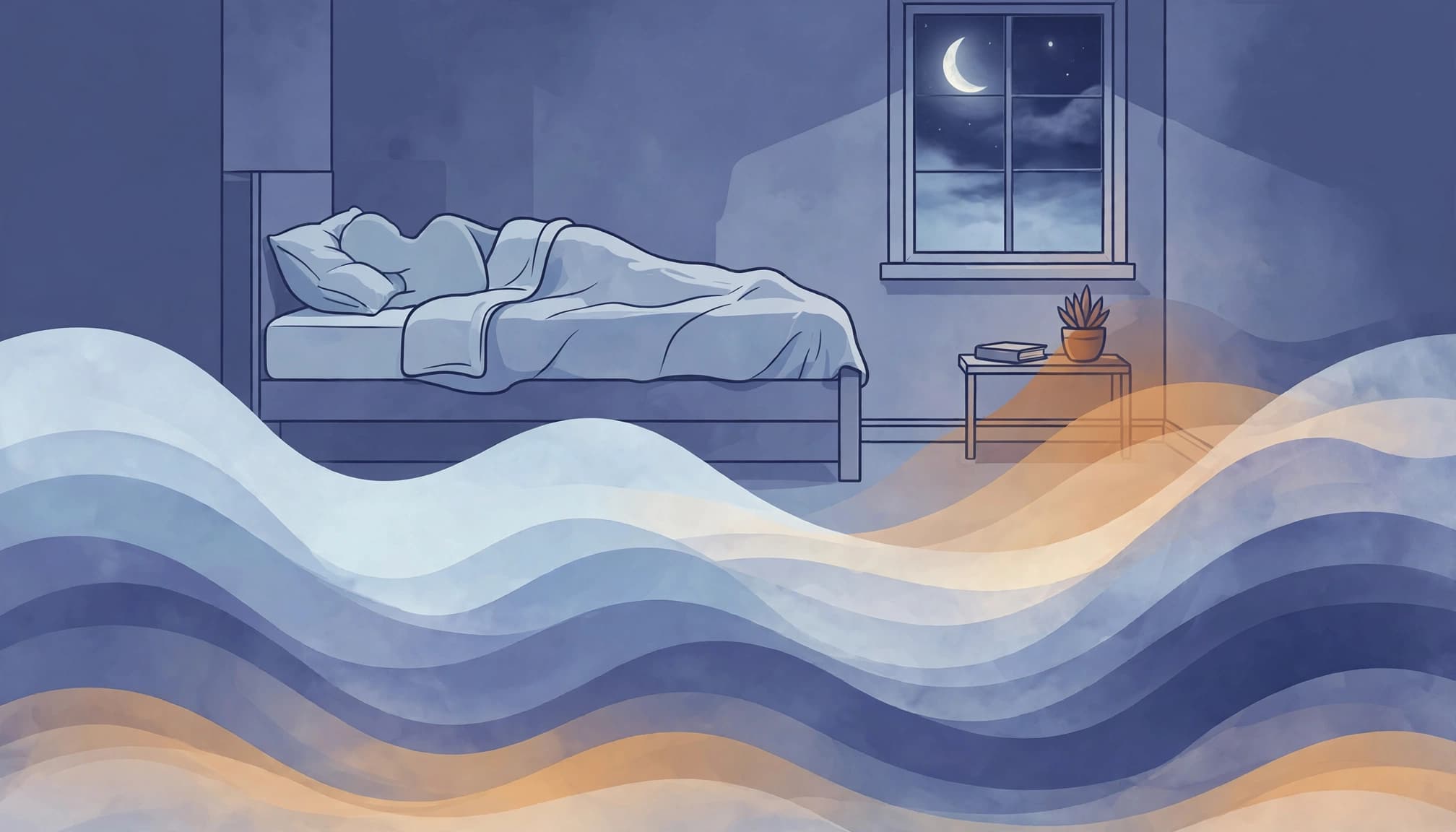
Set up tonight before you get into bed
Make a few practical adjustments while you’re still awake. Repeatedly rearranging the room after bedtime can become another source of stimulation.
Make the bedroom comfortable and predictable
Nuffield Health’s insomnia guidance recommends a bedroom temperature of 16 to 19 degrees C. Treat that as a starting range, then adjust bedding for comfort.
Close curtains, reduce avoidable noise, and locate the bathroom before settling down. An eye mask or comfortable earplugs may help when you can’t change the room.
Bring one familiar item, such as your usual pillowcase, if practical. You don’t need to recreate your entire bedroom.

Give your wind-down a clear ending
Nuffield recommends avoiding screens for two to three hours before bed. Blue light can suppress melatonin, a hormone that helps signal nighttime, while messages and work can increase alertness.
If travel makes that window impractical, reduce screen brightness and finish essential tasks before getting into bed. Then choose a familiar, low-stimulation activity.
Our calming bedtime routine for insomnia offers a simple structure. Keep it flexible, though: missing one step shouldn’t become another reason to worry.
What to do when you’re awake right now
Whether you can’t fall asleep or are waking during the night at 3 a.m., use the same calm response. The aim is to reduce prolonged, frustrated wakefulness in bed.
- Stop calculating the remaining night. Set your alarm once, then turn the clock away. Checking the time gives you fresh material for worry.
- Leave the bed if you’ve been awake for roughly 20 to 30 minutes and feel increasingly alert or frustrated. Nuffield calls this its quarter-of-an-hour rule, although its practical guidance uses that longer window. Estimate rather than timing yourself.
- Sit somewhere safe in dim light. Read a familiar, undemanding book or listen to quiet audio. In a shared room, a chair away from the bed may be enough.
- Return when you feel sleepy. If prolonged wakefulness returns, repeat the process without treating it as a failure.
Henry Ford’s middle-of-the-night insomnia advice discourages work, chores, and absorbing hobbies during these breaks. They can make nighttime waking rewarding.
Getting out of bed works best as a brief, low-stimulation reset. Starting a project or catching up on emails can work against that purpose.
For a gentler focus, try our guided imagery for sleep. Guided imagery is one of several relaxation techniques; focus on a familiar, calming place. If imagery feels upsetting, return attention to comfortable body sensations instead. If getting up is unsafe, use a supported seated position.
Protect tomorrow night’s sleep during the day
After a poor night, the temptation is to compensate with extra time in bed. Large schedule changes can make the next night harder.
Keep your wake time steady
Keep your usual sleep schedule as consistent as possible, especially your wake time. Get up near your planned time and spend some time in daylight. Gentle daytime exercise also helps distinguish waking hours from bedtime.
Avoid going to bed much earlier simply because the previous night was difficult. Instead, begin your wind-down at a familiar time and enter bed when sleepy.
Nuffield advises avoiding naps where possible. If you need one, keep it under 30 minutes and at least eight hours before bedtime. However, don’t drive or do hazardous work when sleepy.
Move caffeine earlier and skip the nightcap
Henry Ford notes that caffeine can linger in your system for up to eight hours. Nuffield recommends avoiding it after midday, a practical starting point if you’re struggling.
Coffee isn’t the only source. Tea, cola, energy drinks, and some workout products also contain caffeine.
Alcohol can make you drowsy initially. However, Henry Ford explains that it can have an alerting effect as your body metabolizes it, contributing to middle-of-the-night awakenings.
For first-night sleep trouble, avoiding an evening drink removes one possible disruptor without adding another remedy.
Be cautious with non-prescription sleep aids
A difficult night in a hotel isn’t a good moment to experiment with several supplements. “Natural” products can cause side effects, and sedating products can interact with alcohol or medicines.
Nuffield advises discussing over-the-counter sleep aids with a medical professional first and limiting use to one or two weeks. Its examples include valerian, lavender products, and sedating antihistamines such as antihistamine versions of Nytol.
That short-term guidance doesn’t establish that every product works or is suitable for you. Next-day drowsiness matters especially when you need to drive or travel.
Our guide to natural sleep aids besides melatonin covers options and safety considerations. For an isolated night away, start with the room, your schedule, and your response to wakefulness before adding a product.
When sleep problems need professional support
Nuffield estimates that up to a third of people experience bouts of insomnia at some point. Common doesn’t mean you should tolerate persistent problems without support.
Use the rule of threes as a prompt
Henry Ford suggests seeking specialist advice when nighttime waking occurs at least three nights a week, takes longer than 30 minutes to resolve, and has continued for at least 30 days.
This is a practical help-seeking prompt. Don’t wait for every threshold if poor sleep affects your mood, functioning, or safety.
Speak to your GP sooner for loud snoring, breathing pauses, gasping, uncomfortable leg sensations, or extreme daytime sleepiness. Pain, anxiety, depression, medication effects, and menopause can also need assessment. If sleep problems persist or are complex, ask your GP whether a referral to a sleep specialist is appropriate. Seek urgent help for thoughts of self-harm.
Ask about CBT-I for ongoing insomnia
NICE’s insomnia treatment guidance recommends CBT-I as first-line treatment for chronic insomnia in adults. It’s generally preferred over relying on sleeping tablets for long-term management.
CBT-I combines changes to sleep habits with work on thoughts and expectations that maintain insomnia. Stimulus control, including leaving bed during prolonged wakefulness, is one component.
A bedtime routine can support treatment, but sleep hygiene alone doesn’t replace a structured program. CBT-I usually requires practice over several weeks. Don’t improvise strict sleep restriction when you’re already very sleepy.
Frequently Asked Questions
Is television in another room okay when I can’t sleep?
A familiar paper book or calm audio is usually a less stimulating choice. Television adds light and can pull you into another episode. If you use it, keep it dim and undemanding, then stop when sleepy.
Does taking a long time to fall asleep count as insomnia?
Sleepstation describes sleep onset insomnia as taking longer than 30 minutes to fall asleep on three or more nights per week for one month. Repeated difficulty staying asleep is sleep maintenance insomnia, another recurring pattern. One difficult night away doesn’t establish either condition. If problems persist, keep a regular sleep schedule and consult a sleep specialist.
How much sleep should I aim for?
Most adults need seven to nine hours per night. Allow enough opportunity for sleep, but avoid repeatedly extending time in bed after a rough night. If problems continue, approximate notes about sleep and daytime functioning are more useful than minute-by-minute monitoring.
Keep the Plan Simple on Your First Night Away
A new room can unsettle sleep without requiring a new supplement or an elaborate routine. Focus on familiar cues, a comfortable environment, and a calm response when you’re awake.
Tomorrow, protect your wake time rather than chasing the lost hours. If the problem becomes frequent or affects daily safety, seek assessment and ask about CBT-I instead of adding more bedtime remedies.