
Arriving exhausted doesn’t guarantee you’ll sleep when your head hits the hotel pillow. Jet lag insomnia can leave you wide awake at bedtime, then fighting sleep during the activities you travelled for.
For a short trip, full adjustment may be unnecessary because you’ll soon be heading home again. Start by choosing a workable sleep schedule, then use light and familiar routines to support it.
This post may contain affiliate links. If you make a purchase through these links, I may earn a small commission at no extra cost to you.
Key Takeaways
- On a brief visit, keeping closer to your home sleep hours may help if your commitments allow it.
- Light timing matters more than simply getting sunshine immediately after waking, especially after large time-zone changes.
- A steady wake time, protected sleep window and calm evenings support recovery. Supplements aren’t automatically safer because they’re labelled natural.
Why Jet Lag Insomnia Happens
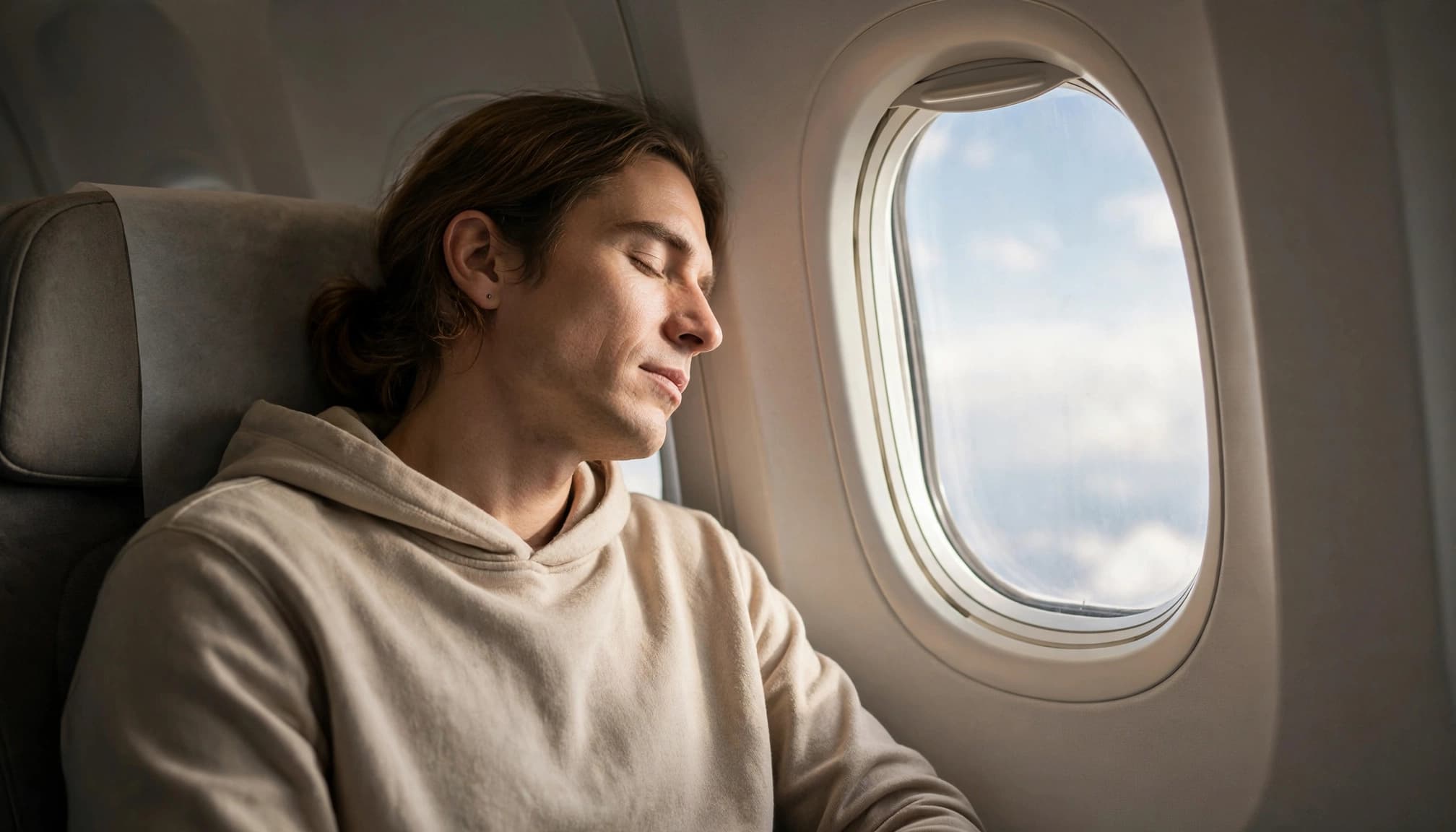
Your body clock hasn’t caught up
Your circadian rhythm controls the daily timing of sleepiness and alertness. After rapid travel across time zones, that rhythm can remain aligned with home while local clocks show bedtime.
As you stay awake, sleep pressure builds, partly due to adenosine. These two systems can disagree, leaving you physically tired but mentally alert. Jet lag can also cause early waking, broken sleep, daytime fatigue and mood changes.
A comfortable room helps remove distractions. However, it can’t instantly persuade your internal body clock that afternoon has become night.
Travel direction affects adjustment
Westward travel usually requires staying awake later, while eastward travel requires sleeping earlier. Most people find delaying their body clock easier than advancing it.
The CDC’s jet lag guidance estimates average adjustment at roughly one hour daily eastward and 1.5 hours westward.
These are averages, not recovery deadlines. Your usual sleep pattern, light exposure and itinerary also matter. On a short visit, you may return before your clock has fully adjusted.
Choose a Sleep Strategy That Fits Your Visit
Before changing anything, check your arrival time, return date and unavoidable commitments. A one-night visit with flexible plans needs a different approach from several days of early meetings.
Use your itinerary to choose a realistic sleep schedule.
| Trip pattern | Practical sleep approach |
|---|---|
| Very brief stay with flexible plans | Consider keeping sleep closer to home hours. |
| Several nights with fixed daytime commitments | Move towards destination sleep and wake times. |
| Rapid travel through multiple destinations | Protect a workable sleep window and seek personalised timing advice. |
The shortest trip doesn’t always need the biggest reset. Keeping home-based hours may reduce symptoms during a brief stay, but it only works if you can actually protect that sleep period.
For example, westward travel between London and New York makes your usual home bedtime occur earlier locally. That may fit an early night but conflict with evening plans.
There’s no universal stay-length cutoff that suits everyone. Weigh the time zone change against your available sleep window and commitments rather than following a rigid rule.
A partial shift may be more practical than forcing complete adaptation before the return flight. However, repeatedly changing plans can leave you with too little sleep on either schedule. Choose one workable approach and keep it reasonably steady.
Prepare Before Departure Without Losing Sleep
Make modest schedule changes
If you’re aiming to adopt destination time, begin adjusting several days before departure. Move sleep earlier for eastbound travel or later for westbound travel, while preserving enough sleep.
Small changes of 15 to 30 minutes may feel more manageable than a sudden jump. The CDC’s advice for travellers also recommends preparing your sleep pattern before crossing time zones.
Don’t shorten each night to manufacture exhaustion. Sleep deprivation adds another problem to the time-zone mismatch.
Protect rest during the journey
Keep familiar sleep items accessible, such as an eye mask or comfortable earplugs. These can reduce light and noise, although they won’t reset your circadian rhythm.
If you’re adopting destination time, use it as a reference for planned rest. If you’re retaining home hours, follow that decision instead of switching strategies mid-flight.
Avoid treating the flight as a test you must pass. Cabin interruptions may limit sleep, especially on a long-haul flight, so leave room for recovery rather than assuming you’ll arrive fully rested.
Use Natural Light at the Right Time

Match light exposure to your internal clock
Light is one of the strongest signals that changes circadian timing. The effect of light exposure depends on when natural light reaches your internal clock.
Morning light after your body’s nightly low point tends to move sleep earlier. Evening light tends to move sleep later. That low point usually falls about two to four hours before your habitual waking time.
After a large eastward jump, local dawn may still occur before your internal low point. Bright light then can push adjustment in the wrong direction.
After a large time-zone change, local morning may still fall during biological night on your internal body clock.
Make the plan specific to your route
For westward adjustment, natural light later in the day can support a later sleep schedule. Eastward adjustment generally needs appropriately timed morning light, with less bright light during the biological evening.
These principles don’t produce a safe universal timetable for every journey. For large shifts or complicated itineraries, seek advice that uses your dates, route and usual sleep hours.
SleeplessZone’s guide to light and sleep timing offers further background.
Check with a clinician before using a light-therapy device if you have bipolar disorder, eye problems or medicines that increase light sensitivity.
Handle the First Nights Without Forcing Sleep
Protect sleepiness during the day
Once you’ve chosen a schedule, keep wake-up time reasonably steady. SleeplessZone explains how a consistent wake time supports sleep, although travel also requires attention to light timing.
If you need a nap for safe functioning, keep it brief, around 20 to 30 minutes, and away from planned bedtime. Allow time to become fully alert afterwards.
Watch caffeine beyond coffee. Tea, cola, energy drinks and some medicines also contain it. Keep caffeine away from your wind-down, adjusting the cutoff to your sensitivity.
Reduce pressure at bedtime
Good sleep hygiene starts with a protected sleep window and a suitable bedroom: dark, quiet and comfortably cool. Repeat a calm wind-down routine, such as washing, reading a paper book and breathing slowly.
Dim lighting before your planned sleep period. Avoid using alcohol to induce sleep, since it can cause sleep disruption and reduce sleep quality later.
If you’re wide awake or frustrated, leave bed for a quiet activity in low light. Return when drowsiness comes back. Turn the clock away so you aren’t repeatedly calculating lost sleep.
A difficult first night doesn’t mean the whole trip will be sleepless.
Be Cautious With Melatonin and Other Sleep Aids
Melatonin can influence body-clock timing, but it isn’t a universal bedtime fix. Taking it at the wrong time can interfere with the adjustment you’re trying to make.
UK guidance also requires context. NICE’s jet lag recommendations note that the medicine is licensed for short-term jet lag treatment, with modest benefit. However, the NHS jet lag page doesn’t recommend it, citing insufficient evidence that it works.
In the UK, melatonin is prescription-only. Discuss suitability and timing with a pharmacist or clinician rather than copying a dose from another traveller.
SleeplessZone’s guide to melatonin benefits and risks covers further safety considerations.
Magnesium isn’t a reliable way to reset your body clock. Herbal products and sedating antihistamines also aren’t automatically harmless. Sleep aids can have side effects, so avoid trying several new products or combining them with alcohol on a short trip.
Plan the Return and Know When to Get Help
If you’ve adopted destination time, allow some flexibility after returning home. Avoid filling the first day with demanding tasks if your travel arrangements permit it.
Return to a dependable wake time and familiar sleep routine. SleeplessZone’s post-holiday sleep reset offers practical support for rebuilding that routine.
Keep brief notes about sleep, naps, caffeine and light exposure if you travel frequently. Look for patterns rather than rating every night as a success or failure.
Speak to a GP or another healthcare provider if symptoms are severe, persist after your usual routine resumes, or repeatedly disrupt daily life. Persistent insomnia may be linked to sleep disorders rather than temporary jet lag. Loud snoring, breathing pauses or substantial daytime sleepiness also deserve assessment.
If you’re struggling to stay awake, don’t drive. Arrange another way to travel rather than relying on caffeine. For ongoing insomnia, ask about cognitive behavioural therapy for insomnia, or CBT-I, rather than repeatedly adding sleep remedies.
Frequently Asked Questions
How long does jet lag usually last?
Many people improve within a few days, but larger time-zone shifts can take longer. Eastward adjustment is usually slower. A fixed promise of one recovery day per time zone doesn’t fit everyone.
Should I stay awake all day after landing?
Avoid forcing wakefulness through unsafe exhaustion. A brief nap may help you function, but long or late naps can make your planned sleep period harder. Your chosen schedule matters more than a blanket rule.
Will a natural remedy prevent jet lag insomnia?
No remedy reliably prevents it for every traveller. Light timing, sufficient sleep opportunity and a workable schedule are the foundations. Supplements can have side effects, and persistent insomnia needs more than sleep hygiene alone.
A Short Trip Needs a Workable Sleep Plan
You don’t have to achieve perfect local-time sleep to make a short visit manageable. Choose a schedule that fits your commitments, then support it with well-timed light and a protected sleep window.
Treat consistency as support, not another standard to worry about. The aim is safer days and less pressure at night while your body catches up.