
If you’re staring at the ceiling after starting a B12 supplement, you’re not imagining things. The short answer is yes, there may be a connection for some people, but it isn’t the same for everyone.
B12 helps with energy, nerve function, and red blood cell production. Because of that, some people feel more alert when they take it. Still, the evidence that B12 directly causes insomnia is mixed, and factors like timing, dose, sensitivity, and whether you were low in B12 in the first place all matter.
A few small changes can make this a lot easier to sort out.
Key Takeaways
- B12 may affect sleep in some people, but it is not a universal cause of insomnia.
- Taking B12 late in the day is a common reason people feel too alert at bedtime.
- High-dose products and B-complex blends may feel more stimulating than plain B12.
- Low B12 can also hurt sleep by causing fatigue, mood changes, anemia, or tingling.
- Track timing, dose, and sleep changes for a week or two before blaming B12 alone.
- If symptoms of deficiency are present, testing and medical advice may matter more than guessing.
What vitamin B12 does in the body, and why sleep could be affected
Vitamin B12 helps your body make healthy red blood cells, support nerves, and turn food into usable energy. It also plays a role in brain function. When those systems shift, sleep can shift too.
If you feel more awake, more wired, or less foggy after taking B12, bedtime may feel different. On the other hand, if you are low in B12, the deficiency itself can leave you drained during the day and restless at night.
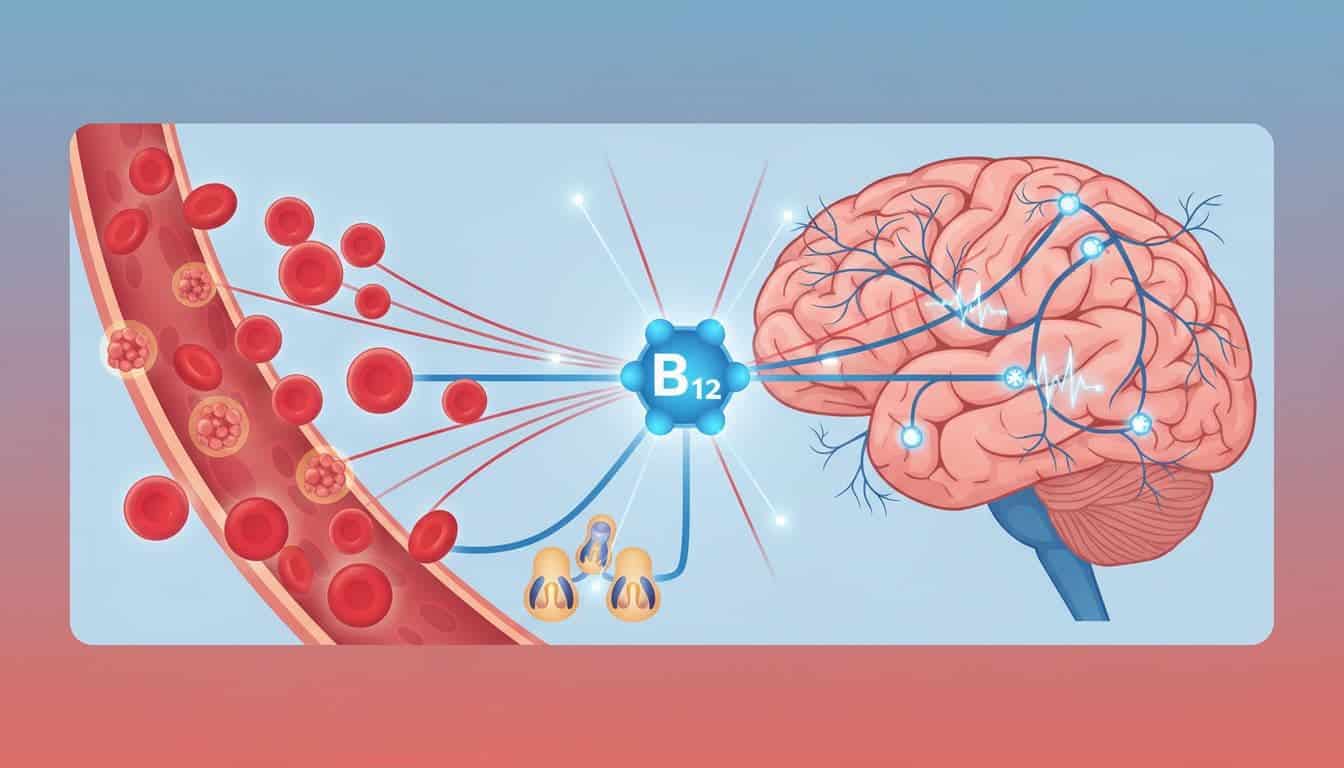
B12 helps with energy and nerve signals, which may make some people feel more alert
B12 is not a stimulant like caffeine. It won’t act like an espresso shot. Still, some people say they feel brighter, sharper, or more awake after taking it.
That makes sense in a simple way. If your body has been running low, adding B12 can improve energy metabolism and nerve signaling. As a result, you may notice more daytime alertness. If you take it in the evening, that alert feeling can spill into the night.
This effect seems more likely in people who are sensitive to supplements, take large doses, or use fast-acting forms like liquids, gummies, sublingual tablets, or injections.
Low B12 can also disturb sleep in indirect ways
A B12 shortage can create problems that don’t look like “sleep issues” at first. You might feel weak, tired, short of breath, low in mood, or mentally foggy. Some people also notice numbness, tingling, or a strange restless feeling.
Those symptoms can chip away at sleep quality. Anemia can leave you wiped out but still unrefreshed. Nerve symptoms may make it harder to settle down. Mood changes can feed racing thoughts at night.
So the picture is a bit messy. Too little B12 can make sleep worse, and the way you supplement it can also affect sleep. Both sides matter.
Is there really a connection between B12 and insomnia? What the research suggests
Research does not show a simple rule that B12 causes insomnia. There isn’t strong evidence that everyone who takes it will sleep worse. Still, there are real reasons why it might affect sleep in some people.
Older research looked at whether B12 might influence circadian timing, melatonin patterns, or alertness. Results were inconsistent. Some people report no sleep change at all, while others notice they feel too awake if they take it late.
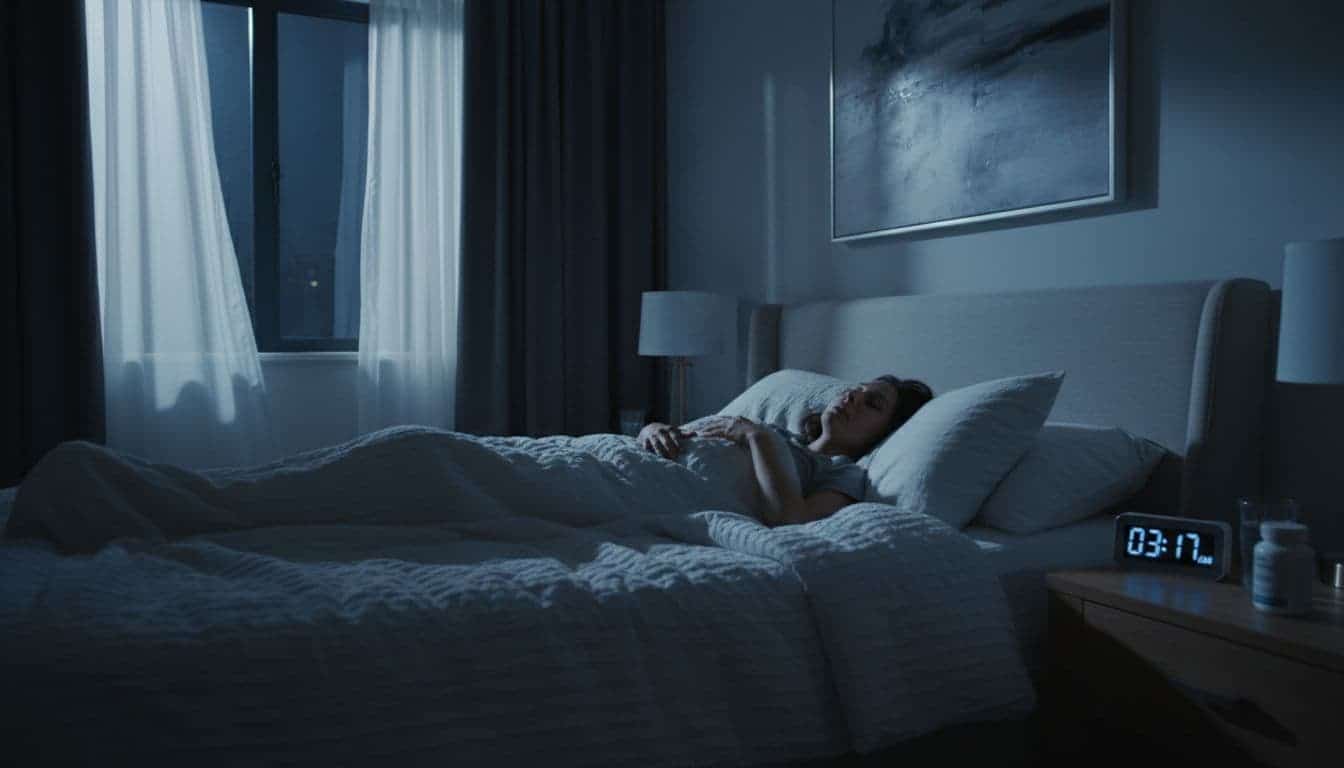
B12 may play a role in insomnia for some people, but the link is personal, not universal.
Some people say B12 keeps them awake, but this doesn’t happen to everyone
Real-life reports are mixed, and that matters. Some people can take B12 at dinner and sleep fine. Others notice a clear pattern, especially after a high-dose supplement or an “energy” blend.
Part of the confusion is that B12 often comes packaged with other ingredients. A B-complex may include several B vitamins in large amounts. Some formulas also add caffeine, green tea extract, or herbs aimed at energy. In that case, B12 may get the blame when the whole product is the issue.
That’s why context matters more than one label or one bad night.
If you were low in B12, treatment may change how you feel during the day and at night
Correcting a deficiency can change your rhythm for a while. You may have more energy, less brain fog, and a better mood during the day. Over time, that can support better sleep because your body is functioning better overall.
At first, though, the shift may feel odd. If you’ve been dragging for months, feeling more alert can seem too strong, even when it’s part of recovery. That doesn’t always mean B12 is “bad for sleep.” It may mean your body is adjusting.
This is why blanket advice often falls short. The same supplement may help one person feel normal again and leave another person too alert at bedtime.
When B12 is most likely to interfere with sleep
If B12 is part of your sleep problem, a few patterns show up often. Timing is usually the first place to look. Dose and product type come next.

Taking B12 late in the day may be the biggest trigger for some people
Morning use is often easier if you feel alert after B12. That gives your body the day to process the change before bedtime.
This matters even more with sublingual tablets, liquids, gummies, shots, and high-dose products. Some people say these forms feel stronger or faster, even if the science doesn’t show a dramatic difference for everyone.
If you’ve been taking B12 at lunch, dinner, or before bed, switching it to breakfast is a simple test.
High doses and combo supplements can make the effect feel stronger
Many B12 products contain far more than the daily requirement. That doesn’t always cause problems, but it can. Some people do fine on large amounts. Others feel edgy or too awake.
Then there are combo supplements. A bottle may say “B12,” but the formula also contains a full B-complex, adaptogens, or ingredients meant to boost energy. That’s why label reading matters.
If your sleep got worse after starting a supplement, check the full ingredient list before deciding B12 alone is the cause.
How to tell whether B12 may be part of your insomnia problem
Guessing rarely helps. A short review of timing and symptoms works better.
Look at timing, dose, and any change in your sleep after starting B12
Write down when you started the supplement, what form you use, what dose you take, and what time of day you take it. Then track your sleep for one to two weeks.
You’re looking for patterns, not perfection. Did the problem start within days of adding B12? Does sleep get worse on days you take it late? Did lowering the dose help? One rough night doesn’t prove much, but a repeat pattern does.
A simple sleep note on your phone is enough. You don’t need a fancy app.
Consider other reasons your sleep got worse at the same time
Insomnia rarely has one cause. Stress is a major trigger. So are caffeine, alcohol, late screens, poor sleep habits, and changes in your schedule.
Health issues can muddy the picture too. Perimenopause, iron deficiency, thyroid problems, some medications, and sleep apnea can all affect sleep. If you changed more than one thing at once, it gets harder to pin the blame on B12.
That wider view matters because it keeps you from dropping a useful supplement when the real problem is somewhere else.
What to do if you think B12 is affecting your sleep
You don’t need to panic or throw the bottle away. Start with small, clear changes.
Simple steps to try first, from changing the timing to lowering the dose
Try one change at a time so you can tell what helps:
- Take B12 in the morning instead of later in the day.
- Check the label for other energizing ingredients.
- Ask whether a lower dose makes sense for your situation.
- Switch from an “energy” blend to plain B12 if needed.
- If B12 is not prescribed, consider a short pause only if it is medically reasonable for you.
If you take B12 because a clinician told you to, don’t stop on your own without checking first.
When it’s smart to talk with a doctor and get tested
Medical advice matters if you have signs of low B12, such as numbness, tingling, weakness, anemia, memory issues, or ongoing fatigue. It also matters if insomnia keeps going even after you change the timing or dose.
Testing is especially worth discussing if you follow a strict vegan diet, have digestive problems, take metformin, or use acid-blocking medicines. In those cases, low B12 is more likely.
If your sleep problem also includes loud snoring, choking awake, strong leg discomfort, or major daytime sleepiness, another sleep disorder may be part of the picture.
FAQ
Can taking B12 at night keep you awake?
Yes, it can for some people. If B12 makes you feel more alert, taking it at night may make it harder to fall asleep.
Should you take B12 in the morning?
Morning is often the safest choice if you think B12 affects your sleep. It gives you time to notice any alerting effect before bedtime.
Can low B12 cause poor sleep?
It can contribute indirectly. Low B12 may lead to fatigue, anemia, mood changes, tingling, or restless feelings, and those can all disrupt sleep.
Conclusion
B12 and insomnia can be linked, but the link is not the same for everyone. Late timing, high doses, and energizing blends are the most common reasons people notice sleep trouble.
At the same time, low B12 can make you feel worse in ways that also hurt sleep. That’s why the best next step is usually simple: look at timing, dose, and the bigger picture of your health and sleep habits.
A few small adjustments often clear things up, and they do it without guesswork.
If B-12 is for energy then it seems prudent not to take it later in the day.
N brainer!
Yes! Best avoided later in the day.