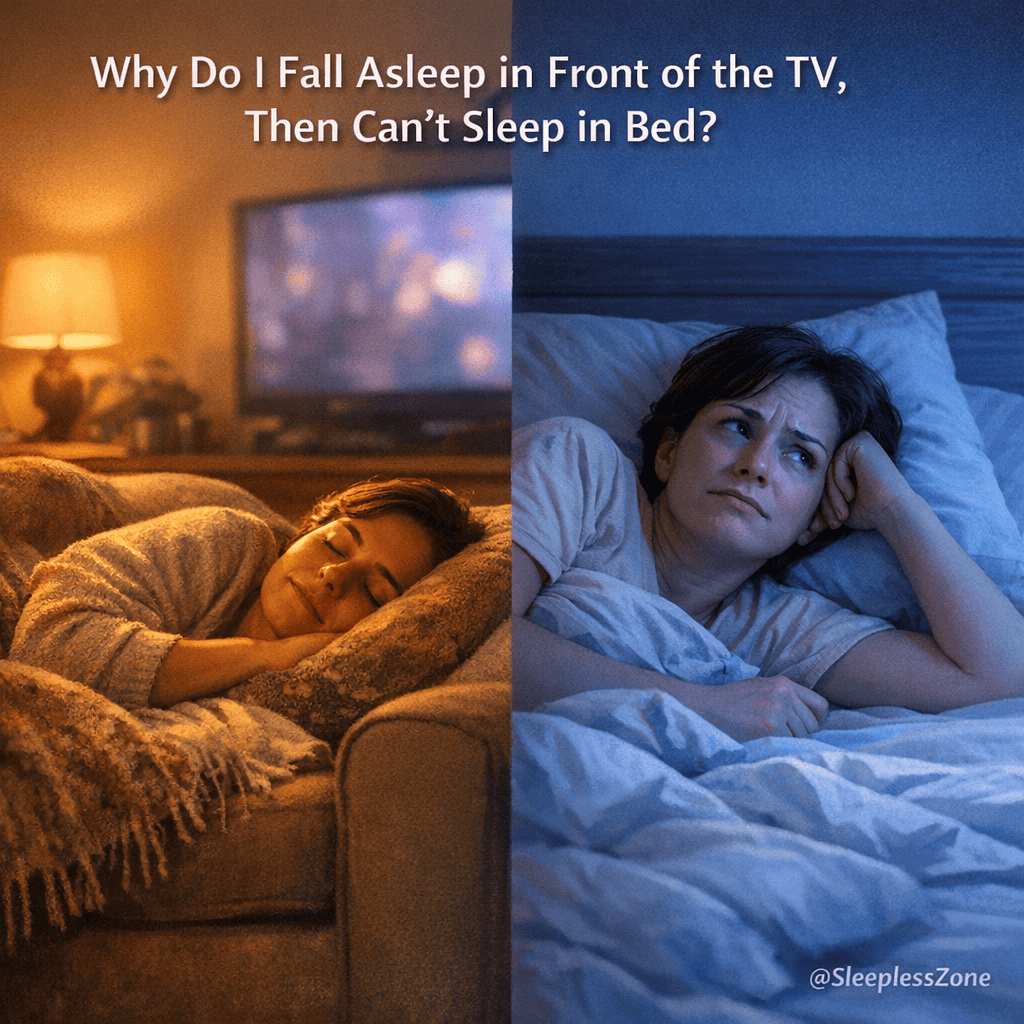
One of the mysteries to me about my own insomnia is “Why do I fall asleep in front of the TV then can’t sleep in bed?”
It’s actually the family jokethat as soon as they switch the TV on, I’m ‘out like a light’; then I go to bed and – wide awake, with the day’s problems whirling round in my head.
No matter how much I had been looking forward to enjoying that program!
Key Takeaways
- Falling asleep on the couch usually means your body is ready for sleep, but the move to bed can wake you back up.
- TV light, sound, and the shift in location can break the sleepy feeling and make it harder to fall asleep again.
- A consistent bedtime routine, less screen time before bed, and dimmer evening light can reduce this problem.
- If this happens most nights, or you feel tired during the day, insomnia, sleep apnea, or another sleep issue may be part of it.
Frequently Asked Questions About Falling Asleep in Front of the TV and Not Sleeping in Bed
Why do I get sleepy on the couch but wake up when I go to bed?
That usually happens because your body is already tired, but the change in location wakes you up just enough to notice it. Walking to bed, turning on brighter lights, or leaving the TV behind can break the sleepiness that built up on the couch.
Does falling asleep with the TV on hurt sleep?
It can. TV light, noise shifts, and late-night stimulation can make sleep lighter and more broken. If the TV is part of your bedtime routine, it can also train your brain to fall asleep in front of the screen instead of in bed.
How can I stop falling asleep on the couch first?
Keep the last 30 to 60 minutes before bed low-key, dim the lights, and go to bed when you first feel sleepy instead of waiting until you crash on the sofa. If needed, move your bedtime earlier by 15 to 30 minutes and keep your wake time steady.
When should I talk to a doctor about this?
Bring it up if it happens most nights, if you’re exhausted during the day, or if you snore, gasp, or wake up unrefreshed. Those signs can point to insomnia, sleep apnea, or another sleep problem that needs attention.ing with the top-of-page answer and ending with sources and author signals.