
At 7 a.m., your night shift may be over, but your brain is often getting its strongest signal to stay awake. Daylight, household noise, errands, and a buzzing phone can turn a tired body into a frustrated one.
This pattern happens when your required sleep time clashes with your body clock, creating circadian misalignment. Natural strategies can make sleep after work more reliable, especially when you use them as a routine instead of an emergency fix.
The goal is not a perfect schedule. It is a protected recovery window that helps you wake up safe, rested, and able to function with better sleep quality.
Key Takeaways
- This pattern improves when you keep a protected sleep block, even on days off.
- Bright light early in overnight work can support alertness, while limiting morning light helps prepare your brain for sleep.
- A planned 20- to 30-minute nap and early-shift caffeine can help, but late caffeine often steals sleep later.
- Blackout curtains, noise control, and clear household boundaries matter as much as a bedtime routine for sleep quality.
- Persistent sleepiness, near-miss crashes, drowsy driving, or insomnia lasting a month deserve medical attention.
Why Shift Work Insomnia Feels Different
After overnight work, you may feel exhausted but still unable to settle. This circadian misalignment reflects a conflict between work timing and biological timing, not a lack of willpower. Your body clock follows a circadian rhythm shaped by light, meals, movement, and social routines.
Your body clock and sleep pressure can disagree
Sleep pressure builds the longer you stay awake, and sleep deprivation can intensify it. However, it cannot always overpower a circadian system that expects daylight and activity. Morning light tells the brain’s master clock, the suprachiasmatic nucleus, that the active part of the day has begun.
As a result, sleep during the day is often lighter and more easily interrupted. A ringing doorbell or sun leaking around a curtain can wake you faster than it would at midnight.
When it may be shift work sleep disorder
Shift work sleep disorder involves insomnia, excessive sleepiness, or both, tied to a work schedule that overlaps your usual sleep period. Symptoms typically persist for at least one month and affect work, home life, or driving safety.
An NIH review notes that clinicians may use a sleep diary or activity tracker for at least seven days to spot the pattern. Sleep disturbances, reduced cognitive performance, irritability, unplanned dozing, and waking unrefreshed all belong in that record.
The immediate danger is sleepiness during a safety-sensitive task or the drive home, raising the chance of workplace accidents. Over time, chronic short sleep is associated with health risks, including mental health problems and cardiovascular disease.
Build a Daytime Sleep Room That Works at Noon
Your bedroom has to compete with a world that’s awake. Treat it less like a casual nap space and more like a protected recovery room for sleep after work.
Block light, noise, and predictable disruptions
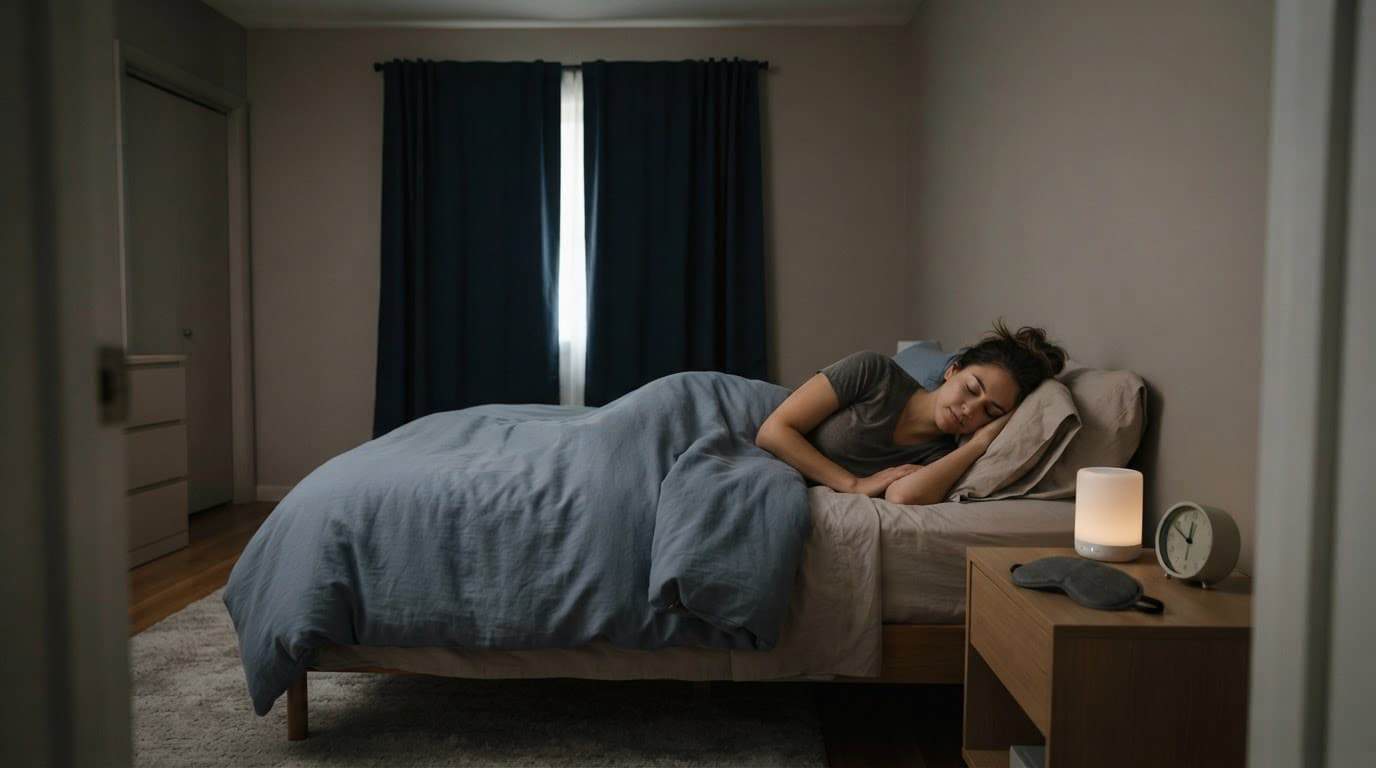
Use blackout curtains that overlap the window frame, not thin curtains that only dim the room. Cover small gaps if natural light still reaches your pillow. An eye mask can help, but it works best as backup rather than your only light barrier.
White noise, a fan, or earplugs can soften traffic and household sound. Along with an eye mask, these non-drug sleep aids help limit sleep disturbances from traffic, doorbells, and notifications. Keep the bedroom cool and reserve the bed for sleep when possible. Darkness, quiet, and a steady temperature all support sleep quality. Put your phone on Do Not Disturb, then give one or two trusted people a way to reach you for genuine emergencies.
A five-minute interruption can be enough to end your sleep during daylight hours, because your brain already expects the day to be active.
Protect the first hour after work
The period between clocking out and getting into bed can decide how easily you fall asleep. After a night shift, go home before errands when you can. A light snack is fine if you are hungry, but avoid turning breakfast into a long, bright, social event.
Keep your post-shift routine boring and repeatable. Wash up, lower the lights, silence notifications, and get into bed. Together, these room and wind-down habits support good sleep hygiene. Alcohol may make you drowsy at first, yet it can fragment sleep later and leave you less restored.
Use Light to Guide Your Body Clock
Light is one of the strongest cues your body receives for its circadian rhythm. Used at the right time, it can reduce circadian misalignment. It can also keep you alert at work and make sleep easier after the shift.
Get bright light early, then dim things down
If you work several consecutive shifts, use brighter workplace light during the first half of each night shift. Some people use a purpose-made bright light therapy device before work or early in the shift. Choose timing that fits your planned sleep schedule, since timing matters more than intensity alone.
The CDC/NIOSH guidance on light and night work advises reducing bright-light exposure during the second half of a night shift when your goal is sleep after work. Late light can delay the release of melatonin and make your morning wind-down harder.
People with eye conditions, bipolar disorder, migraines triggered by light, or medicines that increase light sensitivity should check with a clinician before using the device.
Make the commute part of the sleep plan
After work, natural light can wake your alerting system before you reach home, making daytime sleep harder. Dark wraparound sunglasses may reduce that exposure if they do not impair your ability to see road hazards.
Once home, keep lights low and avoid scrolling in a brightly lit room. You do not need total darkness every minute, but the message should stay consistent: the active period is ending.
Time Naps and Caffeine for a Safer Night Shift
Naps and caffeine work best when they support your sleep plan rather than replace it. For a night shift, use a short nap to briefly offset sleep deprivation, then stop caffeine early enough to protect the later wind-down.

| Point in the shift | Helpful option | What to avoid |
|---|---|---|
| Before work | A 20- to 30-minute nap | Sleeping so long that you wake groggy |
| First half of the shift | Bright light therapy, when appropriate, and modest caffeine | Treating energy drinks as a meal |
| Second half of the shift | Water, a light snack, brief movement | More caffeine close to bedtime |
| After work | Dim light and a direct trip home | Grocery runs under harsh store lighting |
The pattern is simple: support alertness early, then protect the wind-down.
Use strategic napping wisely
A short nap before work can reduce the sharpest edge of sleep loss. If your workplace allows it, a brief scheduled nap break may also help during a long overnight shift.
The American Academy of Sleep Medicine guideline supports planned naps for night workers because they can improve alertness and performance. Give yourself a few minutes to wake fully before driving or performing safety-sensitive work.
Stop caffeine before it follows you to bed
Caffeine consumption can help, but late-shift caffeine often becomes tomorrow morning’s insomnia. Keep caffeine to the first half of your shift and use the smallest amount that helps.
If you rely on repeated large coffees or energy drinks to stay awake, take that as useful information. Your sleep quality still depends on protecting the main sleep period.
Make Rotating Shifts and Home Life Less Hostile to Sleep
Shift workers often lose sleep when schedules change, but relationships and obligations can make the loss worse. A clear plan reduces the need to renegotiate your rest every week.
Keep an anchor sleep block
For a fixed overnight schedule, keep the same core hours in your sleep schedule most days. You can use a short pre-shift nap if needed, but keep the main sleep block stable enough for your body to learn what to expect.
On days off, avoid a full return to daytime hours if you soon resume a night shift. Abrupt reversals can create circadian misalignment. Instead, protect a few consistent hours for daytime sleep and save a predictable awake period for meals, family time, and errands.
Healthcare workers, emergency responders, and on-call staff often face shift extensions and last-minute changes. Those demands make a shared household calendar especially useful. Let people know when you are unavailable unless something is urgent.
Ask for forward rotation when possible
A forward, or clockwise, rotation moves from day shifts to evening shifts to overnight duties. Many people find that direction easier than rotating backward, because the body clock can delay more easily than it can advance.
Bring useful details to a manager or scheduler: your shift sequence, actual sleep time, commute sleepiness, and any near misses. Then ask for a practical change, such as a trial of forward rotation, fewer short turnarounds between shifts, or more recovery time after a run of overnight duties. These changes may help protect sleep quality.
Use Supplements Carefully and Know When to Seek Help
Natural does not always mean risk-free. Supplements can be useful tools, but they shouldn’t become your only sleep aid or substitute for a protected sleep window.
Treat melatonin as a timing tool
Over-the-counter melatonin supplements can help some night workers prepare for sleep during the day when taken at the right time. The supplement is usually taken several hours before the planned sleep period, rather than after lying awake for an hour.
However, melatonin isn’t FDA-approved to treat shift work sleep disorder. It can cause headaches, nausea, vivid dreams, and next-day grogginess. Ask a pharmacist or clinician before using it if you take regular medication, are pregnant, or manage a health condition.
Prescription wake-promoting agents, including modafinil and armodafinil, may be prescribed for excessive sleepiness linked to this condition. These wake-promoting agents aren’t natural sleep solutions, and they don’t replace sleep.
Get checked when safety or function slips
Talk with a clinician if insomnia or sleepiness continues for a month despite changes to light, naps, caffeine, and your sleep environment. They can help identify other causes and discuss treatment options. The Cleveland Clinic guidance also highlights the need to rule out other causes of poor sleep.
Seek help sooner for drowsy driving, falling asleep while driving, a crash or near miss, loud snoring with breathing pauses, or worsening depression or anxiety. If you don’t feel safe to drive home, arrange another ride.
Protect Sleep Before You Need a Rescue
At 7 a.m., sleep protection begins with choices made before you reach your bedroom. Dim light, a direct commute, a dark room, and firm household boundaries protect your daytime sleep.
This problem rarely disappears after one good nap. A repeatable routine can reduce the daily fight between your job schedule and your body clock.
FAQs
Can bright light therapy help shift work insomnia?
It can help when you use it early in a run of overnight work and reduce light after work. Wrong timing can keep you alert when you need to sleep, so follow device instructions and ask a clinician if you have a condition affected by bright light.
Is a long pre-shift nap better than a short nap?
Usually, a 20- to 30-minute nap is easier to wake from and less likely to leave you groggy. A longer nap may suit some people, but build in enough time to feel fully alert before commuting or starting safety-sensitive work.
Are blackout curtains enough for sleep after work?
They are a strong start, but sleep after work also needs noise control and fewer interruptions. Pair darkness with a quiet room, silenced notifications, and a household plan that protects your sleep hours.
Can melatonin supplements help with sleep after overnight work?
They may help when taken at the right time, but timing varies by schedule. The supplement can cause side effects and interact with medicines, so ask a clinician first if you’re pregnant or have a health condition.
Are wake-promoting agents such as modafinil and armodafinil appropriate?
A clinician must determine whether these medicines are appropriate for you. These medicines don’t replace sleep and may not suit everyone.