
A bedroom can feel cool and still leave you waking with a dry throat or a clammy pillow. If that sounds familiar, bedroom humidity is worth checking before you change your bedding or turn up the heating.
A small humidity meter can help you tell whether the air needs more moisture, less moisture, or no adjustment at all. Start with a comfortable range, then look at what happens in your room overnight.
This post may contain affiliate links. If you make a purchase through these links, I may earn a small commission at no extra cost to you.
Key Takeaways
- Aim for 30% to 50% relative humidity in the bedroom. If readings stay above 60%, investigate moisture sources.
- Use a digital hygrometer near the bed, away from windows and heaters. Check it at bedtime and after waking.
- For dry winter air, adjust heating and consider a well-maintained humidifier. For damp air, address condensation, ventilation, and leaks before relying on a dehumidifier.
- Humidity affects comfort, but it isn’t a stand-alone cure for insomnia. Temperature, bedding, and health symptoms matter too.
What bedroom humidity range should you aim for?
For most homes, 30% to 50% relative humidity (RH) is an ideal humidity level. The EPA’s guidance on indoor moisture recommends that range where possible and advises keeping indoor RH below 60% to limit mold risk.
Relative humidity describes how much water vapor the air holds compared with the maximum it could hold at its current temperature. That last part matters. If room temperature changes overnight, the RH reading can change even when you haven’t added water to the air.
You don’t need to hold the bedroom at one exact number. A reading of 38% one evening and 46% the next calls for no correction if you feel comfortable and see no signs of dampness. Treat 30% to 50% as a working humidity level, not a nightly score.
In a cold room, moisture may condense on a chilly window even when a meter elsewhere reads below 50%. Conversely, one reading above 50% isn’t proof of a mold problem. Persistent readings, condensation, and musty smells tell you more than a single number.
How humidity can affect your sleep
Your sleeping environment can affect sleep quality, though changing humidity won’t treat insomnia.
Dry air can make breathing feel uncomfortable
Dry air may irritate your nose and throat, especially if you breathe through your mouth or have a cold. You might wake needing a drink or notice that your lips and skin feel tight. A humidifier may ease dry-air discomfort, but congestion can have other causes, including allergies or an infection.
If you’re ill, changes to your sleep environment can sit alongside other ways to sleep more comfortably with a cold. Persistent throat pain, respiratory issues, or breathing trouble deserve medical advice rather than another adjustment to the humidity setting.
Damp heat makes it harder to cool down
Humidity can affect temperature regulation by making it harder for your body to release heat as you settle to sleep. On a warm, humid night, sweat evaporates less readily, so bedding can feel sticky even when the thermostat looks reasonable. You may wake to throw off the duvet, then feel cold later.
Research on humidity and sleep stages needs careful reading. A study of indoor conditions and sleep found associations involving humidity, temperature, air pollution, arousal, and non-REM sleep. It doesn’t establish that a particular bedroom RH reading directly reduces REM sleep or deep sleep. For day-to-day decisions, repeated discomfort and waking are more useful clues.
Measure bedroom humidity before changing it
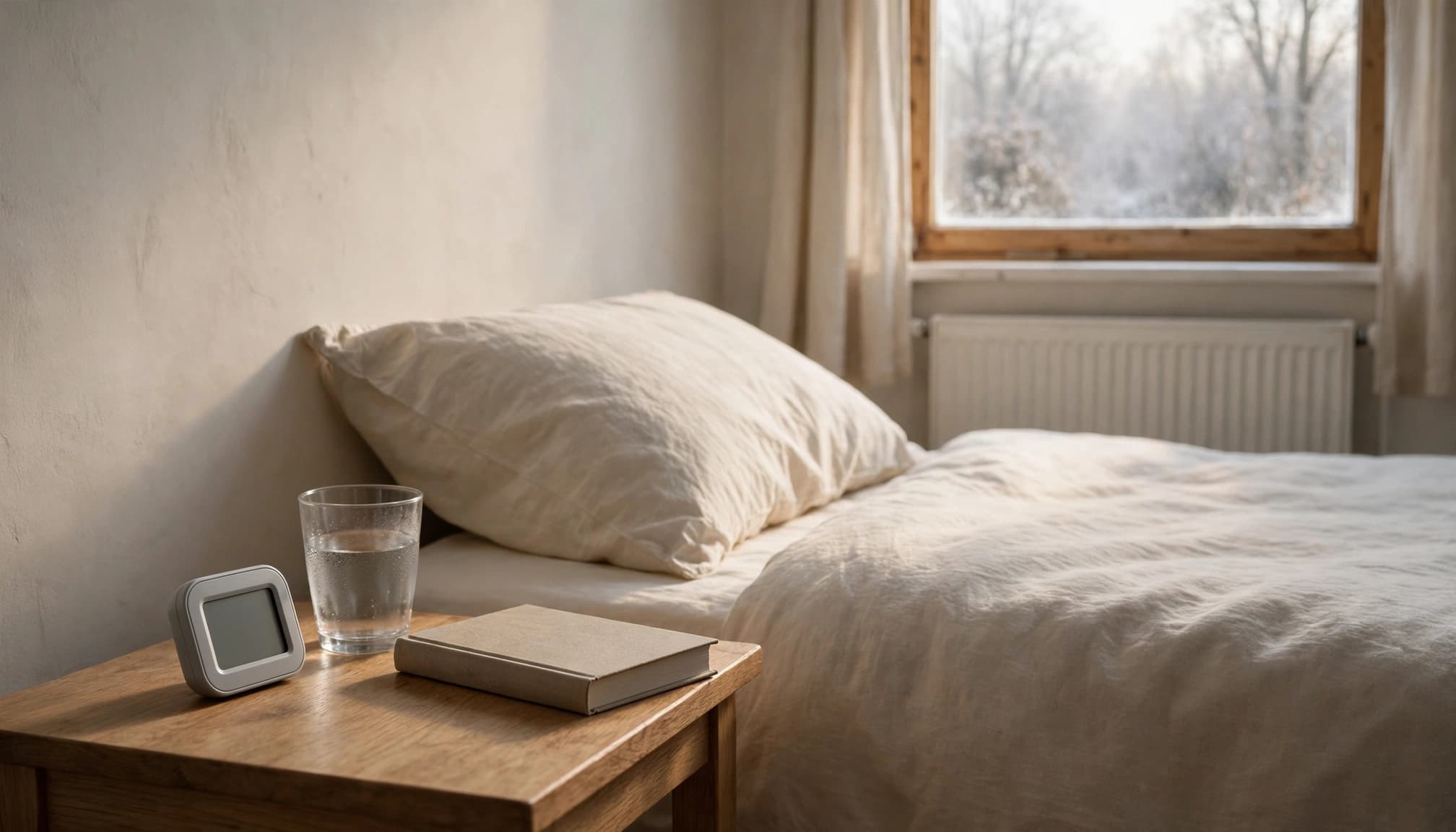
Put the hygrometer where you sleep
A basic digital hygrometer displays RH as a percentage, often alongside temperature. Set it on a bedside shelf or dresser near the bed, with room for air to circulate. Keep it away from a radiator, humidifier outlet, direct sun, and the window glass. Those spots can give readings that don’t reflect the air around you.
If your heating thermostat is in the hallway, its reading may differ from conditions in the bedroom. The EPA’s indoor air quality guide recommends a humidity gauge so you can understand your bedroom’s indoor climate rather than guess.
Look for a pattern over several nights
Check the meter before bed and again when you wake. Write down the temperature, RH, and any signs you notice, such as a dry nose or wet window. Keep the routine short; you don’t need to watch the display while trying to sleep.
If a reading seems odd, move the meter to another open spot for a day or compare it with a second hygrometer. Consumer meters can vary, so small differences matter less than a clear pattern.
A comfortable reading beside the bed doesn’t rule out dampness behind a wardrobe against a cold outside wall.
Signs the air is too dry or too damp
Clues that point toward dry air
A scratchy throat on waking, dry lips, irritated nasal passages, or unusually tight-feeling skin can accompany low RH. These signs often appear in winter, when central heating lowers the relative humidity of cold outdoor air.
Still, symptoms aren’t a reliable humidity meter. Snoring, mouth breathing, medication, allergies, and illness can cause similar discomfort. If your hygrometer stays within range, investigate those possibilities instead of adding moisture.
Clues that point toward excess moisture
Watch for recurring condensation, a musty smell, damp patches, or mold and mildew around window frames and outside walls. Bedding that feels clammy can be another clue, although a heavy duvet may simply trap heat. Persistently damp conditions can favor dust mites, but a humidity reading alone can’t confirm their presence.
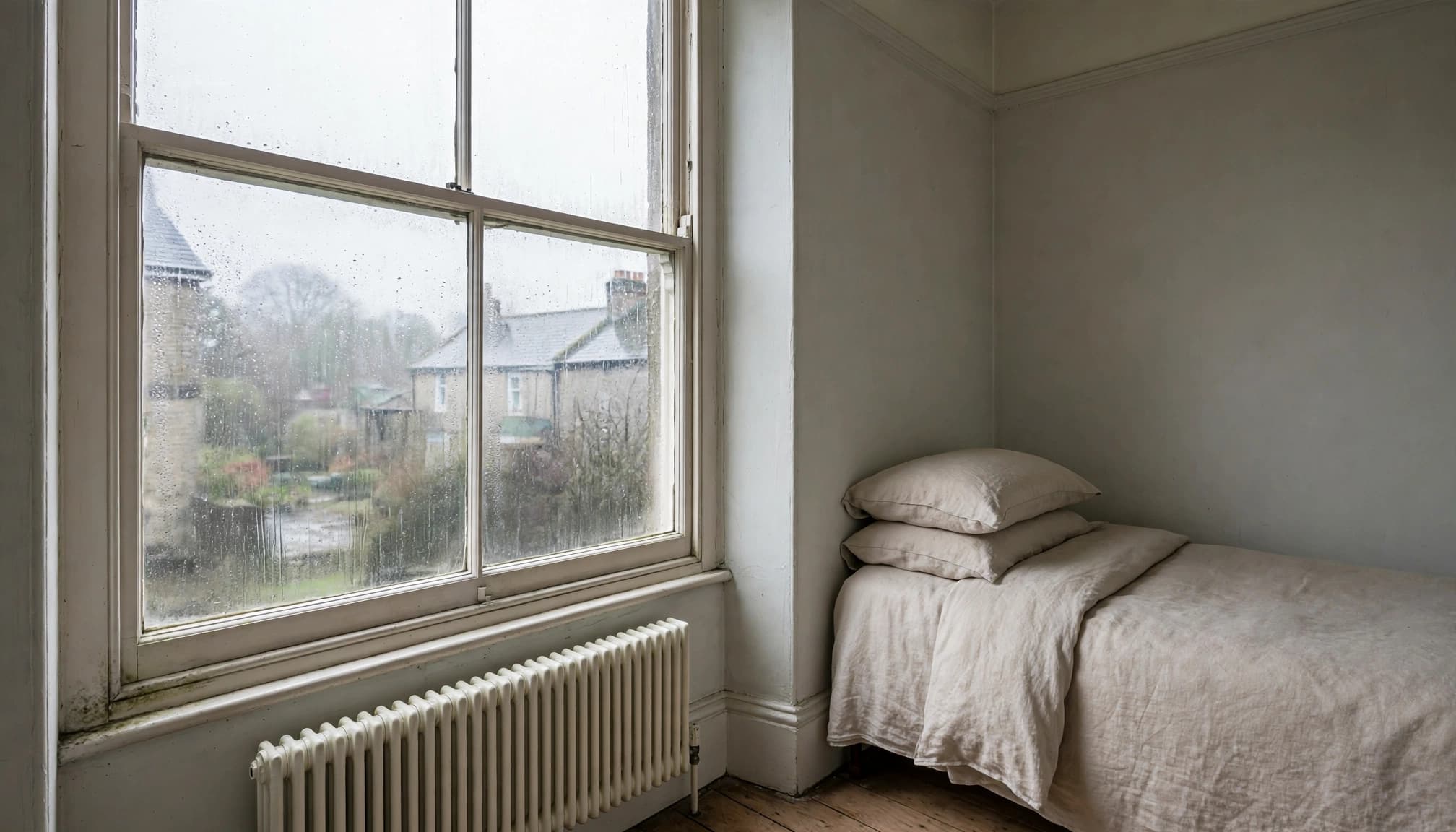
Check behind furniture as well as obvious surfaces. If dampness returns after cleaning, look for a leak, poor ventilation, or a cold surface where water keeps condensing. Tell your landlord or building manager about persistent dampness you can’t resolve.
What to do when your bedroom is too dry
Start with heating and the air around your bed
If RH falls below 30% for several nights, first check whether the bedroom is hotter than you need. Turning down unnecessary heating may improve comfort without adding moisture. If you’re unsure where to start, compare your setup with a guide to comfortable bedroom temperatures at night.
A dry nose can also come from a fan aimed at your face. Redirect airflow before buying a humidifier. Then give any change a few nights, checking both the meter and how you feel.
Use a humidifier without creating dampness
A humidifier adds moisture; it doesn’t need to run all night to help. Choose one that suits the room, follow its cleaning instructions, and use a humidistat or separate hygrometer to track the result. Empty and dry the tank as directed so standing water doesn’t become part of the problem.
Place the unit away from bedding, walls, and furniture that could get wet. Reduce its output if windows begin to mist or RH climbs past 50%. More moisture isn’t better once the air is comfortable. Bowls of water and houseplants aren’t reliable substitutes for a measured adjustment, and plants can add moisture to an already damp room.
What to do when the room stays humid
Find where the moisture comes from
If moisture levels remain high, check for everyday sources before buying a machine. Drying laundry indoors releases water vapor, while an unvented bathroom can send steam into a nearby bedroom. Use extractor fans where available, close the bathroom door during showers, and avoid drying clothes in the sleeping space when you can.
Open windows or vents when conditions make ventilation useful and it’s safe to do so. In humid weather, outdoor air may offer little relief. In colder weather, brief ventilation can help remove moisture, but keep the room adequately heated and check for condensation afterward. Never block permanent ventilation openings.
Older or poorly insulated homes may develop wet window frames or cold wall corners despite careful habits. Repeated mold or damp patches need the underlying cause addressed. A dehumidifier can collect water from the air, but it cannot repair a leak or warm a poorly insulated surface.
Choose a dehumidifier for persistent excess moisture
A dehumidifier removes moisture, so it’s the opposite of a humidifier. The EPA’s advice on controlling household moisture includes dehumidifiers and air conditioners, particularly in hot, humid climates.
Choose a unit suitable for the room and follow its instructions for clearance, drainage, and filter care. Noise matters in a bedroom: you may prefer to run it before bed, then see whether RH stays comfortable overnight. Empty and clean its water container regularly. If the meter remains high despite use, return to the moisture source rather than running the machine harder.
Check the climate inside your bedding, too
A hygrometer measures room air, not the mattress microclimate, the warm pocket beneath your duvet. You can have RH in the target range and still wake sweaty because your covers hold too much heat. Before blaming humidity, try a lighter duvet or fewer layers for several nights.
Cotton bedding or linen sheets may feel more comfortable if your bedding tends to cling when you’re warm. Mattress construction can affect how warm the bed feels too, but no mattress material controls the room’s RH. If you share a bed, separate duvets let each person adjust warmth without changing the whole room.
Make one change at a time. A short note of the room reading, bedding, and overnight wake-ups can help you distinguish clammy air from an overheated bed. It also keeps a difficult night from turning into a long search for a perfect number.
Bedroom humidity FAQs
Is 60% humidity too high for sleeping?
An occasional 60% reading isn’t an emergency. However, the EPA advises keeping indoor humidity below 60%, with 30% to 50% ideal where possible. If your bedroom repeatedly reaches 60% or more, check for condensation and moisture sources, then work on bringing the reading down.
Can high humidity reduce REM sleep or deep sleep?
Warm, sticky conditions can wake you and make sleep less comfortable. Research doesn’t justify claiming that a particular RH percentage directly cuts REM sleep or deep sleep for everyone. If you wake hot, check room temperature and bedding alongside humidity.
Will a houseplant fix a dry bedroom?
Houseplants release some moisture, but they don’t offer predictable humidity control. Check a hygrometer before adding anything to the room. If the air is already damp, watering plants may add to the moisture you need to manage.
Why do I wake with a sore throat in winter?
Heating can lower relative humidity, and dry air may irritate your throat or nasal passages. Mouth breathing, snoring, and illness can also be responsible. Measure RH first, and seek medical advice if symptoms persist or worsen.
A comfortable range, without chasing a perfect number
If you wake dry or clammy, measure first. Keep bedroom humidity around 30% to 50%, then match any adjustment to a repeated reading and the signs in your room.
A comfortable bedroom also depends on temperature and bedding. Fixing moisture problems can remove one source of disturbed sleep, even when it isn’t the whole answer.