
Yes, cold feet can keep you awake by causing discomfort and slowing the heat loss that helps your body prepare for sleep. Gently warming your feet encourages blood vessels near the skin to widen, which helps heat leave your body’s core.
If you have cold feet in bed, the goal is comfortable warmth, without making your whole body hot. Start with loose, dry socks, then adjust your evening routine and bedding if your toes still feel chilly.
This post may contain affiliate links. If you make a purchase through these links, I may earn a small commission at no extra cost to you.
Key Takeaways
- Wearing loose, dry socks to bed is a simple first step for cold feet at night.
- Warm feet help your body release heat, while an overheated bedroom can interfere with sleep.
- A warm bath or foot soak before bed can help, but heating devices need care.
- Persistent coldness, colour changes, pain or poorly healing sores deserve medical attention.
Why Warm Feet Can Help You Fall Asleep
Your skin warms while your core cools
As bedtime approaches, your core temperature naturally falls, often by around half a degree Celsius. That change supports sleep onset, although it isn’t a precise threshold you need to measure.
Meanwhile, blood vessels in your hands and feet widen, a process called vasodilation. Warm blood reaches the skin, where heat can escape into the surrounding air. A review of sleep and thermoregulation describes this connection between peripheral warmth and cooling at the body’s core.
Cold feet encourage the opposite response, vasoconstriction. Blood vessels narrow to conserve heat, which can make the usual bedtime cooling process less efficient.
Socks have promising, limited evidence
A small study of bed socks found that participants fell asleep sooner and slept longer while wearing socks in a cool environment.
That’s encouraging, but it doesn’t establish that socks will prevent awakenings or treat insomnia. The study also doesn’t prove that socks improve deep sleep. Evidence about falling asleep doesn’t establish better sleep depth.
There’s also no established target foot temperature or guaranteed warming time. Aim for feet that feel comfortably warm, with no sweating, burning or pressure.
Why Your Feet Feel Cold Only in Bed
Less movement and cooler surroundings
During the day, walking and other movement help generate warmth. At night, prolonged sitting, a cool floor and getting into cold sheets can leave your feet chilly even when your torso feels comfortable.
Damp feet lose heat more readily, so sweaty socks can make the problem worse. Tight clothing and sock cuffs can also create pressure and discomfort. Smoking affects blood vessels, while stress can trigger vessel narrowing.
If both feet warm up with gentle movement or dry socks, without pain or colour changes, the pattern is generally less concerning.
Individual differences affect warmth
Muscle helps generate heat, while body fat changes how heat moves between the core and skin. Hormones, including estrogen, also affect temperature regulation and blood vessel responses.
These differences may help explain why women often report cold feet. However, the frequently repeated “one in three women” figure isn’t a dependable population estimate.
Cold feet don’t automatically mean poor circulation. Still, persistent symptoms deserve attention, particularly if they accompany fatigue, numbness or other changes. A sensation of coldness when the skin feels warm can also suggest a nerve-related problem.
Five Ways to Warm Cold Feet Before Bed
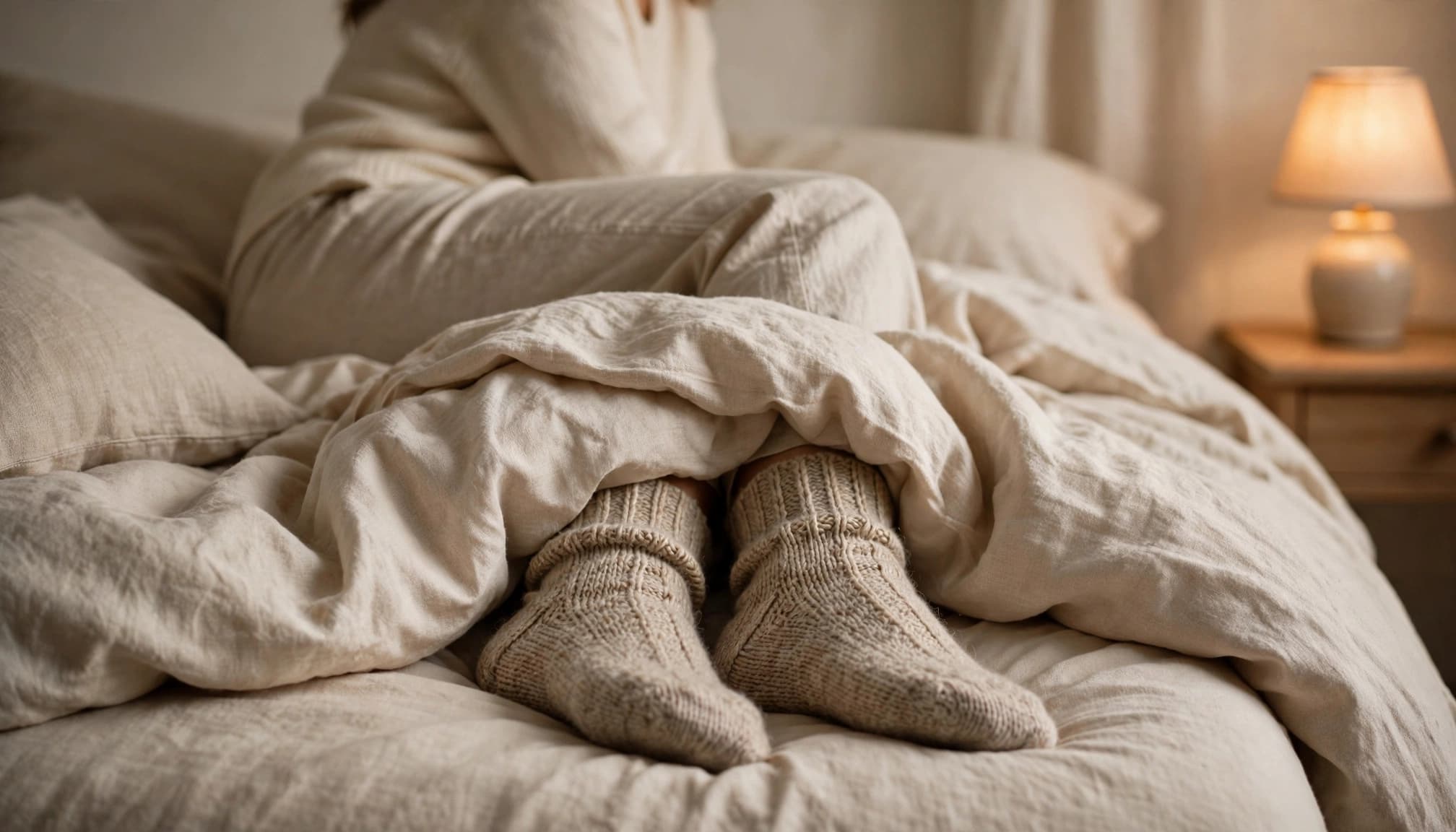
Start with the gentlest option that makes you comfortable.
- Put on loose, dry socks. Wool or merino wool socks provide insulation and manage moisture. Choose a relaxed cuff with room to move your toes. Ordinary breathable socks can also work, and merino isn’t essential for sleep. If you have sweaty feet, change damp socks before bed.
- Warm your socks first. Briefly warm them in a dryer or with a hairdryer on a low setting while they’re off your feet. Keep the hairdryer moving and away from water. The socks should feel mildly warm, never hot.
- Add gentle movement. Walk around indoors, try ankle circles or do a few comfortable calf raises before settling down. A gentle foot massage may also feel soothing. Stop if movement causes pain, and avoid vigorous exercise before bed if it leaves you alert.
- Pre-warm the bedding. Hot water bottles, a heating pad, heated blankets and microwaveable grain bags can warm cold sheets. Follow product instructions, use protective covers and avoid direct skin contact. Switch devices off before sleep and remove bottles or grain bags. If you have diabetes or reduced sensation, don’t rely on your feet to judge temperature. Seek individual advice before using direct heat.
- Choose steady warmth over contrast bathing. Contrast bathing alternates warm water for a few minutes with cold water for ten seconds, repeated four to six times. It isn’t an established sleep treatment, and cold can trigger Raynaud’s symptoms. Gentle, consistent warmth is the better bedtime starting point.
A Simple Warming Routine Before Lights Out

About an hour before bed, try a comfortably warm bath or foot soak lasting 10 to 15 minutes. Avoid water that feels painfully hot or leaves you flushed or dizzy.
Afterwards, dry your feet carefully, including between the toes. Put on loose socks if needed, then spend the remaining time in dim light with a quiet activity. This comfortable routine may support sleep quality, though it can’t guarantee better sleep.
Our guide to warm baths before sleep explains why the cooling period afterwards matters. Research is stronger for warm baths and showers than for foot soaks alone.
By lights out, your feet should feel comfortable while the rest of you feels neither hot nor shivery. Remove a layer if you begin sweating.
Pre-warming your feet can help without heating the entire bedroom, which may leave you too hot later.
Try one change at a time over several nights. That makes it easier to notice whether socks, a soak or different bedding actually helps you settle.
Keep the Room Cool Without Chilling Your Feet
Bedroom-temperature recommendations vary. Some guidance suggests 16 to 18 C (61 to 64 F), while other advice gives 65 to 68 F (about 18 to 20 C). These are starting ranges, not rules for every sleeper.
Our practical starting point is around 18 C, adjusted for your bedding, sleepwear and comfort. Our guide to bedroom temperature for sleep covers those adjustments in more detail.
If your torso feels comfortable but your feet are cold, try socks or warming the foot of the bed before raising the thermostat. Conversely, waking sweaty suggests you may need a lighter duvet.
Breathable cotton or linen sheets and removable layers make adjustments easier. A programmable thermostat can keep the room more consistent, while curtains can reduce heat gain and draughts.
A fan may help when the room feels stuffy, but direct airflow away from already chilly feet. Change damp socks rather than adding another pair over them. Older adults may need a slightly warmer room, so comfort matters more than hitting one number.
When Cold Feet Need Medical Attention
Recurring symptoms can have treatable causes
Raynaud’s phenomenon causes episodes of reduced blood flow, often after cold exposure or stress. Fingers or toes may turn white or blue and feel numb. As circulation returns, they can become red, tingly or painful.
Arrange a medical appointment if this keeps happening, worsens or affects only one side. Persistent cold feet can also accompany an underactive thyroid, anemia, iron or vitamin B12 deficiency, or diabetes.
A clinician can assess symptoms, consider smoking history when evaluating circulation risks and request blood tests for blood count, iron status, B12, thyroid function or glucose. Testing should follow your history rather than assuming every cold-foot problem is a deficiency.
Some changes need prompt or emergency care
The NHS describes walking-related leg pain that improves with rest as a typical symptom of peripheral arterial disease, also called peripheral artery disease (PAD). It needs assessment, particularly alongside changes in the feet.
Seek help for these warning signs:
- Calf pain that repeatedly appears when walking and eases when you stop warrants a medical appointment.
- Non-healing sores, persistent numbness or worsening skin changes need prompt assessment, especially with diabetes.
- One foot suddenly becoming much colder than the other, particularly with pain, paleness, numbness or weakness, requires emergency medical care.
Don’t try to solve a sudden circulation change with a hot water bottle. Likewise, reduced sensation makes burns easier to miss, so direct heating can be hazardous even when it doesn’t feel hot.
Frequently Asked Questions About Cold Feet and Sleep
Is it okay to sleep with cold feet?
Mild, occasional cold feet are usually harmless if you otherwise feel well. There’s no need to force warmth if you’re comfortable and sleeping well. Pain, numbness, colour changes or persistent symptoms need a different approach.
Should I keep socks on all night?
You can, provided they’re clean, dry and loose. Remove them if your feet become sweaty or uncomfortable. Avoid tight or compression socks for bedtime unless a clinician has recommended them for your circumstances.
What if I sleep better with my feet uncovered?
That’s fine. Uncovering your feet can help you release excess heat when you’re too warm. Warming advice applies when coldness causes discomfort or delays sleep, but it doesn’t override your own comfortable sleeping preference.
Can warming my feet cure insomnia?
If cold feet sleep disruption keeps you awake, warming may remove one source of discomfort. Insomnia often has several causes. If sleep difficulties persist or affect daily life, seek support. Our guide to CBT techniques for insomnia explains approaches that address sleep habits and bedtime worry.
Aim for Comfortable Feet, Not a Hotter Bed
Cold feet can make sleep harder because warmth at the skin helps your body release heat. Loose socks, gentle movement and a well-timed warm soak are reasonable first steps.
Keep your bedroom comfortable and avoid overheating under heavy bedding. Most importantly, treat persistent or sudden changes as symptoms worth assessing, rather than something to cover with another blanket.