
Biofeedback uses real-time body measurements to teach relaxation skills that may make sleep easier. Neurofeedback for insomnia uses brain-activity feedback instead. It’s non-invasive and medication-free, but evidence for treating persistent insomnia remains limited.
If you feel exhausted yet wide awake, reducing arousal may help. However, relaxation doesn’t address every cause of poor sleep, and cognitive behavioural therapy for insomnia (CBT-I) has stronger evidence. Understanding what biofeedback measures helps separate useful training from promises it can’t support.
This post may contain affiliate links. If you make a purchase through these links, I may earn a small commission at no extra cost to you.
Key Takeaways
- Biofeedback measures signals such as breathing, heart rhythm and muscle tension so you can practise changing them.
- Neurofeedback uses scalp sensors to reward selected brain-activity patterns, but insomnia research shows mixed results.
- Sleep diaries and daytime functioning reveal more about progress than a better training score alone.
- CBT-I remains the first-line treatment for chronic insomnia; biofeedback may be a supporting approach.
How Biofeedback for Insomnia Works
Insomnia often involves hyperarousal: your brain or body stays alert when you want to rest. You might notice racing thoughts, tense muscles or heightened attention to every sound. Stress processing involving the limbic system can also contribute to alertness, though these sensors don’t measure it.
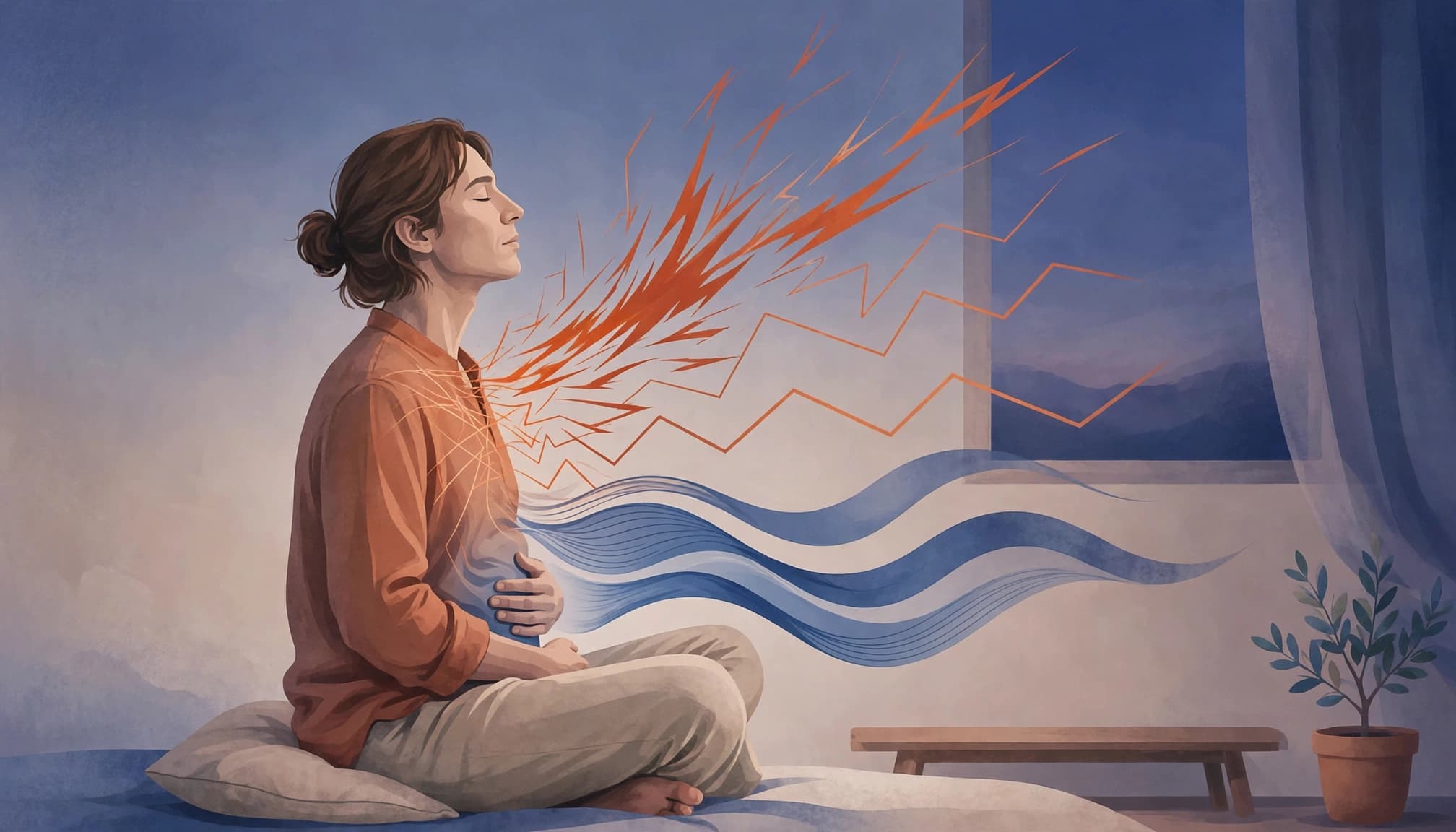
Biofeedback makes some of these responses visible. A sensor records a signal, software displays it, and you practise a relaxation skill while watching what changes. Over time, the aim is to use that skill without the equipment.
HRV and breathing biofeedback
Heart rate variability (HRV) describes changes in the time between heartbeats. HRV biofeedback pairs heart monitoring with comfortable, paced breathing to train coordination between breathing and heart rhythm. These signals offer an indirect view of the autonomic nervous system, which sensors don’t measure as a whole.
This involves vagal regulation, part of the parasympathetic system associated with rest and recovery. However, a higher training score doesn’t automatically mean easier sleep onset.
A pilot study involving cancer caregivers suggested possible sleep benefits. That population-specific finding doesn’t establish effectiveness for everyone with insomnia.
Other body signals you can train
Respiration sensors display breathing rhythm, helping you notice shallow or erratic breathing without forcing deeper breaths. Muscle sensors show tension, while temperature and skin-conductance sensors track other stress-related changes.
For practice without equipment, our guide to diaphragmatic breathing for insomnia offers a gentle starting point. Avoid long breath holds or uncomfortable breathing targets.
What Neurofeedback Looks Like
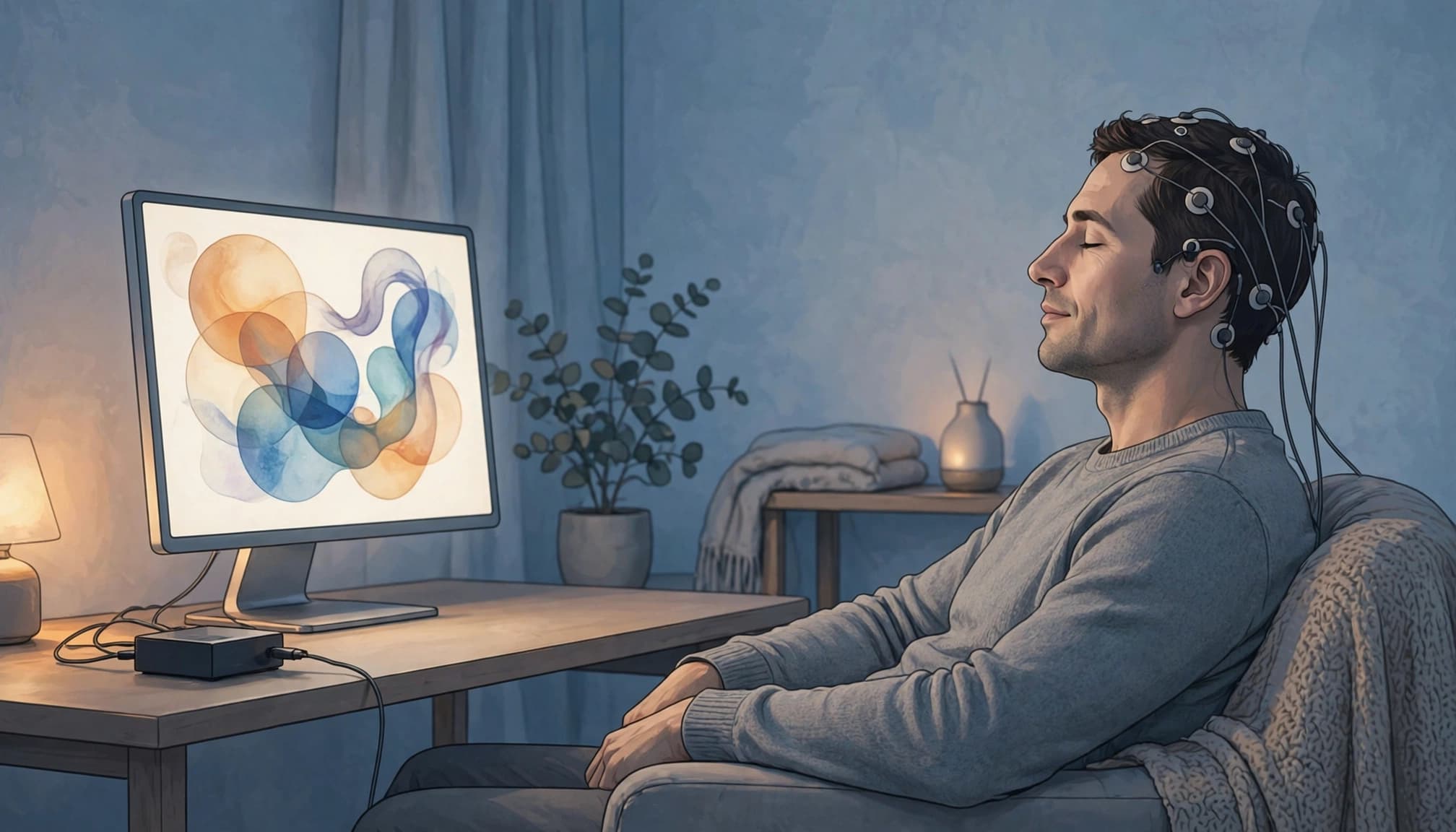
As a form of biofeedback, neurofeedback therapy measures brain activity rather than breathing or muscle tension. EEG sensors placed on your scalp record electrical activity; standard EEG feedback doesn’t send electricity into your brain.
Screens, games and repeated practice
During training, you sit comfortably while software translates selected EEG patterns into visual feedback. An animation or game responds when your activity meets the chosen target.
You don’t need to fall asleep during the session. Instead, the practitioner adjusts the training and watches how you respond. Repeated feedback may support neuroplasticity, but learning to change an EEG signal doesn’t guarantee insomnia relief.
SMR, infra-low frequency and alpha-theta training
Sensorimotor rhythm (SMR) training commonly targets activity around 12 to 15 Hz. Some studies associate it with improved perceived sleep quality and fewer insomnia symptoms.
Other approaches have different targets. Clinics describe ILF neurofeedback as influencing networks that include the default mode network, with the aim of reducing mental chatter. Alpha-theta training encourages slower, dreamlike rhythms and is sometimes used for trauma-related sleep disturbances and nightmares.
These descriptions explain treatment aims. Evidence hasn’t established that these protocols reliably treat those sleep problems.
What the Insomnia Research Shows
The distinction between feeling better and demonstrating a treatment-specific effect matters.
A 2021 review of neurofeedback research described promising findings, including changes in SMR activity and some sleep outcomes. However, studies differed in their methods, size and comparison groups.
A 2024 systematic review and meta-analysis found that surface neurofeedback didn’t provide additional improvements in self-reported sleep quality compared with control conditions. This weakens claims that neurofeedback reliably improves insomnia.
Subjective benefits still matter. Feeling less distressed about sleep can improve daily life. Yet questionnaire improvements don’t necessarily establish longer sleep or fewer awakenings on overnight testing.
CBT-I has the stronger evidence base. The American Academy of Sleep Medicine’s clinical practice guidelines recommend multicomponent CBT-I for chronic insomnia.
CBT-I addresses sleep-related habits and beliefs, including prolonged wakefulness in bed and fear about tomorrow. Biofeedback mainly trains physiological regulation. Our guide to CBT techniques for insomnia explains those behavioural and cognitive skills.
Vagus Nerve Devices and Red Light Are Different Approaches
Some clinics combine biofeedback with resonance-based nerve toning, electrical stimulation, or red-light treatment. These methods aren’t interchangeable.
Resonance breathing uses a breathing rhythm to influence heart-rate oscillations. Device-based nerve stimulation is a form of neuromodulation that applies an external stimulus, while biofeedback gives you information to practise a skill.
Red-light treatment, also called photobiomodulation, is sometimes promoted to regulate circadian rhythm and support deeper rest. Light exposure timing can affect the circadian rhythm, but proposed effects involving blood flow and inflammation haven’t established it as an effective insomnia treatment.
A package containing several methods also makes it harder to identify what helped. Improvement after a combined programme doesn’t prove that each component works.
Sessions, Timelines and Practice Between Visits
There isn’t an established session count that guarantees success with biofeedback for insomnia. Body-based training and different neurofeedback protocols also have different schedules.
What clinic schedules can tell you
Smart TMS describes a neurofeedback therapy course of 25 to 40 sessions, usually two or three weekly, lasting 45 minutes each. It reports that clients often notice changes within three to four weeks, including better focus, mood and deeper sleep.
Those are clinic-reported expectations across its service, rather than insomnia-specific trial results. A full course can therefore continue well beyond the first reported changes.
CBFC describes improvement within a few sessions for some clients, while chronic or trauma-linked sleep problems may require several weeks. Neither timetable predicts your response.
What happens outside the appointment
With body-based biofeedback, home practice may involve brief periods of comfortable breathing or releasing muscle tension. Practise during the day first, when falling asleep isn’t the immediate goal.
Our guide to progressive muscle relaxation for sleep offers another body-focused option. Skip tightening painful muscles and concentrate on release instead.
A calmer training trace shows a change in the measured signal. Sleep improvement still needs to be assessed separately.
How to Tell Whether Training Is Helping
Keep a simple sleep diary for one or two weeks before starting. Record your approximate time to fall asleep, nighttime awakenings, final waking time and daytime functioning.
Then continue during training. Look for trends across weeks rather than judging every night. Useful changes include less time awake, less distress during awakenings and better concentration the next day.
The Insomnia Severity Index (ISI) measures perceived insomnia symptoms. The Pittsburgh Sleep Quality Index (PSQI) assesses broader sleep quality. A clinician can use these alongside your diary to track change.
Wearables offer estimates, but they can’t reliably establish how much deep sleep you gained. Likewise, improved EEG or HRV scores alone don’t establish treatment success.
Agree on sleep-related goals before training begins. If only the device score improves, the treatment hasn’t yet demonstrated the benefit you’re seeking.
Safety and When to Seek More Support
Non-invasive doesn’t mean every exercise feels comfortable. Stop and tell the practitioner if training causes dizziness, headache, agitation or worsening sleep.
Body-focused attention can also trigger panic or distress, especially with trauma-related symptoms. Return to ordinary breathing and use an external focus, such as sounds in the room, if internal monitoring feels unsettling.
Tell your clinician about any over-the-counter sleep aids before adding training. Don’t stop prescribed sleep medication independently. Biofeedback may accompany medication, but reductions need the prescribing clinician’s supervision. Abruptly stopping some sleep aids, especially sedatives, can cause withdrawal and rebound insomnia.
Seek a clinical assessment if sleep problems occur at least three nights weekly for three months, particularly with daytime impairment. Mention loud snoring, gasping, witnessed breathing pauses or dangerous daytime sleepiness.
Pain, depression, medication effects, alcohol and irregular sleep timing can also disrupt sleep. Relaxation training won’t resolve all these contributors.
Frequently Asked Questions
Can biofeedback help me sleep without medication?
It may help some people reduce bedtime tension and settle more easily. However, research doesn’t establish it as a reliable replacement for insomnia treatment. CBT-I is the best-established medication-free option for persistent insomnia.
Why do I wake at 2 or 3 AM with racing thoughts?
Waking briefly is normal, but worry can prolong wakefulness. Alcohol, pain, hot flushes and sleep apnoea can also contribute. The clock time alone doesn’t identify the cause. Biofeedback may reduce arousal without preventing the original awakening.
Is a home biofeedback device enough?
A consumer device may support practice, but measuring a signal isn’t the same as treating insomnia. A guided approach can help interpret feedback and adapt uncomfortable exercises. If monitoring makes you more anxious, a simpler relaxation practice may suit you better.
A Practical Place for Relaxation Training
Biofeedback for insomnia offers a way to observe and practise changing stress-related responses. Its value depends on whether those skills improve your nights and daily functioning.
Keep sleep outcomes at the centre, rather than chasing perfect device scores. For persistent insomnia, CBT-I and assessment of other sleep disruptors provide a firmer foundation, with relaxation training as a possible addition.