
Sunday-night insomnia can begin with a harmless-looking Saturday lie-in. When sleep on free days shifts far later than your workweek routine, social jet lag can leave you tired yet oddly alert at bedtime.
This timing mismatch creates circadian misalignment between your body clock and the calendar. It isn’t a personal failure or an automatic reason to reach for a melatonin supplement. A steadier weekend can ease it without cutting the sleep you need.
Small changes in timing, morning light, and evening blue light cues can make Monday feel less punishing.
Key takeaways
- Social jet lag is the difference in the midpoint of sleep on workdays and free days.
- Extra weekend rest can increase sleep duration and reduce sleep debt, but a large sleep-in may delay your timing further.
- A consistent wake time, morning daylight, and dimmer evenings with less blue light are practical ways to steady your body clock.
How Social Jet Lag Is Measured With Sleep Midpoints
The term social jet lag is not a diagnosis, and no single cutoff applies to everyone. Researchers usually describe it as the absolute difference between your midpoint of sleep on workdays and free days.
Till Roenneberg and colleagues introduced the term in their original socialjetlag paper. The measure captures a familiar problem: your alarm demands an early weekday wake-up, then your weekend pattern swings later when that pressure disappears. This circadian misalignment links social demands with your body clock and helps estimate biological clock timing.
Use the midpoint, not only your bedtime
Your midpoint of sleep is halfway between falling asleep and waking up. If you sleep from 11:30 p.m. to 6:30 a.m., your midpoint is 3:00 a.m. If you sleep from 1:30 a.m. to 10:30 a.m. on Saturday, it moves to 6:00 a.m.
| Sleep day | Sleep window | Sleep midpoint |
|---|---|---|
| Workday | 11:30 p.m. to 6:30 a.m. | 3:00 a.m. |
| Free day | 1:30 a.m. to 10:30 a.m. | 6:00 a.m. |
That is a three-hour social jet lag gap. The Munich Chronotype Questionnaire, or MCTQ, compares reported sleep on workdays and free days, unlike objective methods such as actigraphy. A review of chronotype and social jet lag describes sleep midpoint as a useful behavioral marker of circadian timing.
Sleep debt and timing gaps are different problems
A later midpoint can happen because you sleep longer on weekends, sleep later, or both. A short workweek may reduce your sleep duration, while a late wake-up can also shift your internal timing. Sleep quality and timing are related, but distinct concerns.
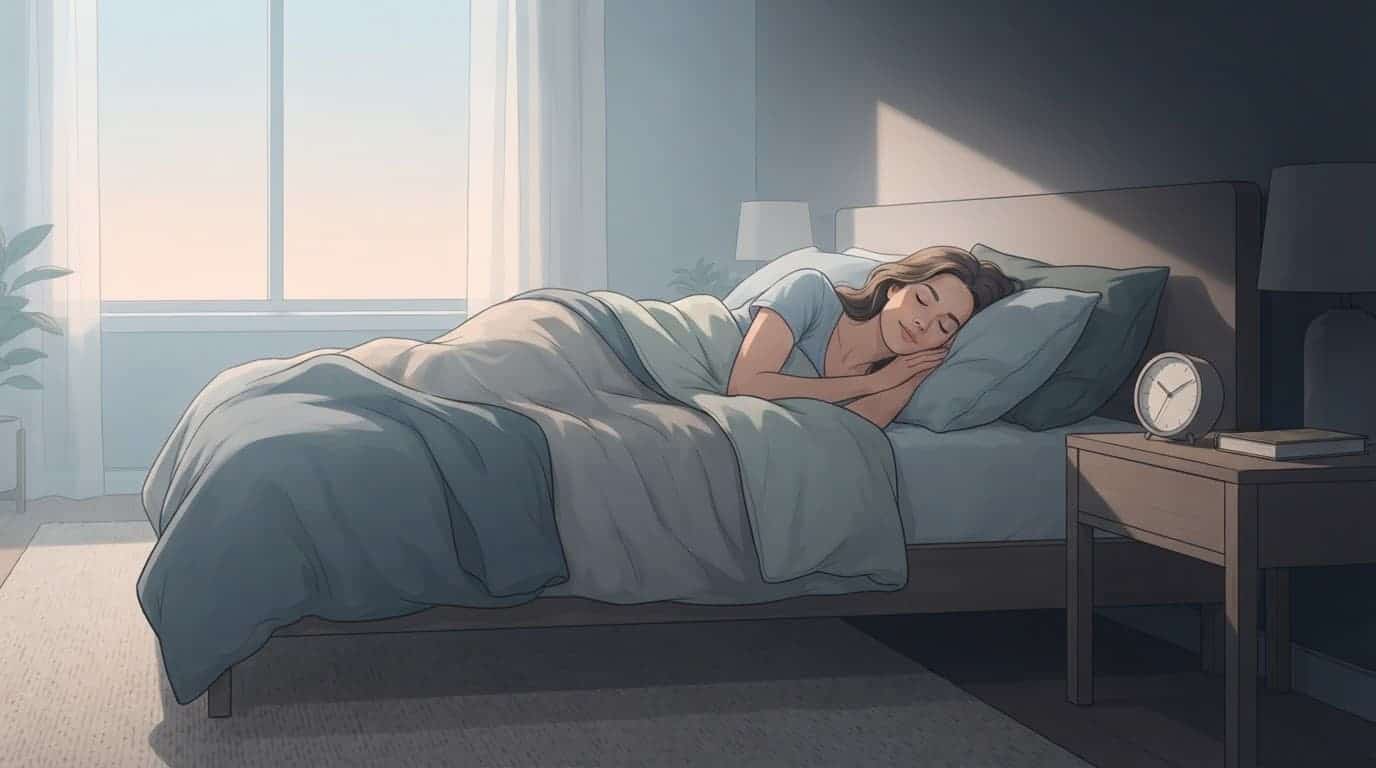
A weekend lie-in can repay some lost sleep while still making Sunday-night sleep harder.
The aim is not to wake at dawn every day. Instead, try to give your internal timing similar cues across the week.
Why Weekends Can Trigger Social Jet Lag and Insomnia
Social schedules often reward late nights and punish them with early mornings. A later weekend sleep schedule widens the gap between weekday and weekend timing, creating social jet lag and making bedtime less predictable.
Late chronotypes face a steeper mismatch
Your chronotype is your natural tendency toward earlier or later sleep. Night owls often feel alert later in the evening, but school, work, or commuting can conflict with their biological clock.
Their body clock may still favor a later start, even when daily obligations demand an early wake time. This mismatch can make it harder to keep sleep consistent.
Sleep timing commonly shifts later in adolescents. Early school start times can therefore create a strong mismatch. Young adults can face the same issue with classes, shift work, social plans, and early jobs.
Evening light tells the brain to stay alert
Bright room light and televisions can delay melatonin release and push sleep later. Blue light from phones and screens may keep the brain alert, while reducing evening blue light may support sleep.
Daytime light matters too. A 2025 real-life study in adolescents found that greater average daytime light exposure was associated with earlier sleep onset and wake time. Morning outdoor light gives your circadian rhythm a clearer signal than an indoor desk lamp.
Catch-up sleep has limits
Sleeping until noon after a draining week may feel restorative, but a large shift resembles moving across time zones before Monday. If your weekday alarm clock rings at 6:30 a.m., the change can reduce sleep quality and create circadian misalignment.
A shorter, earlier weekend recovery period usually causes less disruption and gives your circadian rhythm a steadier anchor. If you’re exhausted, protect sleep by going to bed earlier rather than moving your wake time several hours later.
What Research Says About Health Effects
Studies connect social jet lag with daytime sleepiness, poorer mood, body-weight changes, and poorer sleep quality. However, most research is observational. A systematic review of social jetlag research found a broad range of health and behavioral associations, but association does not prove that the timing gap directly caused them.
Daytime symptoms often arrive first
For many people, the immediate issue is less dramatic but still frustrating. You may feel foggy in the morning, rely on caffeine late in the day, feel sleepy after lunch, and then fail to feel sleepy at a sensible bedtime.
Social jet lag can worsen insomnia symptoms, yet it does not automatically cause chronic insomnia. Insomnia involves ongoing trouble falling or staying asleep despite enough opportunity for sleep. Stress, anxiety, pain, medication, caffeine, and sleep disorders can also play a part.
Metabolic and mood links need context
Research has linked larger sleep-timing differences to obesity, insulin resistance, and type 2 diabetes. It also reports mood disorders and cardiovascular disease, but these associations aren’t proof of direct effects. Sleep debt, chronotype, work pressure, and existing mental health can explain part of those links.
For example, one study in early adolescents found greater sleep-timing differences were associated with higher adiposity in girls, but not with an overall cardiometabolic risk score. That is a useful reminder to treat sleep timing as a modifiable pattern that may affect sleep quality, not a prediction of disease.
A Gentler Weekend Plan for Better Sleep
A rigid seven-day schedule is unrealistic for most people. Still, a realistic sleep schedule can narrow social jet lag and reduce circadian misalignment. Keeping your sleep timing in the same neighborhood gives your body clock more consistent cues.
Choose a realistic wake-time anchor
Start with your wake time because it sets the next night’s sleep pressure. For many people, keeping weekend wake-up time within 60 to 90 minutes of weekdays is a practical first target.
If you need more rest, try an earlier bedtime on Friday or Saturday to increase sleep duration instead of taking a huge morning lie-in. A brief nap can help after a poor night, but take it early in the afternoon and keep it short enough that bedtime remains possible.
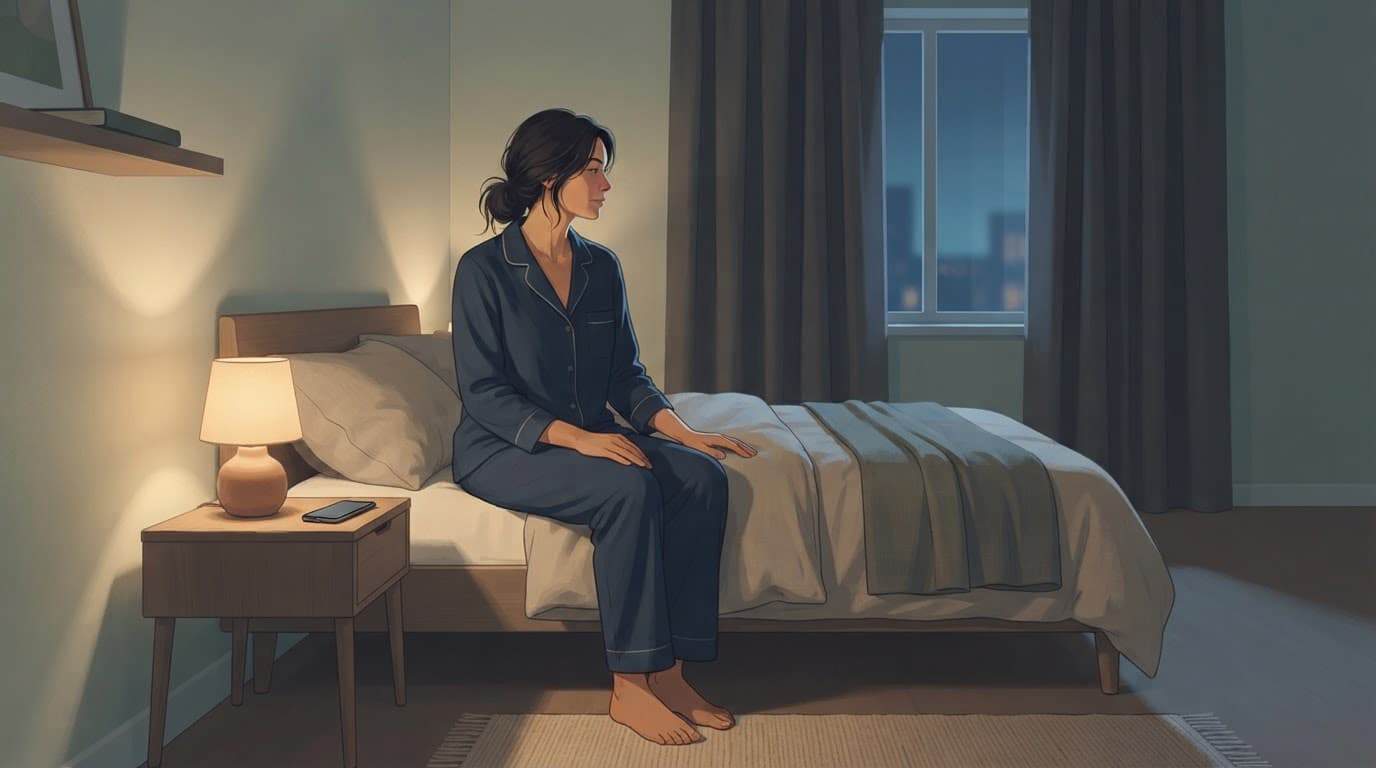
If you are wide awake in bed, avoid checking the clock. Get up, keep lights low, and do something quiet until drowsiness returns. This protects the link between your bed and sleep, which supports sleep quality.
Use light and routines to shift gradually
Get outside soon after waking, even for a short walk or a coffee by a bright window. Morning light supports your circadian rhythm and cues your biological clock. Together, these light, nap, and wind-down habits create a practical sleep hygiene routine. Before bed, reduce blue light and bright overhead lighting, then put your phone away because a blue light filter alone isn’t a complete solution.
Avoid using alcohol, sedating antihistamines, or a random melatonin dose to force an earlier bedtime. Alcohol can fragment sleep, antihistamines can cause next-day grogginess, and melatonin timing matters. Ask a pharmacist or clinician before trying melatonin, especially if you take medication or are pregnant.
When a Sleep Schedule Needs More Support
Talk with a healthcare professional if sleep trouble happens at least three nights a week for three months, affects your ability to work or drive safely, or continues after you steady your routine. Cognitive behavioral therapy for insomnia, often called CBT-I, can help when persistent sleep latency, or difficulty falling asleep, becomes part of the cycle. A professional can also review whether timed melatonin is appropriate, rather than recommending self-treatment.
Also seek advice if you snore loudly, wake gasping, have uncomfortable leg sensations, or experience severe daytime sleepiness. People affected by shift work may need an individualized sleep schedule aligned with rotating shifts.
A Steadier Weekend Helps Sleep
Social jet lag rarely improves through one perfect Sunday. A consistent wake-time anchor, more daylight early in the day, and modest weekend recovery support your biological clock. Less blue light in the evening places less strain on your body clock.
You don’t need a flawless routine. Reducing the gap between weekday and weekend sleep gives your sleep schedule a chance to become predictable again.
Frequently Asked Questions
Can weekend catch-up sleep cure social jet lag?
Catch-up sleep can reduce sleep debt, especially after several short nights. However, it won’t fully correct social jet lag if your weekend bedtime and wake time move several hours later. Earlier recovery sleep is often easier on your circadian rhythm, and melatonin timing is best discussed with a clinician.
Why does social jet lag affect night owls more?
Night owls naturally become sleepy later, partly because melatonin rises later in the evening. When school or work demands an early wake-up, they lose sleep on weekdays and often sleep much later on free days. Bright blue light at night can also delay sleepiness, so dimming screens may help.
How does the Munich Chronotype Questionnaire measure social jet lag?
The MCTQ asks when you usually fall asleep and wake up on workdays and free days. It helps identify your chronotype by comparing the midpoint of sleep across both patterns. Researchers use that difference to estimate social jet lag, or the mismatch between social obligations and preferred sleep timing.
Do observed links between obesity and type 2 diabetes prove causation?
No. These findings show an association, not proof that social jet lag causes either condition. Shared factors, including irregular routines and insulin resistance, may influence the results. More research is needed to determine whether it contributes to type 2 diabetes.