
A scary claim keeps popping up online: an “MIT doctor who discovered melatonin” warned that melatonin could “fry” sleep receptors in your brain. If you’re tired, frustrated, and staring at the ceiling at 2:00 a.m., that kind of headline can make you panic, or skip something that might actually help.
Here’s the calm truth. Melatonin is a hormone your body already makes. It’s not a sleeping pill, and it doesn’t work like one. Most problems people have with melatonin come down to timing, dose, and expectations, not permanent brain damage.
This guide breaks down what “fry” likely meant, what science says about melatonin receptors over time, and how to try melatonin in a safer, more useful way. If melatonin isn’t a fit, you’ll also get non-prescription options that often work better.
Key takeaways for anyone thinking about melatonin tonight
- Melatonin helps timing more than sedation. Think “body clock signal,” not “knockout.”
- Lower doses often work better. High doses raise side effects without adding much benefit.
- Timing matters. Many people do best taking it 1 to 3 hours before their target bedtime.
- Too much can cause grogginess and vivid dreams. Headaches happen for some people too.
- Nightly high dosing is where problems are more likely, including feeling “off” the next day.
- “Sleep receptors” is a simplification. Sleep and circadian rhythm involve many signals, not one switch.
- Safety note: If you’re pregnant or breastfeeding, have a seizure disorder, an autoimmune disease, or take blood thinners, talk with a clinician before using melatonin.
Did an MIT melatonin discoverer really say it can “fry” sleep receptors?

Viral quotes often travel without context. A short line gets pulled from an interview, clipped into a video, then reposted with a stronger headline. After a few rounds, “could cause tolerance in some people” turns into “fries receptors.”
It’s also worth clearing up a common mix-up. Melatonin was first isolated and named in 1958 by dermatologist Aaron Lerner and colleagues at Yale, not MIT. MIT has produced major circadian rhythm research over the decades, so it’s easy for social media to mash facts together. Still, without a verifiable source, it’s safer to treat the “MIT doctor” line as internet shorthand, not documented history.
So what does “fry” usually mean when a scientist talks casually? In biology, people use dramatic words to describe ordinary processes, like:
- Desensitization: receptors respond less strongly after repeated stimulation.
- Downregulation: the body temporarily reduces receptor activity or availability.
- Mistimed signaling: the message arrives at the wrong time and shifts your clock the wrong way.
None of those mean your brain is “cooked.” They do mean you can use melatonin in a way that makes sleep feel worse, even if the supplement itself isn’t “damaging” anything.
The biggest risk with melatonin usually isn’t harm, it’s using the wrong dose at the wrong time and training your sleep schedule in the wrong direction.
What people mean by “sleep receptors”, and what melatonin actually binds to
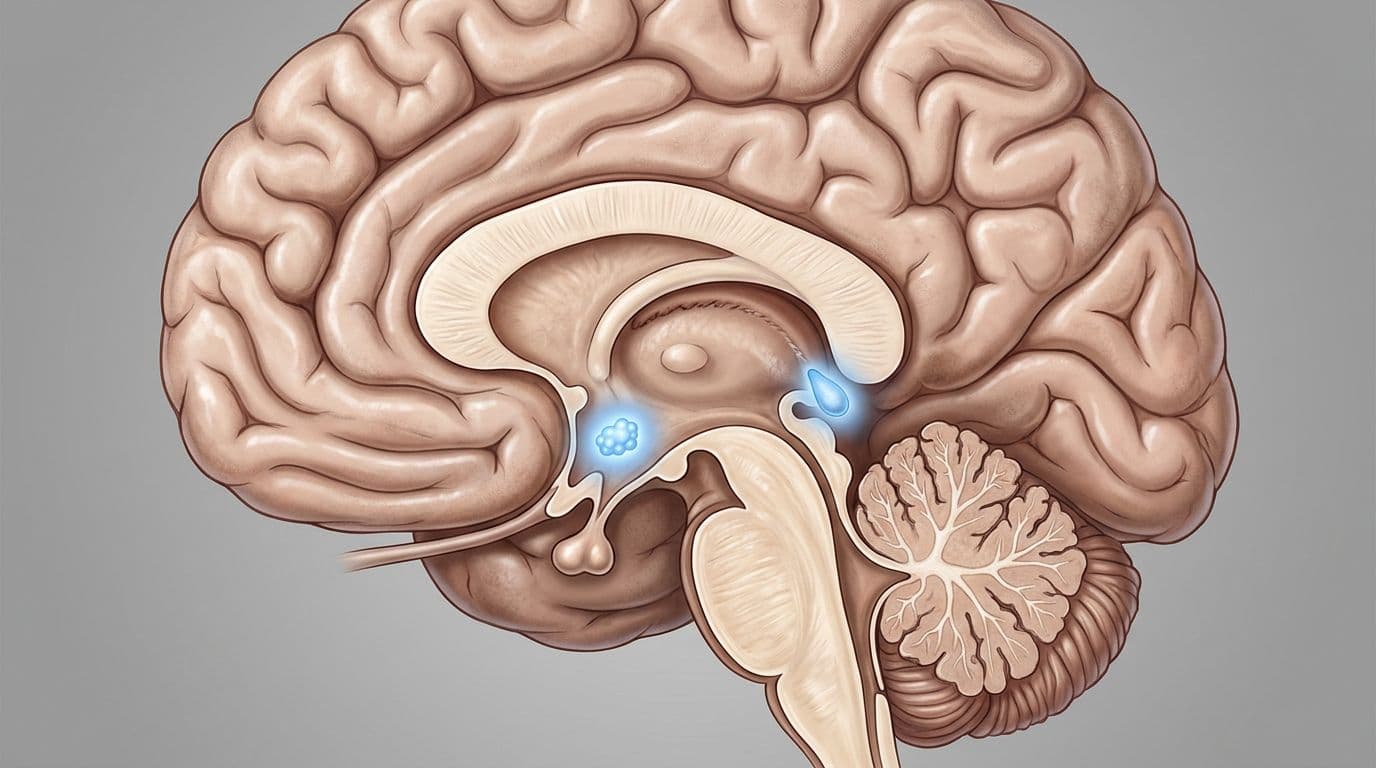
When people say sleep receptors, they usually mean “the parts of the brain that control sleepiness.” That’s understandable, but it’s not one simple receptor system.
Melatonin mainly binds to melatonin receptors (often called MT1 and MT2 in research). These receptors help your body coordinate circadian timing, like when your brain expects darkness, when body temperature drops, and when you start to feel drowsy. That’s why melatonin often helps more with sleep schedule problems than with stress insomnia.
Sleepiness also depends on other signals, such as:
- Adenosine (sleep pressure that builds during the day)
- Light input to the brain (especially morning light and evening screens)
- Stress hormones (like cortisol) that can keep you alert
- Habit loops (bed worry, irregular wake times, late naps)
In other words, melatonin doesn’t “turn sleep on.” It nudges the clock. If your insomnia is driven by anxiety, pain, reflux, noise, or a racing brain, melatonin might not touch the root cause.
Receptor “burnout” in plain English: tolerance, mis-timing, and next-day fog
People worry that melatonin “stops working” because receptors burn out. In real life, three simpler patterns explain most bad experiences.
First, mis-timing. If you take melatonin too late (or only when you’re already desperate), you may send a confusing signal. Your brain can drift later, or your sleep window can get choppy.
Second, too high a dose. Many over-the-counter products are several milligrams. For some people, that’s like turning the volume up so loud that the music distorts. You might fall asleep, but you wake up foggy, headachy, or with intense dreams.
Third, over-reliance. If melatonin becomes your nightly ritual for months, you might notice a weaker “effect” over time. That doesn’t prove permanent receptor damage. It often reflects the same schedule and light habits that caused insomnia in the first place.
What research suggests about melatonin and sleep receptors over time
Melatonin has a long track record in sleep research. In general, experts consider it low risk for short-term use for many adults. The messy part is long-term, high-dose, nightly use, because it’s studied less, and supplement quality varies.
Two things can be true at once:
- Melatonin can be helpful and gentle for the right problem.
- Melatonin can still backfire when the dose, timing, or product is off.
Product quality matters more than most people think. Melatonin supplements can contain more or less than the label says, depending on the brand and batch. That makes it harder to find your “sweet spot,” and it can create side effects that feel random.
Also, melatonin works differently depending on what’s driving your insomnia. Your best friend might swear by it. You might feel nothing, or feel worse. That doesn’t mean anything is broken. It means your sleep problem may not be a circadian problem.
A practical way to think about it is this: melatonin is usually best for when-sleep problems, not can’t-sleep problems.
When melatonin helps most: circadian problems like jet lag and delayed sleep
Melatonin tends to help when your body clock is out of sync with your life, for example:
- Jet lag after crossing time zones
- Shift work when you need to sleep at odd hours
- Delayed sleep phase (the classic night owl who can’t fall asleep until very late)
In these cases, small doses taken earlier can do more than a big dose at bedtime. The goal is to signal “night is coming” before you want to sleep, then support that signal with dim light and a steady wake time.
If you’re trying to move bedtime earlier, melatonin is more like a gentle tug on a rope than a shove. Pair it with morning light, and the rope moves easier.
When melatonin can make insomnia worse: anxiety nights, middle-of-the-night waking, and wrong dose
Melatonin often disappoints when insomnia is fueled by stress. It can also cause problems when people use it like a rescue pill at 2:00 a.m.
Common missteps include taking melatonin:
- After midnight (when your brain may interpret it differently)
- Every time you wake up (which can shift or fragment your rhythm)
- In large doses expecting sedation
- With alcohol, which disrupts sleep architecture and can worsen next-day fog
When melatonin is mistimed or too strong, people report vivid dreams, night sweats, and a groggy “tired but wired” day. That can start a loop, because a groggy day often leads to naps, caffeine, and another rough night.
How to try melatonin safely without messing up your sleep receptors

A safe plan starts with a basic idea: use melatonin as a short experiment, not a lifelong crutch. Give it the best chance to work by lining up your schedule and light exposure.
Here’s a quick reference for common goals.
| Your goal | Typical timing | Dose style to consider | Common mistake |
|---|---|---|---|
| Fall asleep earlier (night owl) | 1 to 3 hours before target bedtime | Start low | Taking it at bedtime and expecting a knockout |
| Jet lag adjustment | Early evening at destination time (varies by direction) | Start low | Changing timing every night |
| Shift work sleep (day sleep) | Before planned sleep block | Start low, clinician input helps | Taking it randomly after a night shift |
| Early-morning waking | Depends on cause, often not first choice | Sometimes extended-release with clinician guidance | Taking a high dose at bedtime and waking foggy |
The takeaway: timing and dose matter more than the brand name on the bottle.
A simple plan: start low, pick a goal, and use it for a short window
Start by deciding what you’re trying to fix. “I want to fall asleep earlier” is a clear goal. “I want to be knocked out” usually ends badly.
Next, try this approach:
- Pick a low dose to start (many adults do well with very small amounts). More isn’t always better.
- Choose a target bedtime and a steady wake time.
- Take melatonin 1 to 3 hours before that bedtime for a circadian shift attempt.
- Run a short trial, about 5 to 14 nights.
- Track three things in a simple sleep log: time you took it, lights-out time, and how you felt the next morning.
At the same time, support the signal. Get bright light in the morning, dim lights at night, and cut caffeine early enough that it doesn’t fight your sleep pressure.
Red flags and interactions: when to stop or ask your doctor first
Stop or scale down if you get strong side effects, like bad headaches, heavy next-day sedation, mood changes, or nightmares that feel extreme. If you feel worse for several nights in a row, don’t just push through.
Talk with a clinician before using melatonin if any of these apply:
- Pregnancy or breastfeeding
- Seizure disorders or seizure meds
- Autoimmune conditions or immune-suppressing meds
- Blood thinners or bleeding disorders
- Sedatives or meds that already cause drowsiness
Also, choose products with third-party testing when possible, because dose mismatches are a real issue with supplements.
If melatonin is not the answer, what else helps without prescriptions
Melatonin gets all the attention, but insomnia often improves faster when you focus on your body clock and sleep pressure. Think of sleep like a train. Light sets the timetable, and sleep pressure is the engine. Melatonin is only a small signal flag.
The biggest non-pill lever: light in the morning, dim light at night

Morning light tells your brain, “Day has started.” As a result, your body can build a stronger sleep drive by night. Evening bright light does the opposite, because it can delay natural melatonin release.
Try these simple moves:
- Get 10 to 20 minutes of outdoor morning light soon after waking.
- Lower lights 1 to 2 hours before bed, and aim for warmer, dimmer bulbs.
- Keep screens dim at night, and avoid blasting your eyes with bright overhead lighting.
These steps sound small, but they stack. After a week, many people feel sleep coming more predictably.
Sleep pressure basics: caffeine timing, wake time consistency, and a short wind-down
Sleep pressure builds while you’re awake. When you nap late, sleep in, or drink caffeine too late, you poke holes in that pressure.
A realistic routine looks like this:
- Keep a similar wake time most days (even after a bad night).
- Set a caffeine cutoff, often early afternoon for many adults.
- Skip long late naps. If you must nap, keep it short and early.
- Do a 20 to 30 minute wind-down (shower, light reading, calm breathing, or stretching).
If insomnia has lasted months, consider CBT-I (cognitive behavioral therapy for insomnia). It has the strongest evidence among non-drug approaches. Many people start with a digital CBT-I program if in-person care is hard to access.
FAQs about melatonin, sleep receptors, and long-term use
Can melatonin permanently damage sleep receptors?
Permanent damage isn’t the typical finding. Still, chronic high doses or bad timing can disrupt your body clock and make sleep feel worse. Short trials, low doses, and better timing reduce that risk.
What is a good melatonin dose for insomnia?
Many people do better with lower doses than they expect. Higher doses raise the odds of grogginess, headaches, and vivid dreams. Start low, then adjust cautiously based on morning feeling and sleep timing.
Should I take melatonin right at bedtime or earlier?
For many circadian timing goals, earlier is often better, usually 1 to 3 hours before bed. Bedtime dosing may feel weaker for some people because the timing cue comes too late. Follow clinician advice if you’re using it for a specific medical reason.
Is it safe to take melatonin every night?
Short-term nightly use is common. Long-term nightly use is less clear, especially at higher doses. It’s best used as a tool while you fix wake time, light exposure, and habits. Periodic breaks and reassessment can help.
Why do I feel groggy or have weird dreams after melatonin?
Dose and timing usually explain it. Try taking less, taking it earlier, and avoiding alcohol on melatonin nights. A consistent sleep window also reduces “dream rebound” feelings for many people.
Can melatonin help if I keep waking up at 3 a.m.?
Sometimes, but it’s not the first place to start. Early waking can come from stress, alcohol, early bedtime, depression, temperature, or sleep apnea. If it’s frequent, focus on wake time consistency and light timing, and consider clinical screening.
Does melatonin work right away?
It can, but results vary. For circadian shifts, you may notice the best change after several days of consistent timing and morning light.
Conclusion
The “fry sleep receptors” claim makes a catchy headline, but it oversimplifies how sleep works. Melatonin is mainly a timing signal, so problems usually come from taking it too late, taking too much, or leaning on it nightly instead of fixing the schedule. Start with morning light and a steady wake time first. If you use melatonin, keep the dose low, take it earlier, and track results for 1 to 2 weeks. If insomnia stays severe or persistent, talk with a clinician so you don’t keep guessing in the dark.