
Key Takeaways
- Adolescent insomnia is more than just a phase—it affects 23-73% of teens and can lead to serious mental health issues if left untreated.
- Biological changes during puberty naturally shift teens toward later sleep times, making early school start times particularly challenging.
- Creating a consistent sleep routine and sleep-friendly environment is crucial for helping teens overcome insomnia.
- Screen use before bedtime significantly impacts melatonin production and can delay sleep onset by 1-3 hours.
- Anxiety Institute provides specialized support for teens whose insomnia is connected to anxiety or other mental health challenges.
Why Teen Sleep Matters: The Truth About Adolescent Insomnia
Teen insomnia isn’t just about being tired the next day. When adolescents consistently struggle to fall asleep, stay asleep, or wake up too early, the effects ripple through every aspect of their lives. Research shows that between 23-73% of teens experience insomnia symptoms, yet many parents dismiss these struggles as normal teenage behavior. The consequences extend far beyond drowsiness—chronic sleep deprivation in teens is linked to increased risk of depression, anxiety, impaired academic performance, and even dangerous driving.

What makes teen insomnia particularly challenging is that it often becomes a vicious cycle. A teenager who can’t sleep develops anxiety about not sleeping, which further prevents them from falling asleep. At Anxiety Institute, we’ve seen how this cycle can intensify existing mental health challenges in adolescents. Understanding that adolescent insomnia is a legitimate health concern—not laziness or defiance—is the first step toward helping your teen find relief.
The good news is that adolescent sleep problems are highly treatable with the right approach. Unlike adult insomnia, which might have developed over decades, teen sleep patterns are still forming and can be more responsive to intervention. By combining environmental adjustments, behavioral changes, and sometimes appropriate supplements or professional help, most teens can establish healthier sleep patterns within weeks rather than months.
Biological Reasons Teens Struggle With Sleep
The sleep challenges teenagers face aren’t simply about bad habits or too much screen time—though these factors certainly contribute. There are profound biological changes happening during adolescence that fundamentally alter how their sleep-wake cycle functions. Understanding these natural shifts can help parents approach teen sleep problems with greater empathy and more effective solutions.
Delayed Sleep Phase: Why Teens Naturally Stay Up Late
During puberty, the body’s internal clock (circadian rhythm) shifts significantly, causing what sleep specialists call “delayed sleep phase syndrome.” This biological change pushes teens’ natural sleep time about two hours later than when they were children. Your teenager isn’t necessarily being difficult when they can’t fall asleep at 10 PM—their body is literally programmed to feel alert until around midnight.
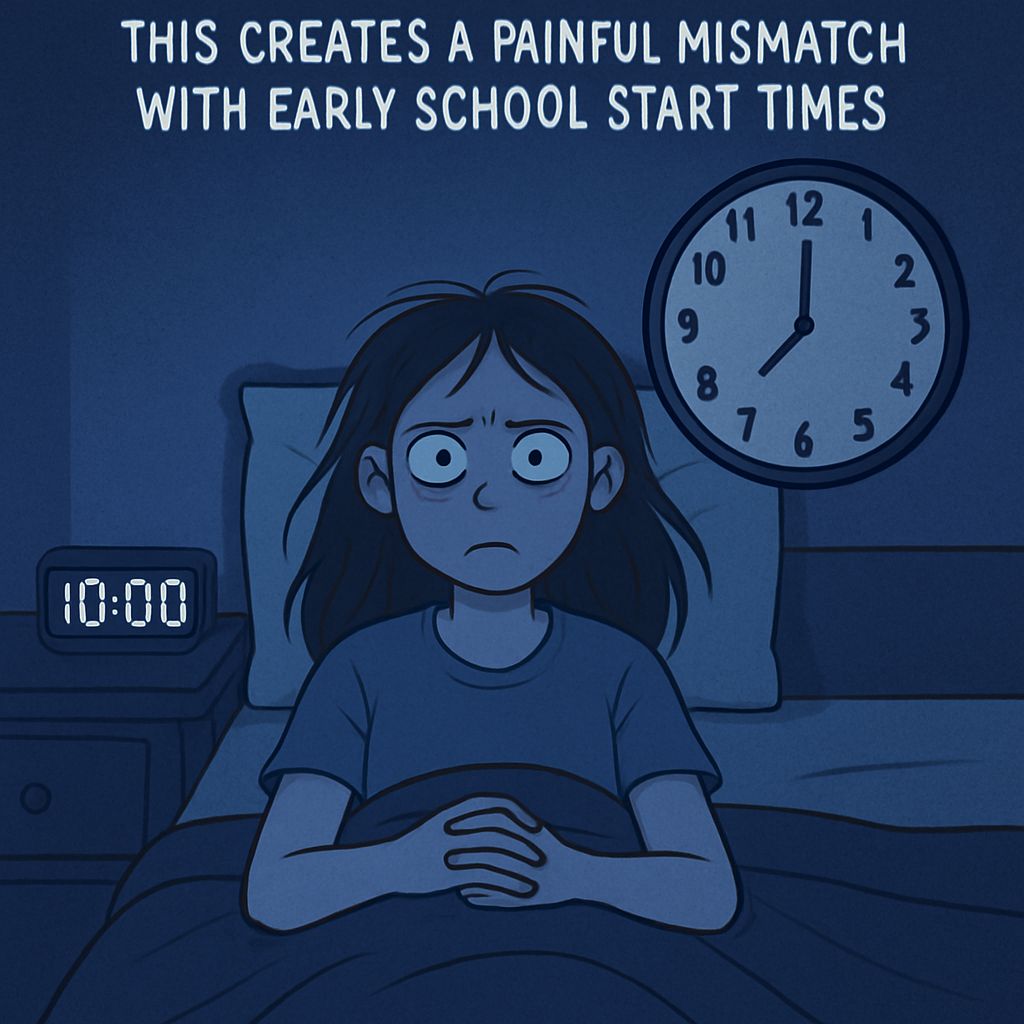
This natural delay creates a painful mismatch with early school start times. While a teen’s biology keeps them up until 11 PM or later, most high schools begin before 8:30 AM, creating a perfect storm for chronic sleep deprivation. Research supports this biological reality: studies show that when schools shift to later start times, student sleep quality, mental health, and academic performance all improve dramatically.
This biological shift explains why simply setting earlier bedtimes often fails as a solution. Telling a teen with delayed sleep phase to “just go to bed earlier” is like asking an adult to fall asleep at 7 PM—their body simply isn’t ready for sleep yet. Instead, gradual adjustments and consistent routines work better to gently reset their clock.
Hormonal Changes That Disrupt Sleep Patterns
The hormone tsunami that characterizes puberty directly impacts sleep quality. Surging sex hormones not only trigger physical development but also affect brain chemistry related to sleep regulation. These fluctuating hormone levels can cause more fragmented sleep, with teens experiencing more nighttime awakenings than younger children or adults.
For girls, menstrual cycles bring additional sleep challenges. Premenstrual symptoms can cause sleep disruption, and hormonal fluctuations throughout the month may lead to inconsistent sleep patterns. Boys experience their own hormonal shifts that can heighten stress responses and make relaxing into sleep more difficult. To learn more about managing these challenges, consider exploring resources on helping teens manage insomnia.
How Technology Affects Teen Melatonin Production
The blue light emitted from phones, tablets, and computers is particularly problematic for teen sleep. This specific wavelength of light directly suppresses melatonin production—the hormone responsible for signaling to your body that it’s time to sleep. Studies show that just two hours of evening screen exposure can delay melatonin release by nearly 3 hours and reduce overall melatonin levels by 23%.
Teens are especially vulnerable to this effect because their developing brains are more sensitive to light exposure. The impact is compounded by the fact that adolescents spend an average of 7+ hours daily on electronic devices, with usage typically peaking in the evening hours. This constant exposure effectively tricks their brains into thinking it’s still daytime, making it nearly impossible to fall asleep at appropriate times. To understand more about what happens in the brain to cause insomnia, you can read this informative article.
Beyond the blue light itself, the content teens consume on these devices often stimulates rather than relaxes the brain. Whether it’s engaging social interactions, exciting games, or stress-inducing news, these activities activate the sympathetic nervous system—the opposite of what’s needed for sleep onset.
Create A Sleep-Friendly Environment
The physical space where your teen sleeps plays a crucial role in sleep quality. Even with perfect sleep habits, a bedroom that’s too bright, noisy, or uncomfortable will sabotage their rest. Creating an environment that signals “sleep” to the brain is one of the most practical and immediate steps you can take to help your teen overcome insomnia.
The goal is to create a sanctuary that appeals to your teen while incorporating sleep-promoting elements. This might mean compromising on some décor choices while being firm about others. Remember that adolescents are more likely to maintain sleep-friendly habits when they’ve had input in creating their sleep space.
Best Bedroom Temperature For Teen Sleep
Temperature is one of the most overlooked yet critical factors in sleep quality. Research consistently shows that a cool room—between 60-68°F (15-20°C)—promotes the deepest, most restorative sleep. This is because our body temperature naturally drops as we prepare for sleep, and a cooler environment facilitates this process.
Teens often prefer warmer rooms, especially during winter months, but overheating is a common cause of sleep disruption. Consider investing in layered bedding that allows for temperature adjustment throughout the night. Moisture-wicking sheets can also help teens who tend to sweat during sleep, a common occurrence during puberty when hormone fluctuations can cause night sweats.
Light Control: Setting Up A Dark Sleep Space
Our brains are wired to sleep in darkness, with even small amounts of light disrupting sleep quality. Blackout curtains are an excellent investment for teen bedrooms, especially for those who need to sleep past sunrise on weekends. These specialized window coverings block nearly 100% of outside light and can make a dramatic difference in sleep quality.
Equally important is eliminating sources of light within the bedroom. Digital clocks, charging indicators, and especially notification lights from phones can all disrupt sleep. Consider replacing bright alarm clocks with models that offer dimming features or use red light, which has less impact on melatonin. For teens who fear complete darkness, a small red-spectrum nightlight is the best compromise.
Noise Management Strategies For Sensitive Sleepers
Teens are often more sensitive to noise disruptions than younger children, yet may be reluctant to admit it bothers them. White noise machines can be particularly helpful for masking household sounds or neighborhood noise. Some teens prefer natural sounds like rainfall or ocean waves, while others do better with consistent white or pink noise.
For households where noise control is challenging, quality earplugs designed for sleep can be a simple solution. Silicone or foam options designed specifically for sleeping are comfortable enough for all-night wear. Alternatively, headphones designed for sleep can play calming sounds while blocking external noise, though these should be used with appropriate volume limits to protect hearing.
The Right Mattress And Pillow For Growing Bodies
Adolescents experience rapid physical growth that can make yesterday’s comfortable mattress suddenly inadequate. A mattress that’s too firm or too soft can cause discomfort that prevents deep sleep, while also potentially contributing to back pain. Medium-firm mattresses typically provide the best support for growing bodies, with enough cushioning to accommodate developing hips and shoulders.
Pillow height and firmness should match your teen’s primary sleep position. Side sleepers need thicker pillows that fill the space between shoulder and head, while back sleepers require thinner, firmer support. For teens who frequently wake with neck pain, a pillow upgrade might resolve sleep issues more effectively than any other intervention.
Remember that teenagers’ comfort preferences may change throughout puberty as their bodies develop. What worked at 13 may be uncomfortable by 16, making it worth reassessing sleep surfaces periodically during these growth years.
Natural Sleep Aids That Work For Teens
When environmental changes and sleep hygiene improvements aren’t enough, natural sleep aids can provide additional support. Unlike prescription sleep medications, which are rarely appropriate for adolescents due to risk of dependence and side effects, certain natural approaches have demonstrated safety and efficacy for teenage sleep problems.
Always consult with your teen’s healthcare provider before starting any supplement regimen. What works well for one teenager may not be appropriate for another, especially if they have underlying medical conditions or take other medications. Start with the lowest effective dose and monitor for both benefits and potential side effects.
Melatonin: When It’s Appropriate And How To Use It
Melatonin supplements can be effective for teens with delayed sleep phase syndrome, helping to reset their internal clock to align better with school schedules. Research supports its short-term use in adolescents, showing improvements in sleep onset and quality without significant side effects when used appropriately. The key is proper timing—melatonin should be taken 1-2 hours before the desired bedtime, not when a teen is already struggling to fall asleep.
Progressive Muscle Relaxation Method
Progressive muscle relaxation (PMR) is particularly effective for teens who carry tension in their bodies from school stress, sports, or anxiety. The technique involves systematically tensing and then releasing each muscle group, starting from the feet and working up to the face. Most teens notice immediate benefits, with reduced physical tension leading to faster sleep onset and improved sleep quality.

Journaling To Release Worries
The racing thoughts that prevent sleep often stem from unprocessed worries and tomorrow’s to-do list. Having your teen spend 10 minutes before bed writing down concerns, uncompleted tasks, and next-day priorities creates a “worry download” that clears mental space for sleep. The physical act of transferring thoughts to paper signals to the brain that these items can be addressed tomorrow.
For maximum effectiveness, suggest your teen use two columns: one for concerns and another for potential solutions or action steps. This approach transforms abstract anxiety into concrete problems with pathways forward. Even if solutions aren’t immediately apparent, simply acknowledging the concerns reduces their emotional charge.
Some teens prefer gratitude journaling before bed, which shifts focus from stressors to positive experiences. Research shows this practice increases positive emotions, reduces negative rumination, and improves sleep quality by activating the parasympathetic nervous system.
Breathing Exercises That Actually Work
The 4-7-8 breathing technique is remarkably effective for calming an anxious teenage mind. Your teen inhales quietly through their nose for 4 counts, holds their breath for 7 counts, then exhales completely through their mouth for 8 counts. This breathing pattern activates the parasympathetic nervous system, counteracting the stress response that often prevents sleep. Most teens report feeling significantly calmer after just 4-5 repetitions.
Another effective approach is diaphragmatic breathing, where teens place one hand on their chest and another on their stomach, focusing on making the stomach hand rise more than the chest hand. This deep breathing stimulates the vagus nerve, which regulates sleep and relaxation responses. Unlike complicated meditation techniques, these breathing exercises require minimal instruction and provide immediate physiological calming effects.
When To Seek Professional Help
While many teen sleep issues respond well to the strategies we’ve discussed, persistent insomnia requires professional evaluation. About 10-15% of adolescents have chronic insomnia disorder that won’t resolve without specialized treatment. If your teen has tried consistent sleep hygiene practices for 2-3 weeks without improvement, or if their sleep problems significantly impact daytime functioning, it’s time to consult a healthcare professional who specializes in adolescent sleep issues.
Signs That Insomnia Needs Medical Attention
Several red flags indicate the need for prompt professional evaluation. If your teen experiences intense anxiety about sleep itself, demonstrates significant mood changes like irritability or depression, has declining academic performance, or shows signs of substance use to manage sleep, seek help immediately. Physical symptoms like morning headaches, excessive daytime sleepiness despite adequate time in bed, loud snoring, or gasping during sleep also warrant medical investigation as they may indicate underlying conditions like sleep apnea.
Watch for patterns rather than isolated incidents. Occasional sleep difficulties are normal, but when sleep problems occur three or more nights weekly for over a month, professional assessment is necessary. Additionally, if your teen expresses hopelessness about their ability to sleep normally again, this cognitive distress itself can perpetuate insomnia and requires intervention.
Types Of Sleep Specialists For Teens
Several types of professionals specialize in adolescent sleep issues. Pediatric sleep specialists have specific training in childhood and adolescent sleep disorders and can order appropriate testing when needed. Child and adolescent psychiatrists can address both sleep and any co-occurring mental health issues, which commonly accompany teen insomnia. Clinical psychologists specializing in CBT-I (Cognitive Behavioral Therapy for Insomnia) provide the gold-standard non-medication treatment for chronic insomnia, with success rates exceeding 70% for adolescents.
What To Expect At A Sleep Consultation
A comprehensive sleep evaluation typically begins with detailed questionnaires about your teen’s sleep patterns, daytime functioning, and medical history. The specialist will interview both you and your teen, focusing on sleep habits, bedroom environment, and possible contributing factors like caffeine use or screen time. They may recommend a sleep diary to track patterns over 1-2 weeks or, in some cases, an overnight sleep study (polysomnography) to rule out physical sleep disorders like sleep apnea or periodic limb movement disorder.
Treatment recommendations vary based on findings but typically include a combination of behavioral interventions, environmental modifications, and possibly short-term use of supplements or medications. CBT-I is often recommended as first-line treatment, which helps teens identify and change thoughts and behaviors that perpetuate sleep problems. Unlike adult treatment, adolescent sleep therapy typically involves parents as active participants in implementing and maintaining healthy sleep routines.
Help Your Teen Sleep Better Tonight
While long-term solutions require consistency, several strategies can provide immediate relief for a teen struggling with sleep. Start by encouraging a 20-minute wind-down routine that includes dimming lights throughout the house and removing all screens. A warm shower or bath 60-90 minutes before bed temporarily raises body temperature, and the subsequent cooling process mimics the natural temperature drop that triggers sleep. For tonight, focus on creating a sleep-conducive environment rather than enforcing a specific bedtime, which can reduce performance anxiety around sleep.
Remember that your approach as a parent significantly influences your teen’s sleep experience. Expressing empathy rather than frustration acknowledges the biological challenges they’re facing. Instead of focusing on the need to wake up early tomorrow, help your teen feel safe and relaxed tonight. The sleep strategies outlined in this article become most effective when implemented as part of a supportive family approach that respects the unique sleep challenges of adolescence while gently guiding teens toward healthier patterns.
Frequently Asked Questions
Navigating teen sleep problems raises many questions for concerned parents. Here are answers to the most common questions about adolescent insomnia, based on current research and clinical practice.
Can a teen develop insomnia from stress about school?
Yes, academic pressure is one of the leading causes of insomnia in adolescents. The combination of homework demands, test anxiety, and early start times creates a perfect storm for sleep problems. Research shows that 68% of teens report schoolwork as their primary source of stress, with sleep disturbances often peaking during exam periods. This academic stress triggers the body’s fight-or-flight response, raising cortisol levels that directly interfere with the ability to fall and stay asleep. For more information on what happens in your brain to cause insomnia, check out this detailed article.
Is it normal for teenagers to stay up until midnight?
Biologically speaking, yes. During puberty, the body’s circadian rhythm naturally shifts about two hours later, making most teens genuinely unable to fall asleep before 11 PM regardless of how tired they feel. This biological shift, called “phase delay,” is caused by changes in melatonin timing during adolescence. While this later sleep pattern is normal, it conflicts with early school start times, creating chronic sleep deprivation for many teens who must wake before their bodies are ready.
How long should teens try natural remedies before seeing a doctor?
Natural approaches should show some improvement within two weeks if implemented consistently. If your teen has made genuine efforts with sleep hygiene, environment modifications, and natural remedies for 2-3 weeks without improvement, it’s appropriate to seek professional help. However, don’t wait if your teen shows signs of significant distress, declining functioning, or if you suspect an underlying medical or psychiatric condition contributing to their sleep difficulties.
Remember that consistent application is key—sporadic use of sleep strategies rarely produces meaningful results. Many families benefit from a structured approach, gradually implementing changes while tracking sleep patterns to identify what helps and what doesn’t.
Can exercise help teens sleep better?
Regular physical activity significantly improves sleep quality and duration for most teens, with research showing 20-30 minutes of daily exercise can reduce sleep onset time by up to 55%. However, timing matters crucially. Exercise raises core body temperature and stimulates alerting hormones like adrenaline, which can interfere with sleep when done too close to bedtime. For optimal sleep benefits, teens should complete moderate to vigorous physical activity at least 3-4 hours before their intended bedtime.
The type of exercise also impacts sleep differently. Regular aerobic activities like swimming, running, or cycling have been shown to increase deep sleep, while strength training and high-intensity interval training may improve sleep quality but should be scheduled earlier in the day due to their more stimulating effects. For teens with persistent insomnia, gentle movement like yoga or stretching in the evening provides sleep benefits without the alerting effects of more intense exercise.
Are weighted blankets effective for teenage insomnia?
Weighted blankets can be helpful for many teens with insomnia, particularly those whose sleep difficulties stem from anxiety or sensory processing issues. These specialized blankets apply gentle, distributed pressure across the body, stimulating deep touch pressure receptors that trigger relaxation responses and increase serotonin production. Research shows they can reduce time to fall asleep by an average of 32% and decrease nighttime awakenings for adolescents.
For best results, choose a blanket weighing approximately 10% of your teen’s body weight, and ensure it’s designed specifically for sleep with breathable materials to prevent overheating. Some teens find the weight uncomfortable initially, so a gradual introduction—starting with the blanket across the lower body only—can help with adaptation. While not a cure-all, weighted blankets provide a non-pharmaceutical option worth trying for teens who feel anxious or restless at bedtime. For additional insights, explore the causes of sleep deprivation and potential solutions.
Helping your teen overcome insomnia requires patience, consistency, and understanding of the unique biological challenges of adolescence. By combining environmental adjustments, behavioral strategies, and appropriate professional support when needed, most teens can develop healthier sleep patterns that support their wellbeing during this critical developmental stage. For further understanding, you can explore what happens in your brain to cause insomnia.
Insomnia in adolescents can be a challenging issue to address. Often, it is caused by a combination of stress, lifestyle habits, and biological changes. Understanding the underlying factors that contribute to this condition is crucial. For instance, knowing what happens in your brain to cause insomnia can provide insights into effective treatments and strategies for better sleep.